The Artificial Intelligence Reckoning on College Campuses: Integration, Resistance, and the Future of Higher Education
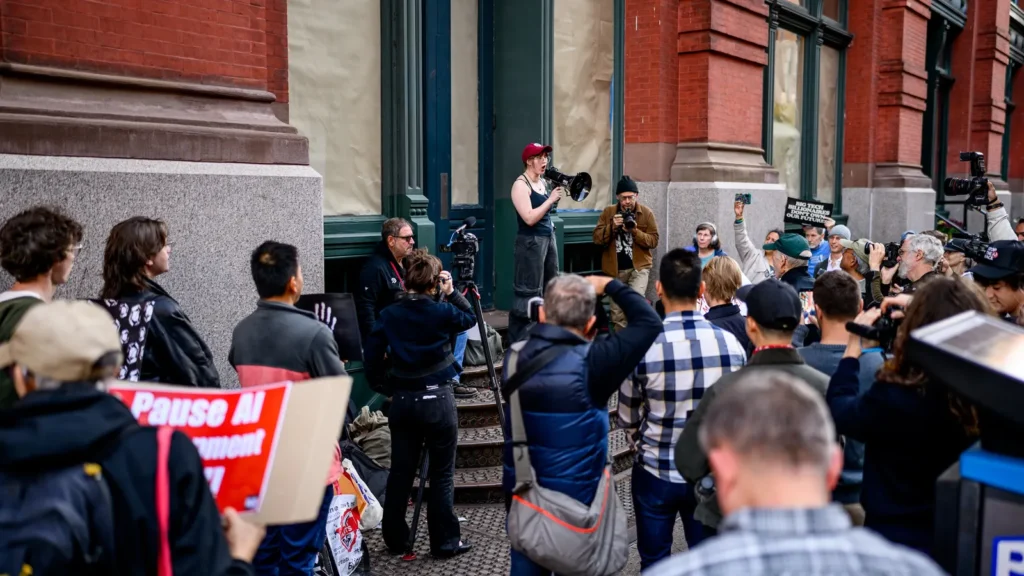
Higher education across the United States is standing at a historical crossroads. As colleges and universities aggressively embrace artificial intelligence—automating administrative tasks, redesigning curricula, and forging multi-million-dollar partnerships with tech giants—they are encountering a formidable wave of resistance. From student-led protests over AI surveillance and commencement voices to faculty-driven labor disputes and looming strike threats, campuses have become the primary battleground over the role of automation in human development.
While academic leaders argue that AI literacy is vital for the modern workforce, a broad coalition of students, professors, and labor unions warn that rapid, top-down implementation threatens academic integrity, democratic governance, and the fundamental mission of public education.
Main Facts
The integration of artificial intelligence into higher education has evolved from an experimental phase into an institutional mandate, accompanied by sharp cultural and political friction.
- Top-Down Tech Adoption: Universities nationwide are incorporating generative AI platforms—such as OpenAI’s ChatGPT and Google’s Gemini—into everything from student registration assistants to classroom curricula. Major higher education networks, most notably the California State University (CSU) system, have invested heavily in system-wide commercial contracts, including an OpenAI deal totaling roughly $17 million initially, followed by renewals costing $13 million annually.
- Widespread Campus Pushback: This institutional pivot has triggered severe pushback. Students and faculty have staged demonstrations against AI-powered campus surveillance, the use of synthetic AI voices at graduation ceremonies, and university partnerships with technology firms tied to military applications.
- Faculty Skepticism and Academic Integrity: National surveys reveal deep anxiety among educators. Approximately 75% of faculty report a spike in cheating since generative AI became widespread, 95% fear student overreliance on the technology, and nearly all surveyed educators worry about diminishing critical thinking skills and declining attention spans.
- Labor Friction: The rush to digitize has bypassed traditional shared governance structures in many institutions, leading to formal legal action. Academic labor unions, such as the California Faculty Association (CFA), have filed unfair labor practice charges against university administrators for implementing sweeping tech initiatives without mandatory collective bargaining.
Chronology of the Campus AI Movement
The friction between higher education administrators and campus communities has intensified through a distinct timeline of policy rollouts, institutional investments, and escalating protests:
- 2024: San José State University (SJSU) establishes a 15-member AI advisory committee composed of faculty, students, and staff to help guide the ethical integration of technology. Simultaneously, the grassroots "Luddite Club" movement expands across multiple college campuses, representing a broader youth counter-culture against mandatory technology dependency.
- Fall 2025: SJSU formally launches its ambitious "AI Everywhere" initiative, aiming to weave AI instruction throughout the university. Concurrently, the California State University system signs high-profile contracts with generative AI corporations. In response to being bypassed in these decisions, the California Faculty Association files an unfair labor practice charge against CSU management for failing to negotiate the new tech policies.
- January 2026: The American Association of Colleges and Universities (AAC&U) and Elon University publish a comprehensive national survey of over 1,000 instructors, highlighting widespread faculty unpreparedness, soaring rates of academic dishonesty, and a lack of institutional guidelines.
- April 2026: Students at Emory University stage protests demanding the removal of AI-powered surveillance cameras from campus. Weeks later, SJSU students demonstrate against the university’s institutional ties to prominent tech firms like Nvidia, OpenAI, and Google due to ethical and military concerns.
- May 2026: Tensions peak at Columbia University, where students and faculty publicly denounce the administration’s use of an AI-generated voice to announce graduate names during commencement ceremonies.
- Mid-2026 to Present: Negotiations between academic unions and university systems stall, with faculty representatives across multiple institutions preparing for potential strikes centered on artificial intelligence mandates, intellectual property rights, and workload protections.
Supporting Data and Statistical Insights
Recent empirical research from higher education associations and institutional surveys paints a clear picture of how AI is transforming—and destabilizing—the campus ecosystem:
- Curricular Growth: At San José State University, under the direction of special assistant to the provost Sandra Hirsh, projections indicate that by the start of the 2027–28 academic year, the institution will host 28 AI-related programs and 101 courses—representing a 75% and 36% increase, respectively, compared to fall 2025 levels.
- Institutional Adoption Rates: According to a fall 2025 Pulse Point Survey by the American Council on Education (ACE), a quarter of senior higher education leaders had already adopted generative AI technologies for student support. Another 22% planned to do so within six months, and 43% targeted adoption within one to two years.
- Faculty Usage vs. Skepticism: Data from CSU internal surveys shows a complex reality: while 61% of faculty and staff report regularly using AI tools for teaching, research, or administrative duties—with 64% noting positive impacts—about 52% remain generally skeptical of AI’s overall benefits in higher education, and 85% express profound ethical concerns.
- The Training Gap: According to the AAC&U and Elon University survey, 68% of faculty members state that their institutions have failed to adequately prepare educators to use generative AI for effective teaching and mentoring. Less than half report having formal written guidelines for AI usage, and only 13% have seen AI literacy adopted as a core general learning outcome.
- Assessment and Policy Control: Lacking top-down institutional clarity, 87% of faculty have taken matters into their own hands, designing independent classroom policies to govern student AI usage for projects, tests, and assignments.
Official Responses and Perspectives
Administrators, faculty advocates, and student leaders view the AI transformation through vastly different lenses, highlighting a deep philosophical divide over the purpose of the university.
Administrative Optimism and Workforce Preparation
University officials defend their investments by pointing to macroeconomic shifts. Proponents argue that because generative AI is rapidly transforming private industry, universities have a professional obligation to prepare students for the modern workforce.
Initiatives like SJSU’s AI Everywhere program and community-facing projects—such as the joint city-university AI Center for Civic and Social Good at the Dr. Martin Luther King Jr. Library—are framed as community investments. Sandra Hirsh emphasizes that these measures are carefully designed to integrate technology ethically while expanding local civic access to emerging educational tools.
Faculty Concerns Over Governance and Quality
Conversely, academic experts and faculty leaders argue that efficiency-driven rollouts are dismantling the foundational principles of higher education.
"This is the transformation of the very mission of public education, and it can’t just be implemented one way from the top," asserts Robert Ovetz, a professor at San José State University and co-author of the forthcoming book Organizing Against AI in Higher Education.
C. Edward Watson, vice president for digital innovation at the AAC&U, notes that while universities understand the need to evolve, they are structurally unequipped to do so rapidly. Crafting meaningful, sustainable curricula typically requires semesters of careful deliberation among faculty and industry partners. When administrators sidestep this collaborative process to sign multi-million-dollar software contracts, they alienate the very people responsible for delivering the education.
Student Counter-Movements
For students, the pushback is not merely about cheating or surveillance; it is part of a broader resistance against mandatory digital integration. Lucy Jackson, a Binghamton University sophomore and early member of the international Luddite Club movement, argues that students enroll in universities seeking genuine intellectual engagement, not forced interactions with automated systems.
"When you enter a university, you expect to receive an education, not a requirement that you have to interact with certain technologies," Jackson explains. She points out that when some students use AI to bypass coursework, it cultivates an artificial academic culture that undermines the value of the degree for everyone else.
Implications for the Future of Academia
The ongoing culture war over artificial intelligence on college campuses carries profound long-term implications for labor relations, educational equity, and intellectual standards.
- The Erosion of Shared Governance: The unilateral deployment of AI tools by executive boards and university presidents has triggered an existential crisis for academic senates and unions. When massive financial commitments are made to tech firms without faculty consent, it reduces professors from autonomous scholars to managed labor. If legal challenges, such as the CFA’s unfair labor practice charges, succeed, they could establish legal precedents that force administrations to negotiate technological adoption.
- Labor Intensification and Intellectual Property: Instructors face mounting workloads. Beyond teaching complex subjects, faculty are now burdened with policing student work for AI plagiarism, re-evaluating pedagogical frameworks, and learning proprietary software platforms. Without explicit intellectual property protections and workload caps, educators risk being replaced or exploited by automated systems built on their own uncompensated research and teaching materials.
- The Devaluation of Critical Thinking: If institutions fail to establish clear, thoughtful boundaries around generative AI, educators warn that universities risk graduating students who are technically proficient in prompt engineering but deficient in deep critical thinking, original research, and ethical reasoning.
- The Path Forward: Experts like Hironao Okahana suggest that successful AI integration is impossible without inclusive, multi-stakeholder governance models. Rather than treating campus committees as mere rubber stamps for executive decisions, universities must engage faculty, students, and staff as genuine co-creators.
Ultimately, the campus AI debate forces higher education to answer a fundamental question: Is a university a pipeline designed to feed the corporate tech sector, or is it a sanctuary for human-centric critical inquiry, democratic discourse, and independent thought? How institutions answer that question over the coming years will define the future of learning for generations to come.