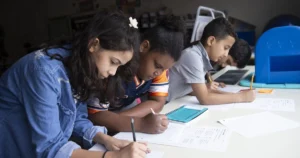
Rooted in Resilience: How Benin’s Youth are Rewriting the Future of Agroforestry
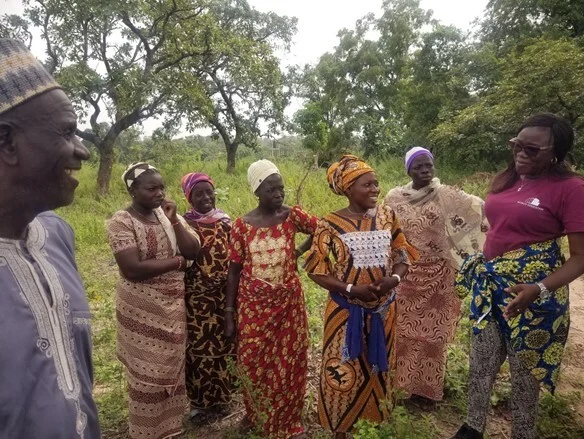
In the sun-drenched savannas of Northern Benin, a quiet revolution is taking place—one that is as much about the microscopic threads of fungal mycelium beneath the soil as it is about the aspirations of the young people walking above it. Driven by the World Education initiative, a transformative project known as "AgroNative" is blending behavioral science, youth-led research, and ancestral ecological knowledge to reshape how rural communities interact with their land.
By moving away from traditional, top-down agricultural models, these communities are fostering a decentralized, symbiotic system that treats the environment not as a resource to be exhausted, but as a living network to be nurtured. This shift is turning the tide on land degradation, proving that when youth are given the tools to collect their own data, they become the architects of their own economic and environmental future.
The Genesis: Research as a Catalyst for Change
The journey began in 2022, when World Education launched a participatory research initiative in the community of Wèrèkè. The objective was ambitious: to bridge the widening gap between the expectations of an older generation, which often prioritizes stable, traditional desk jobs, and a younger generation seeking viable, eco-conscious entrepreneurship.
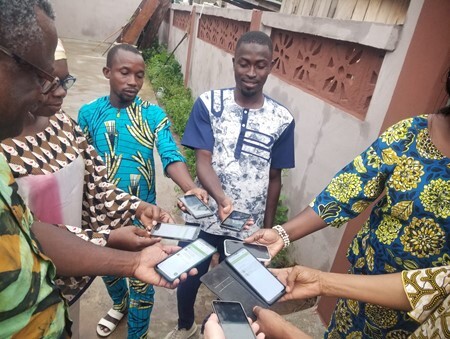
Armed with clipboards and smartphones, a cohort of young researchers set out to collect empirical evidence to challenge local perceptions. They were not merely students; they were citizen scientists. Their missions were diverse and granular:
- Social Analysis: Evaluating how family expectations influence career choices among rural youth.
- Ecological Observation: Investigating the symbiotic relationship between Parkia biglobosa (Néré) trees and local bird populations, which act as natural pest controllers for soybean crops.
- Economic Viability: Testing whether small-scale eco-agricultural businesses could provide a sustainable livelihood.
The data they gathered was revelatory. It confirmed that biodiversity was not just a conservation goal—it was an economic engine. By demonstrating that healthy ecosystems directly correlated with higher agricultural yields, the youth transformed the local narrative from "conservation versus profit" to "conservation as the foundation of profit."
A Chronology of Collaboration
The success of the recent AgroNative project (2024–2026) did not emerge in a vacuum; it is the culmination of years of strategic community building and iterative learning.
Phase 1: The Foundation (2023–2025)
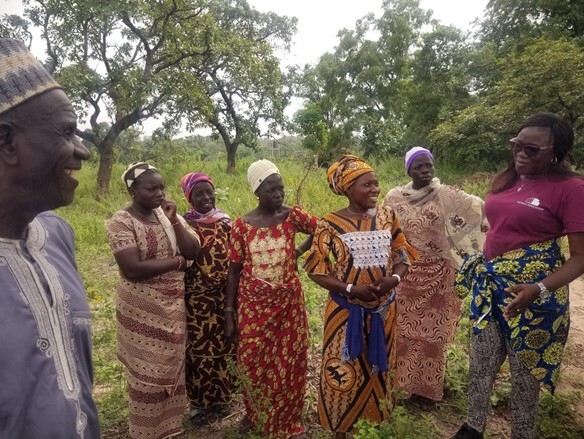
The precursor to the current work was the "Women-led, School-based Agroforestry in Benin" (WSAB) project, funded by the Darwin Initiative. This project focused on empowering Mothers of Students Associations (AMEs) to integrate native plant species into agricultural practices. The results were immediate and tangible:
- Restoration: 9.5 hectares of degraded land were rehabilitated through community-led planting events.
- Economic Impact: The women-led microenterprises generated 1,180,000 FCFA in revenue, a significant portion of which was reinvested into school canteens.
- Reach: An estimated 10,729 people were indirectly supported through climate adaptation efforts.
Phase 2: The Youth Integration (2025)
Recognizing that the labor burden on these women was immense, the youth of Wèrèkè proposed a new model. They integrated their research findings with the existing AME infrastructure. By restructuring cooperatives, they introduced a "sub-parcel" system. Youth members gained access to land for a symbolic rental fee of 1,000 FCFA per month, provided they maintained native tree canopies. This allowed them to launch individual startup enterprises while contributing to the collective health of the ecosystem.
Phase 3: Scaling Up (2024–2026)
With the launch of the AgroNative project, the focus shifted to policy alignment. Recognizing that current laws—such as Decree No 96-271, which mandates planting one tree every 10 meters—were insufficient for deep ecosystem health, the communities began to advocate for higher tree density. They established Natural Resource Management Committees (NRMCs) across five new villages, creating a formal structure to manage 15 hectares of habitat, directly benefiting 3,000 residents.
Supporting Data: The Science of Symbiosis
The project’s success is underscored by its commitment to "BioBlitz" events—rapid, intensive biological surveys where community members catalogue native flora and fauna. These events have provided the empirical basis for the community’s transition to high-density agroforestry.
The researchers discovered a critical lesson: the "10-meter rule" dictated by government policy created a "barren sea" for fungal mycelium. Underground, mycelium acts as an information and nutrient highway, connecting tree to shrub to crop. When trees are planted too far apart, this network is severed, leaving the ecosystem vulnerable. By pushing for tighter, more organic planting configurations, the youth are essentially "re-wiring" the soil, allowing it to hold more water and nutrients.
Furthermore, the behavioral science component proved that collective engagement is superior to individual asset distribution. The research found that when farmers were given individual, isolated donations to develop plots, group cohesion weakened. Conversely, when the focus remained on shared cooperatives, the entire community benefited from shared resources like guards for saplings and collective marketing power for their harvests.
Implications: A New Paradigm for Development
The implications of this work extend far beyond the borders of Northern Benin. World Education’s model highlights three essential pillars for sustainable development:
- Decentralized Leadership: Much like the mycelial networks they study, the communities have adopted a non-hierarchical approach to resource management. Problem-solving happens at the grassroots level, allowing for rapid adaptation to climate shifts.
- Economic Resilience through Ecology: By treating native trees as assets rather than obstacles, the youth have created a business model that is immune to the volatile nature of monoculture farming. They are proving that you can be an entrepreneur and an environmentalist simultaneously.
- Policy-Community Symbiosis: The project serves as a masterclass in how local initiatives can inform and improve national policy. By using data to show the limitations of existing decrees, the communities are becoming active partners with their government, rather than passive recipients of top-down mandates.
Looking Ahead: The Future of the Web
As the AgroNative project continues to unfold, the focus remains on long-term sustainability. The youth are now the stewards of the saplings, while the older generation provides the wisdom of historical climate patterns.
The "web" of collaboration is expanding. Every BioBlitz adds a new entry to the communal database; every new sub-parcel reinforces the cooperative model; and every successful harvest serves as proof that the path to a green economy is rooted in the soil.
"We are decomposing the old, fractured ways of thinking," one young researcher noted. "We are absorbing the lessons of the forest, where nothing survives alone. We are building a future where our livelihoods grow alongside our trees."
As these communities continue to breathe knowledge into their sustainable agroforestry practices, they offer a blueprint for the world. In the cool, dark earth of Wèrèkè, a new, resilient future is not just being imagined—it is being grown, one thread at a time.
About World Education
World Education is a leading international development organization dedicated to improving the lives of individuals through education and training. With expertise in systems strengthening, program design, and applied research, the organization continues to foster enduring partnerships that address the most pressing challenges of our time, from climate resilience to economic empowerment. To learn more about how to partner with World Education or to follow their ongoing projects, visit their website and subscribe to their newsletter for the latest updates from the field.