Beyond the Automated Letter: How One Washington Elementary Reimagined Student Attendance and Rebuilt Trust
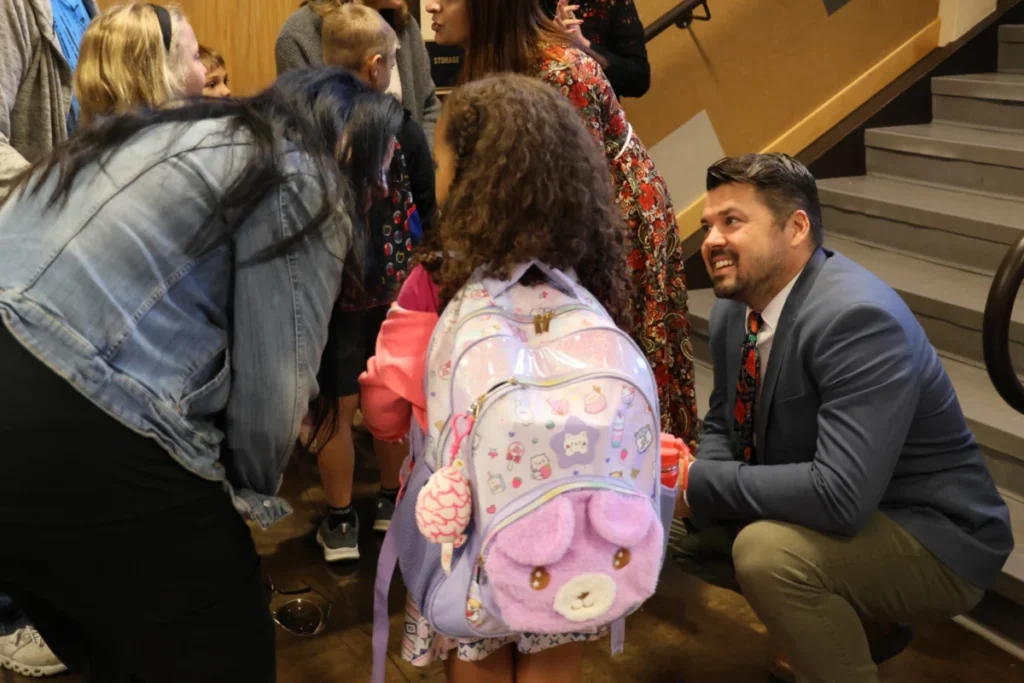
EVERSON, Wash. — For most elementary school students, the academic calendar is measured in milestones: the excitement of the first-day-of-school photo, the countdown to winter break, and the final bell signaling summer. But for Cam, a fifth-grader at Irene Reither Elementary School, the school year was defined by a starker metric.
When Tyler Dockins, principal of the Washington state elementary school, sat down with Cam and pulled up the child’s attendance history, he asked a simple question: "Do you know how many days are in a school year?"
Cam, who had missed between 30 and 40 days of school every single year since kindergarten, answered without hesitation: "180."
Dockins turned his computer monitor toward the boy, tracing the cumulative void of missing months across his educational timeline. "So, what do you think this means?"
Cam studied the screen quietly before looking up. "Basically, I’ve missed about a year of school."
Across the table, Cam’s mother absorbed the revelation. Like many parents caught in the daily grind of modern life, she admitted she had never looked at the macro-level impact of chronic absenteeism. Her son’s story is no longer an isolated cautionary tale; it is the catalyst for a fundamental culture shift that transformed Irene Reither Elementary from a school struggling with post-pandemic truancy into a national model for student engagement.
Chronology of a Crisis: From Compliance to Care
Like thousands of schools across the United States, Irene Reither Elementary—situated in the rural community of Everson—initially relied on the traditional playbook for handling chronic absenteeism. When students missed school, the administrative machinery kicked into gear: automated phone calls were dispatched, formal warning letters were mailed home, and absences were meticulously documented in state databases.
They followed every required compliance procedure. And nothing changed.
In the wake of the COVID-19 pandemic, the school’s attendance metrics mirrored a broader national crisis. Only 57% of Irene Reither’s students met Washington state’s benchmark for regular attendance. Beneath those numbers lay a complex web of modern barriers: acute mental health struggles, transportation deficits, housing instability, chronic illness, debilitating anxiety, and a profound sense of post-pandemic school disengagement.
"We faced the same barriers everyone else did," Dockins recalls. "Our automated responses were not effective. Those administrative practices matter for legal compliance, but they rarely change hearts."
The turning point arrived during that fateful meeting with Cam and his mother. As the conversation deepened, Cam’s mother shed light on the psychological roots of her decisions. Growing up, her own mother had forced her to attend school even when she was physically ill or emotionally overwhelmed—a memory that left lasting scars.
"I don’t want to be that mom," she confessed to Dockins.
Because her work schedule offered flexibility, whenever Cam expressed reluctance or resistance to going to school, she allowed him to stay home. Her choices were not born of neglect or apathy; they were rooted in maternal protection. In trying to shield her son from the rigid pressures of her own childhood, she had inadvertently erected an invisible barrier to his education, quietly eroding his future academic and social opportunities.
That moment of vulnerability reframed the school’s leadership philosophy. It mirrored the tenets espoused by author and researcher Brené Brown: Accountability is an act of care. It is neither about punitive measures nor public shaming; rather, it is about helping families confront reality while standing beside them as genuine partners to forge a different path forward.
With the implementation of regular check-ins and a straightforward self-monitoring attendance plan, Cam finished the academic year meeting the state benchmark for regular attendance. More importantly, his breakthrough forced the administration to ask a radical question: What if our entire approach to attendance is broken?
Supporting Data: A Turnaround Rooted in Systematic Change
Irene Reither Elementary decided to abandon the question that had guided public education for decades—“How do we get families to comply?”—and replace it with a radically supportive inquiry: “How do we build systems that help families succeed?”
The empirical results of this paradigm shift speak for themselves. Over the subsequent years, the school’s regular attendance rate climbed steadily:
- Post-Pandemic Baseline: 57% of students meeting state attendance benchmarks.
- Phase One Reform: Climbed into the low 60s.
- Phase Two Expansion: Reached the high 70s.
- Recent Academic Year: Hit an impressive 84%.
This dramatic upward trajectory was not achieved by magic, but through structural evolution across three core pillars:
1. Shifting Institutional Focus
Every two weeks, the school’s attendance team reviewed schoolwide trends before looking at individual student files. Instead of diagnosing what was "wrong" with a child or family, they interrogated their own operational structures. When barriers proved entirely insurmountable, they focused on minimizing the academic cost of missed learning.
2. Cross-Disciplinary Intervention Teams
The school dismantled administrative silos by creating a multi-disciplinary attendance task force. The team united school counselors, the school nurse, a bilingual attendance secretary, a family services coordinator (who also serves as the McKinney-Vento Homeless Assistance Act liaison), a cultural liaison, student support staff, and the principal. Each specialist brought distinct expertise—from pediatric health management to housing resources—allowing the school to view a child’s reality through a holistic lens and establish stronger communication loops with classroom teachers.
3. Districtwide Alignment
Success was amplified because the entire Nooksack Valley school district aligned around common definitions, shared data platforms, unified district goals, and consistent Multi-Tiered System of Supports (MTSS) practices. This coherence ensured families experienced a seamless support network rather than a confusing bureaucratic maze.
Official Responses and Operational Framework
To sustain these gains, Irene Reither Elementary structured its interventions into three distinct, proactive tiers, replacing reactive punishment with intensive support.
Tier 1: Culture and Prevention (Missing 0%–5% of School)
At the foundational level, the school focused on cultivating an undeniable culture of belonging. Attendance was actively celebrated in school newsletters, pep assemblies, and hallway bulletin boards. When students were absent, the school replaced cold notifications with "We miss you" video messages sent directly to families. Morning routines were overhauled to include welcome-back songs, daily name games, and personalized teacher greetings designed to make every child feel anticipated and valued.
Tier 2: Early Intervention (Missing 10% of School)
Rather than waiting for chronic absenteeism to solidify by mid-year, the school intervened within the first week of a student slipping off track. Every Tier 2 student was assigned a dedicated "case manager." Automated letters were entirely replaced by personal phone calls and direct text messages, paired with self-monitored student attendance plans that gave children agency over their own tracking.
Tier 3: Persistence and Intensive Support (Missing >15% of School)
For students facing severe, chronic absenteeism, the strategy shifted to relentless persistence. Every morning at 9:30 a.m.—once official attendance was finalized—the support team systematically called on every absent student in Tier 3.
When external barriers like transportation failures or catastrophic mornings threatened a child’s day, school staff took extraordinary steps. A staff member would personally drive to a student’s home in a district vehicle and transport them to class.
As Principal Dockins notes, these actions were executed with clear boundaries: they were never intended to become permanent crutches or to strip families of their foundational responsibilities. Instead, they delivered an unmistakable, visceral message: We are not giving up on you.
"One home visit says more than 10 attendance letters," Dockins reflects. "One ride to school tells a child, ‘You matter enough that we came looking for you.’"
Implications for Modern Public Education
The transformation at Irene Reither Elementary offers critical takeaways for school districts nationwide grappling with chronic absenteeism in the wake of societal shifts.
First, it highlights the limits of technocratic governance in education. While automated data systems and digital dashboards are essential for tracking metrics, they are fundamentally incapable of building trust. Truancy is rarely just an administrative infraction; it is frequently a symptom of social isolation, economic precarity, mental health distress, or generational trauma. Until schools treat absenteeism as an emotional and systemic challenge rather than a compliance failure, punitive measures will continue to alienate the families who need support the most.
Second, the Everson model demonstrates that systemic reform requires resource reallocation toward relational infrastructure. By empowering cross-functional teams—nurses, social workers, cultural liaisons, and administrators—schools can intercept crises before they compound into academic failure.
Finally, Cam’s story serves as a profound reminder for educators and parents alike. Chronic absenteeism steals from a child’s future one missed day at a time, often quietly accumulating until an entire year of potential learning has vanished. But as Irene Reither Elementary proved, when a school community decides to stop sending letters and start building bridges, attendance numbers cease to be mere data points—they become a testament to what is possible when a child realizes they are worth showing up for.