The Long Shadow: Evaluating the Persistent Crisis in American K-12 Education Four Years Post-Pandemic
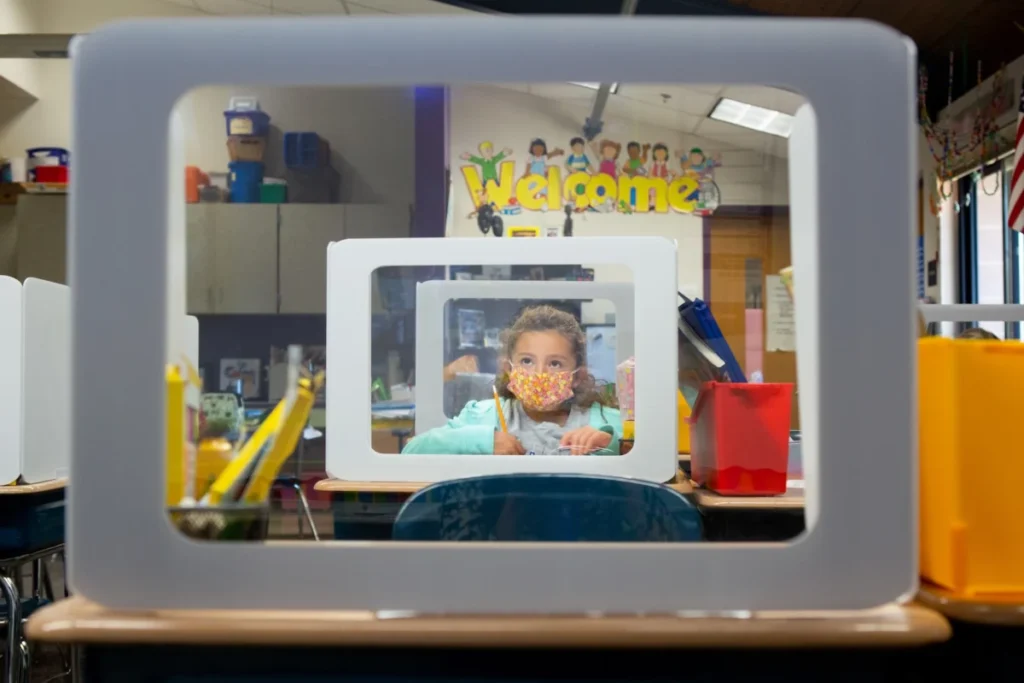
Four years after the global COVID-19 pandemic forced an unprecedented shuttering of American schools, the educational landscape remains in a state of precarious recovery. Despite the return to physical classrooms, the "new normal" is defined by systemic fragility, a widening achievement gap, and a chronic absenteeism crisis that threatens to derail the academic trajectories of a generation. A new synthesis of research, funded by the Center on Reinventing Public Education (CRPE) and the Walton Family Foundation, reveals that while schools are open, the foundational stability of the U.S. K-12 system has yet to be restored.
The State of the System: A Statistical Reality Check
The data from the 2024-25 school year paints a sobering picture of an education system struggling to find its footing. Chronic absenteeism—defined as missing 10% or more of the school year—has become a structural hurdle rather than an outlier. In 2024, approximately 23% of students were chronically absent, a significant jump from the 15% pre-pandemic benchmark. Alarmingly, this trend is universal; every one of the 50 states has failed to return to pre-pandemic attendance levels.
Academic performance metrics offer little consolation. According to the National Assessment of Educational Progress (NAEP), often referred to as "The Nation’s Report Card," proficiency in fourth-grade reading has slipped. In 2024, only 30% of fourth graders scored at or above the proficient level, a decline from 32% in 2022.
Perhaps most distressing is the state of the lowest-performing students. At the eighth-grade level, 34% of students scored "below basic" in reading. This figure represents the highest percentage of students in this category in the 32-year history of NAEP reading assessments. This stagnation suggests that the "learning loss" narrative, while accurate, does not fully capture the permanence of these setbacks. We are not merely looking at a temporary dip; we are observing a potential downward shift in the baseline of American educational attainment.
Chronology of a Lingering Crisis
The timeline of the current crisis is characterized by distinct phases of response, each of which has left its own set of complications.
- 2020–2021 (The Emergency Phase): Massive, abrupt closures and the rapid, often inequitable, shift to remote learning. During this period, the focus was entirely on continuity rather than quality.
- 2021–2022 (The Re-entry Phase): Schools reopened, but the focus shifted to health protocols, social distancing, and the initial, often optimistic, attempts at remediation. It was during this period that the first massive spikes in absenteeism began to crystallize.
- 2022–2023 (The Recovery Phase): Districts deployed federal stimulus funds toward high-impact tutoring and summer school. However, it became clear that "generic" interventions were insufficient for the scale of the trauma and learning loss.
- 2024–Present (The Sustainability Crisis): Federal funding has largely dried up, and the focus has shifted to maintaining programs in a landscape of fiscal tightening. The current phase is defined by the realization that the pandemic’s impacts were not uniform—they disproportionately affected the most vulnerable student populations.
Intersecting Challenges: Why Existing Strategies Fail
The research synthesis commissioned by the CRPE highlights a critical disconnect: the strategies currently employed by many school districts are mismatched with the complexity of the current crisis.
Historically, districts have treated absenteeism and academic performance as two separate silos. However, the evidence suggests they are deeply intertwined. Students who are chronically absent are often navigating a web of non-academic stressors—family caregiving responsibilities, lack of reliable transportation, mental health crises, and a general erosion of school-to-home trust.
In low-income districts, these intersections are most visible. These areas have seen the most drastic increases in absenteeism and, consequently, the slowest rates of recovery in math and reading. When a student is absent due to a systemic issue (such as the lack of a reliable bus route or a parent working two jobs), a school’s automated "nudge" letters or standard truancy interventions are not only ineffective—they are often alienating.
Furthermore, many districts are operating in the dark. A recurring finding in the 2024 research is the absence of integrated data systems. Educators are often unable to track a student’s specific needs alongside their progress, making it impossible to evaluate whether a particular intervention (like a tutoring program) is actually working for a specific child.
Leadership as the Final Frontier
While the challenges are systemic, the research suggests that human capital remains the most important variable. District leaders and school principals who have managed to sustain progress share a common trait: they acted as agile problem-solvers rather than mere administrators.
Successful schools were those where leaders treated the post-pandemic environment as an opportunity for reinvention rather than a return to 2019. By acting as advocates for their schools, these leaders secured alternative funding streams and maintained high-impact tutoring programs even after federal relief funds (ESSER) expired. They cultivated cultures of continuous improvement where data was used to pivot strategies in real-time, rather than just as a tool for state reporting.
Implications for Future Policy
The path forward, according to the Evidence Project, requires a departure from "business as usual." For policymakers, the recommendations are threefold:
1. Advanced Data Infrastructure
Districts must move beyond basic attendance and test score tracking. The next generation of educational data systems must integrate social-emotional indicators, attendance barriers, and intervention efficacy. Policymakers must prioritize funding for the technological and human infrastructure required to make data actionable for teachers on the ground.
2. Tailored, Ambitious Interventions
The "one-size-fits-all" approach to learning recovery has reached its limit. Future interventions must be as complex as the students they serve. This means providing wraparound services that address the root causes of absenteeism, such as integrated mental health support and flexible scheduling, rather than relying solely on extra hours of instruction.
3. Sustainable Financial and Leadership Models
The reliance on temporary grants for critical recovery services creates a "cliff" that many districts are now falling off. Moving forward, state and federal budgets need to bake effective recovery strategies into the base funding of education. Furthermore, there is a dire need for leadership development programs that prioritize resilience, data literacy, and community advocacy, ensuring that the next generation of principals is equipped to handle long-term, structural crises.

Conclusion: A Call for Reinvention
The data is clear: the pandemic did not just disrupt education; it broke the mechanisms that allowed the system to serve its most vulnerable students. While there are pockets of success, the overarching trend is one of stalled progress.
The research conducted by the CRPE and the Walton Family Foundation serves as both a diagnosis and a call to action. We are past the point where simple, temporary fixes will suffice. To address the persistent achievement and attendance gaps, the educational system must undergo a period of fundamental reinvention. This requires moving away from the rigid structures of the past and toward a more flexible, data-informed, and student-centered model that recognizes that academic success is impossible without addressing the holistic well-being of the student.
The work of recovery is far from finished. It is, in many ways, just beginning. As the final reports from the 2024 Evidence Project are synthesized, it is clear that the "unfinished work" of the pandemic is the most important project in American education today. Failure to address these systemic issues now risks cementing a permanent divide in the educational outcomes of American youth.