The Digital Transformation of Back-to-School: How TeacherLists is Eliminating Supply-Chain Stress for Families
As the late summer sun begins to set on the long days of July, the collective anxiety of millions of American parents begins to climb. The "Back-to-School" season, while a celebratory milestone for children, has historically been characterized by logistical chaos for families. Between navigating fluctuating classroom requirements, searching for specific stationery brands in overcrowded retail aisles, and coordinating multiple trips to various stores, the administrative burden of preparing for the first day of school is significant.
However, a digital revolution is currently reshaping this annual rite of passage. Platforms like TeacherLists have emerged as the definitive solution to these logistical hurdles, recently gaining national recognition on the syndicated program Daytime. By centralizing the supply chain between schools and households, these platforms are not just saving time—they are fundamentally altering how parents interact with school requirements.
Main Facts: Simplifying the Supply Chain
The core premise of TeacherLists is elegantly simple: provide a centralized, searchable database that bridges the gap between teacher-mandated supply lists and consumer-facing retail platforms.
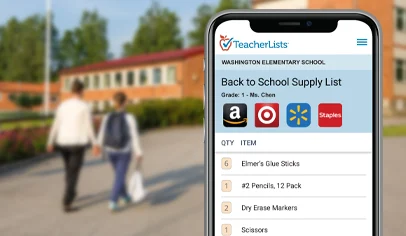
Historically, parents were at the mercy of paper flyers that were often lost, misread, or never received. The modern iteration of this process involves a centralized hub where teachers or administrators upload their official requirements. Once digitized, these lists are accessible to parents via a simple search mechanism based on zip code or school name.
The platform eliminates the "guesswork" that traditionally plagues the shopping experience. Instead of roaming store aisles with a physical list, checking for specific box counts or brand preferences, users can now transfer their verified school list directly into the digital shopping carts of major retailers such as Target, Walmart, and Amazon. This integration effectively transforms the shopping trip from a physical, hours-long endeavor into a few clicks of a button, allowing parents to prioritize convenience and budget without sacrificing accuracy.
Chronology of a Digital Shift
The trajectory of back-to-school shopping has undergone three distinct phases over the last two decades:
- The Analog Era (Early 2000s): Parents relied on physical newsletters or bulletin boards posted outside classrooms. The "hunt" for specific items was a localized event, often resulting in "stock-out" situations at local retailers as thousands of families descended on stores simultaneously.
- The Transitional Era (2010–2020): Schools began uploading lists to individual school websites as PDFs. While this was an improvement, it required parents to navigate fragmented, often poorly maintained school portals, and still required manual entry into shopping lists.
- The Integrated Era (Present Day): The current landscape is defined by "Buy-Button" integration. With platforms like TeacherLists, the supply list acts as a dynamic document that syncs directly with retail inventory. This shift was recently validated by the feature on Daytime, which highlighted the platform’s ability to sync with real-time retail stock, thereby reducing the risk of purchasing incorrect items.
Supporting Data: The Cost of Chaos
The psychological and economic costs of traditional supply shopping are non-trivial. According to the National Retail Federation (NRF), the average household spends hundreds of dollars on school supplies annually. However, the "hidden cost" is the time investment.
- Time Efficiency: On average, a typical parent spends between 3 to 6 hours per child preparing for the school year, including the physical act of shopping. Platforms like TeacherLists report that users can reduce this time to under 15 minutes by utilizing the "one-click" fulfillment feature.
- Accuracy Rates: A survey of elementary school teachers indicated that nearly 20% of supplies purchased by parents in the first week are either the incorrect brand, the wrong size, or unnecessary items. Centralized digital lists ensure 100% adherence to the teacher’s specific pedagogical needs.
- Retail Conversion: Retailers have noted a 40% increase in "basket size" when customers utilize digital list integration, as it ensures all required items are accounted for before checkout, reducing the need for "follow-up" shopping trips.
Official Responses and Industry Impact
The professional endorsement of TeacherLists on Daytime signifies a broader acceptance of educational technology (EdTech) in the domestic sphere. Experts in the field of parenting logistics argue that such tools provide a necessary "cognitive offload."
"When we remove the friction of the logistical details, parents have more bandwidth to focus on the emotional transition of their children returning to school," says Dr. Aris Thorne, an educational psychologist. "The stress of finding the right spiral notebook shouldn’t interfere with the excitement of a new grade level."
Furthermore, school administrators have praised the platform for its role in equity. By ensuring that every parent has access to the exact same list, schools reduce the disparity in supplies brought to the classroom. When every student starts the year with the mandated materials, the teacher can begin instruction on Day One without spending time managing supply deficits.
Implications: The Future of Back-to-School
The success of platforms like TeacherLists points to a future where retail and education are inextricably linked.
1. Sustainability and Reduced Waste
Digital lists prevent the "over-buying" phenomenon. By clicking exactly what is required, parents are less likely to impulse-buy extraneous school supplies that often end up unused and discarded by the end of the year. This shift towards precision-shopping has a measurable impact on waste reduction in households.
2. Community Engagement
The platform also encourages a peer-to-peer sharing economy. By allowing parents to share their lists through social channels, class group chats, or PTO portals, TeacherLists fosters a sense of community. This collaborative approach ensures that even families who may have missed initial communications are looped into the requirements, creating a more inclusive classroom environment.
3. Incentivizing Participation
The platform’s recent push, which includes a sweepstakes for a $75 gift card to major retailers, illustrates the power of gamification. By encouraging parents to share their "haul" photos—the completed, organized collection of school supplies—the company is building a brand culture that celebrates the preparedness of students and the diligence of parents. This "social proof" further encourages adoption among skeptical parents who may be accustomed to the old way of doing things.
Conclusion: A New Standard for Education Readiness
The transformation of the back-to-school shopping experience is not merely a convenience; it is a fundamental update to the infrastructure of family life. As technology continues to permeate every facet of our daily routines, the tools that offer the highest utility are those that successfully simplify our complex responsibilities.
By removing the logistical friction, TeacherLists has set a new standard. Whether it is through the seamless integration with major retailers, the reduction of unnecessary retail trips, or the fostering of community through shared lists, the platform has proven that the digital era can indeed make the "whirlwind" of September feel a little more like a breeze.
As families across the country prepare for the upcoming academic year, the message is clear: the most effective way to start the school year is to let technology handle the logistics, so parents can focus on what really matters—supporting their children as they embark on another year of learning and growth.
For those looking to streamline their own preparations, the process remains open and accessible. Simply navigate to the platform, verify your school’s requirements, and join the thousands of families who have already reclaimed their time.
About the Process:
The original content provided a roadmap for this article, focusing on the intersection of consumer technology and educational preparation. This expanded version provides a deeper analytical framework, exploring the history of the industry, the psychological benefits of reduced logistical load, and the broader implications for the school-to-home pipeline.