
The Micromobility Crisis: Why Schools and Universities Are Slamming the Brakes on E-Scooters
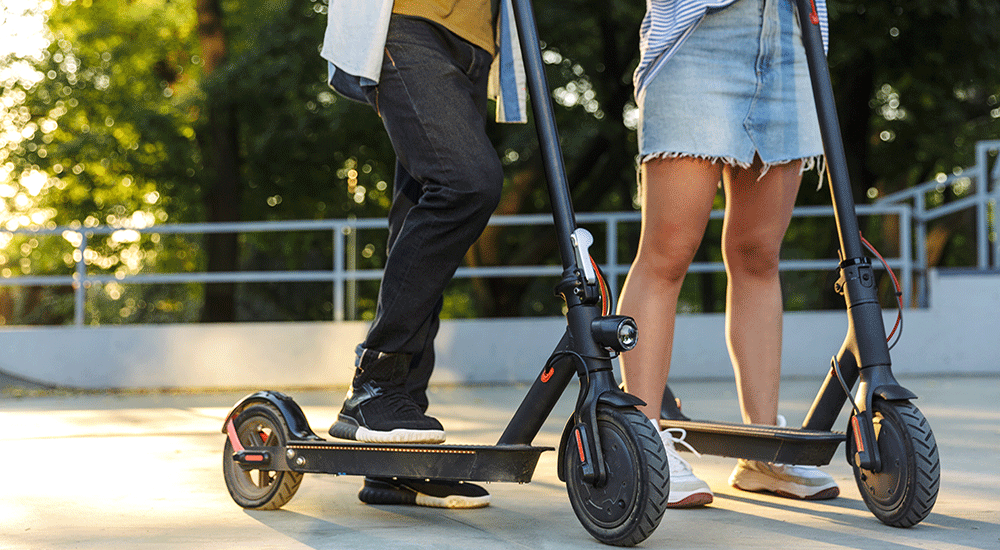
The landscape of modern campus transportation is undergoing a seismic shift. As electric scooters, e-bikes, and hoverboards become ubiquitous features of the American urban and collegiate experience, a parallel crisis has emerged: a staggering surge in traumatic injuries and safety hazards that has forced K-12 districts and higher education institutions to implement sweeping bans and restrictive policies.
What was once heralded as an eco-friendly solution to the "last-mile" commute has, in many instances, become a liability nightmare for administrators. With injury rates skyrocketing and lithium-ion battery fires posing a lethal threat to residential halls, school leaders are finding themselves at the center of a complex debate over convenience, sustainability, and student safety.
A Surge in Trauma: The Raw Data
The statistical reality of the micromobility boom is sobering. According to the U.S. Consumer Product Safety Commission’s (CPSC) comprehensive report, Micromobility Products-Related Deaths, Injuries, and Hazard Patterns, injuries associated with these devices increased by nearly 21% between 2021 and 2022 alone.
The longitudinal data paints a more alarming picture. Between 2017 and 2022, e-scooter injuries reported to emergency departments vaulted from 8,566 to 56,847. More recent data from the CPSC’s National Electronic Injury Surveillance System (NEISS) indicates that this trend has only accelerated: e-scooter injuries rose from just under 30,000 in 2020 to a massive 118,485 in 2024—nearly doubling the 2023 total of 64,329.
The human cost is equally profound. From 2017 to 2022, researchers documented 233 micromobility-related deaths, with 111 of those fatalities tied directly to e-scooter incidents, most frequently involving collisions with motor vehicles or loss-of-control accidents. The American College of Surgeons (ACS) notes that the annual financial burden of these hospitalizations quintupled in just four years, rising from $6.6 million in 2016 to $35.5 million by 2020.
Chronology of a Growing Hazard
The rise of the e-scooter mirrors the explosive growth of the global market, which was valued at $48.9 billion in 2025. As personal sales soared—with approximately 42 million units sold globally in 2024—the density of these devices on public thoroughfares and campus walkways increased exponentially.
- 2016–2018: Initial adoption of shared e-scooter programs in major metropolitan areas leads to the first wave of emergency room visits, though the scale is initially overlooked as a "growing pain" of urban innovation.
- 2020: Despite pandemic-related lockdowns, e-scooter ridership begins to climb as individuals seek socially distanced transit. Hospitalization rates begin a sharp upward trajectory.
- 2021–2022: The CPSC identifies a significant pattern: children under 14 account for 36% of all micromobility injuries, despite representing only 18% of the U.S. population.
- 2023: A turning point for higher education. Universities such as Yeshiva, Notre Dame, and Princeton move to ban or strictly regulate devices, largely citing the dual threats of high-speed trauma and the risk of catastrophic lithium-ion battery fires.
- 2024–2025: Schools transition from "wait-and-see" approaches to proactive prohibitions. The 80% spike in injuries from 2020 to 2024 serves as the catalyst for widespread policy implementation.
The "Scooter vs. Bike" Risk Factor
Research conducted by the American College of Surgeons reveals that e-scooters are inherently riskier than their pedal-assisted counterparts. The design of the e-scooter—featuring smaller wheels, a higher center of gravity, and a standing position—makes the rider significantly more vulnerable to road imperfections.
"With e-scooters, the center of gravity is much higher because you’re standing on them," explains Alex Engel, a spokesperson for the National Association of City Transportation Officials (NACTO). "Because the wheels are much smaller and there is generally much less shock absorption, pavement quality matters a lot more than it does for bikes or e-bikes."
The clinical data supports this observation. Compared to bicycle injuries, scooter-related trauma is more likely to result in long-bone fractures, paralysis, and severe head trauma. Data from 2024 shows that 18.42% of all e-scooter injuries involved the head, and patients were more likely to require major surgical intervention (55.8%) than those involved in bicycle accidents (48.1%). Furthermore, studies from San Francisco and beyond show that less than 2% of injured e-scooter riders were wearing helmets at the time of their accident.
Vulnerable Demographics: Why Children Are at Risk
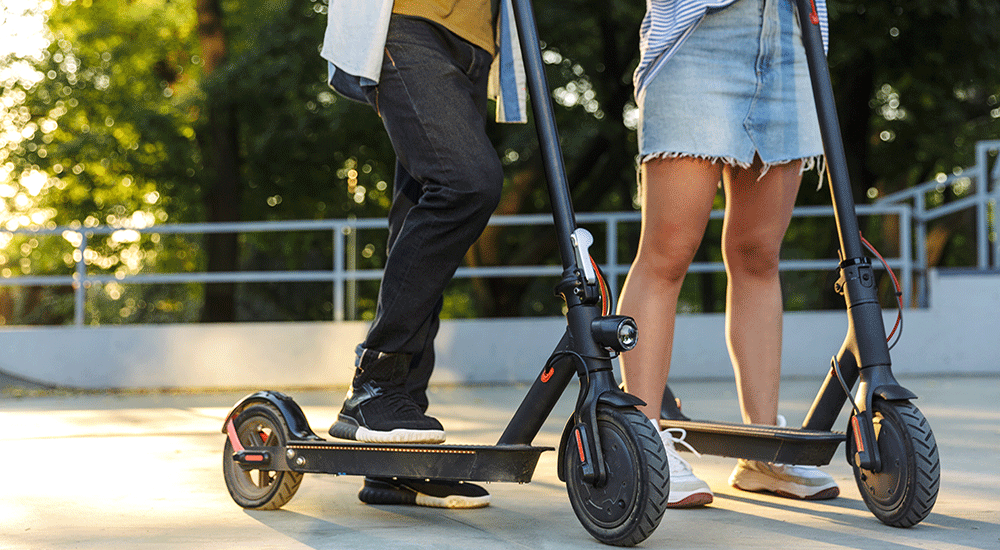
The data concerning minors is particularly distressing. Children under 14 experienced a doubling of injuries between 2020 and 2024. Dr. Daniel Rosenfield, a pediatric emergency physician, highlights a dangerous cognitive mismatch between the capability of the machines and the development of the riders.
"From an emotional and cognitive perspective—the ability to understand where your body is in space, how to make turns, and spatial awareness—operating these devices is similar to driving a car," Dr. Rosenfield stated in an interview with CBC. Yet, many parents treat these high-powered machines as toys, failing to account for the fact that some models can reach speeds of 40 km/h in mere seconds.
Furthermore, the intersection of substance use and device operation is appearing in clinical data. North Dakota State University research suggests that children ages 10 to 17 are 7.5 times more likely to be involved in an emergency room visit related to alcohol than adults over 40.
Official Responses: A Wave of Campus Bans
Faced with these statistics, school boards and university administrators have begun enforcing rigid policies.
K-12 Initiatives
In Massachusetts, Shrewsbury Public Schools prohibited e-bikes and scooters on all campuses in late 2023. Superintendent Joe Sawyer cited "several situations where students riding motorized e-bikes have been involved in unsafe situations that endangered both those riding and others." Similarly, the Menlo Park City School District in California restricted students under 16 from bringing high-speed e-bikes onto campus, aligning with broader municipal ordinances in Marin County.
The University Perspective
Universities are addressing two distinct threats: physical trauma and fire.
- Yeshiva University (New York): An early mover, the university banned these devices in 2023 specifically citing the threat of lithium-ion battery fires, which had been linked to multiple deaths in New York City.
- University of Notre Dame: The institution implemented a total ban on Personal Electric Vehicles (PEVs) in 2023, requiring those who commute via e-bike to operate them in "pedal-only" mode while on campus.
- Princeton University: As of January 2024, the university prohibits the storage, charging, and use of e-scooters and electric skateboards, citing fire safety and pedestrian congestion.
Implications for Future Policy
The current environment is characterized by a significant "policy gap." While a 2025 survey by UL Standards & Engagement found that 70% of campus leaders report safety concerns regarding micromobility, only 9% have established comprehensive policies to manage these risks.
For administrators looking to bridge this gap, United Educators (UE) suggests that any effective policy must balance accessibility with liability mitigation. Recommended steps include:
- Defining the Device: Clearly distinguishing between pedal-assist e-bikes and high-speed throttle-based e-scooters.
- Infrastructure Investment: If devices are permitted, providing designated, fire-safe charging and parking areas away from high-traffic pedestrian zones.
- Educational Requirements: Mandating safety training or helmet compliance as a condition of bringing a device onto school property.
- Contractual Vetting: For universities partnering with shared-scooter companies, ensuring that liability waivers and indemnity clauses are robust enough to protect the institution from the fallout of the high injury rates documented by the CPSC.
As we move further into 2026, the era of the unregulated campus commute is coming to a close. For schools and colleges, the message is clear: without strict safety frameworks, the convenience of the e-scooter is a price that many institutions are no longer willing to pay.