The Crisis of Confidence: How No-Confidence Votes Are Reshaping the Higher Education Landscape
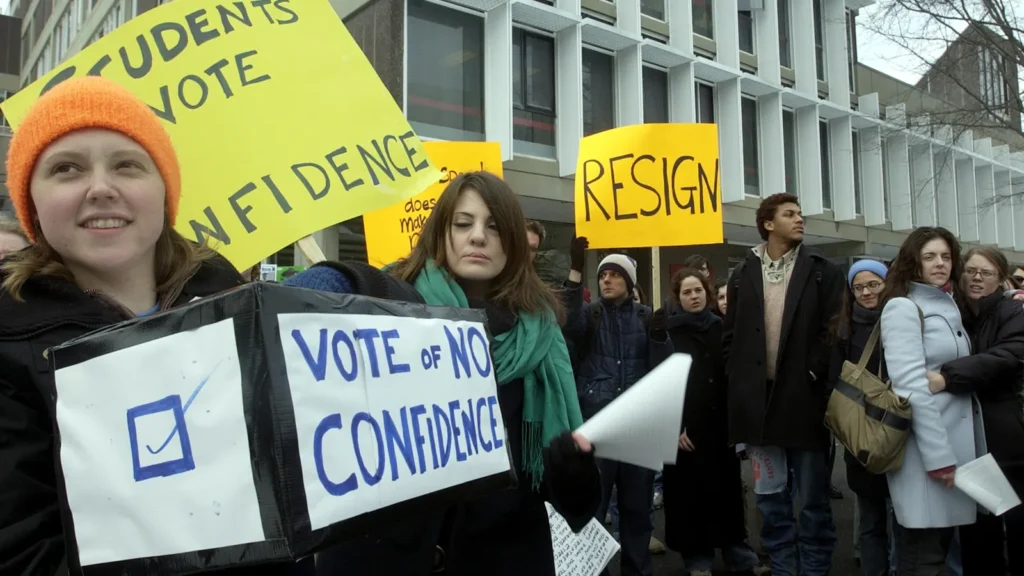
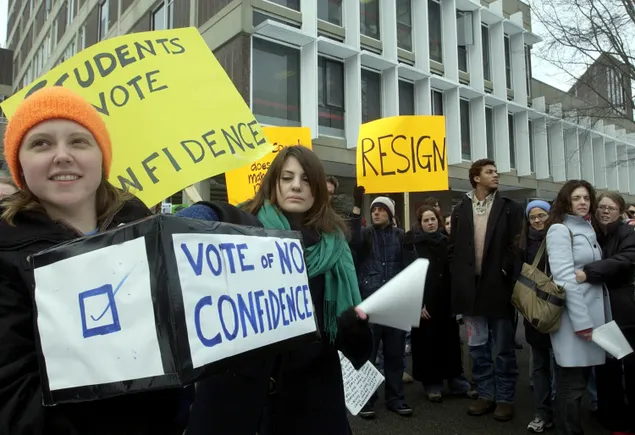
In the quiet corridors of academia, a potent instrument of protest has become increasingly loud: the no-confidence vote. Across the United States, faculty senates and professional associations are leveraging these symbolic—yet often career-ending—measures to challenge university leadership as institutions grapple with mounting financial deficits, political polarization, and the systemic erosion of shared governance.
The recent turmoil at the University of Nebraska-Lincoln (UNL), where faculty members passed a historic no-confidence measure against then-Chancellor Rodney Bennett, serves as a bellwether for a broader trend. What began as internal frustration over proposed program cuts and budgetary restructuring culminated in the sudden resignation of a high-profile administrator. This pattern, however, is not an isolated anomaly. It is a recurring narrative that mirrors the experiences of faculty at institutions ranging from West Virginia University to regional colleges struggling under the weight of demographic shifts and declining enrollment.
A Chronology of Conflict: From UNL to the National Stage
The descent into open conflict at UNL was neither rapid nor unheralded. Last year, faculty began sounding the alarm as Chancellor Bennett introduced a suite of aggressive program cuts intended to bridge a persistent budget deficit. Despite public meetings, organized press conferences through the American Association of University Professors (AAUP), and the presentation of alternative fiscal strategies to academic advisory committees, the administration proceeded with its plans.
When dialogue failed, faculty took the unprecedented step of passing a no-confidence vote. The political fallout was swift: less than two months after the governing board ratified the program eliminations, Bennett announced his resignation.
This sequence of events is strikingly similar to the crisis at West Virginia University (WVU), where, two years prior, faculty cast a vote of no confidence in President Gordon Gee. The catalyst in both instances was the same: a top-down mandate for program reduction that bypassed traditional faculty input, triggering a collapse in institutional trust.
The Academic Autopsy: Analyzing the "No Confidence" Phenomenon
To understand the mechanics and consequences of these votes, former college presidents Michael Nietzel and Charles Ambrose have authored a comprehensive study titled, No Confidence: When College Faculty Turn Against Their Presidents.
Nietzel, president emeritus of Missouri State University and former provost at the University of Kentucky, and Ambrose, a former president of the University of Central Missouri and current consultant at Husch Blackwell, argue that these votes are far more than mere theatrical gestures. By examining 75 documented cases of no-confidence votes spanning several decades, the authors provide a rigorous look at the psychological, political, and financial drivers behind these institutional fractures.
Data and Dynamics
The research reveals a startling correlation: over 50% of college presidents who face a no-confidence vote depart from their positions within 12 to 15 months. According to Nietzel, the votes are often the "terminal event" of a much longer period of ignored communication. "While there may be a trigger—a specific policy change or a budget announcement—there are events that preceded that trigger that made the faculty more willing to act aggressively," Nietzel explains.
Ambrose notes that for some presidents, a no-confidence vote is mistakenly viewed as a "badge of honor"—a sign that they are making the "hard decisions" necessary for progress. However, this mindset often blinds leaders to the human cost of their policies. "I really became incredibly sensitive and empathetic to faculty leadership," Ambrose says. "Not only the emotional toll it takes when considering no-confidence votes, but the time, the effort, and the genuine struggle to protect the institution."
The Erosion of Shared Governance
Central to the increase in no-confidence votes is the steady decline of shared governance—the traditional model of academic decision-making where faculty have a meaningful voice in the institution’s trajectory.
Nietzel points out that faculty increasingly feel their "backs are against the wall." This feeling is compounded by legislative efforts to curtail the power of faculty senates and the widespread trend of marginalizing faculty expertise in financial matters. "The erosion of tenure is one of those forces, as is a tendency to marginalize them in institutional decision-making," Nietzel observes.
The authors argue that when universities face financial distress, transparency is often the first casualty. At many institutions, faculty are kept in the dark regarding the true extent of fiscal woes until a crisis forces a sudden, traumatic announcement of layoffs or program closures. This lack of transparency, according to Ambrose, is a "choice." By failing to integrate faculty into the budgeting process, administrators squander the "wealth of knowledge" that academic staff possess regarding the institution’s operations and potential for revenue.
Official Recommendations: A Path Toward Stability
Nietzel and Ambrose propose a shift toward a "learning model" of governance, where faculty and administrators collaborate on fiscal realities before they reach the point of crisis. Their recommendations include:
- Faculty Representation on Boards: The authors argue that governing boards should include faculty representatives. While some presidents fear this will lead to "self-interest," Nietzel counters with anecdotes of faculty serving with distinction and high-level fiduciary responsibility on boards of trustees.
- Institutionalized Budgetary Collaboration: Universities should establish permanent budget committees consisting of faculty, students, administrators, and the CFO. Regular, transparent reporting to the university senate ensures that when austerity measures are necessary, the community is informed rather than blindsided.
- Deliberate Transparency: Transparency must be extended to all stakeholders—staff, community members, and contractors. The authors contend that the more information is shared, the more leverage the university has to effect necessary change through consensus rather than coercion.
Implications for the Future of Higher Education
As the sector faces a "perfect storm" of rising costs, political scrutiny, and declining public confidence, the frequency of no-confidence votes remains a wildcard.
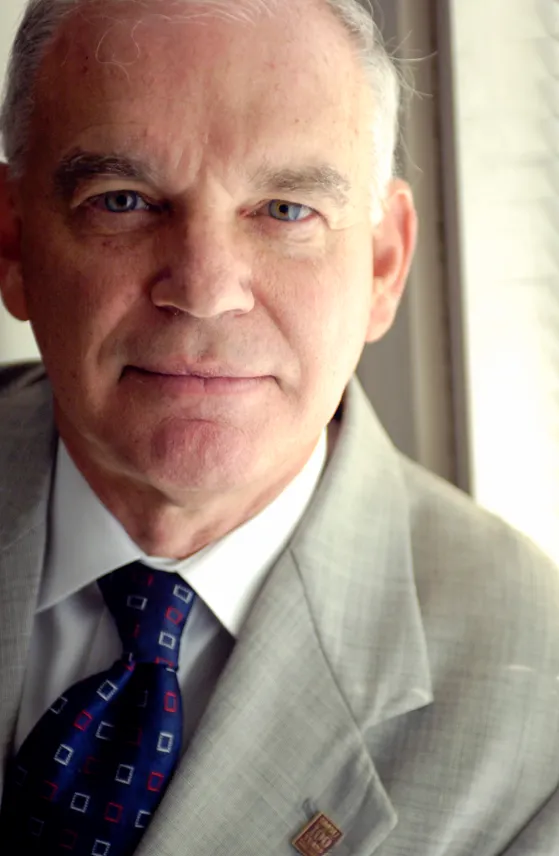
"I’m not sure which way this will cut," says Nietzel regarding future trends. While high-profile issues like athletics spending will continue to act as lightning rods for faculty anger, there is also a sense of caution. Faculty may be hesitant to pile onto institutional leaders during a time when higher education is under fire from external political forces.
Conversely, Ambrose suggests the target of these votes may shift. "There’s a chance that we may see more no-confidence votes considered against boards," he notes. "Faculty may just not have confidence that their boards can carry the water for making good decisions."
The Human Toll
Ultimately, the authors emphasize that no-confidence votes represent a failure of the "total human experience" within an institution. Even when program cuts are mathematically necessary to save a "broken" institution—as Ambrose experienced during his tenure at Henderson State University—the process of displacement creates lasting trauma.
"When you displace people out of livelihood and work, and in many ways careers, it’s really almost impossible to avoid the human trauma," Ambrose admits.
For university leadership, the lesson is clear: in an era of scarcity, the traditional top-down administrative style is increasingly unsustainable. Without a commitment to shared governance, radical transparency, and a genuine effort to align the faculty with the institution’s survival strategy, presidents will continue to find themselves on the losing side of a vote that marks the end of their leadership. The future of the American university may well depend on whether the divide between the boardroom and the classroom can be bridged before the next crisis hits.