
The Quiet Revolution: Rethinking AI’s Role in Mathematics Education

In the landscape of modern educational technology, few visions have been as ambitious—or as scrutinized—as the promise of an AI tutor for every student. From the high-profile development of Khanmigo, a collaboration between Khan Academy and OpenAI, to the myriad of startups attempting to replicate the nuance of human instruction, the goal is clear: to put the equivalent of a world-class tutor in every student’s pocket.
However, as a recent New York Times report highlighted, this vision is fraught with the "growing pains" of complex development. Attempting to build an AI that can replicate the pedagogical sensitivity of a veteran educator is not just a technological challenge; it is a logistical and financial one. While the industry fixates on the "Goldilocks zone"—finding the perfect balance between context and cost—a more practical, immediate, and arguably more impactful use for AI in mathematics is already unfolding in the shadows of the classroom: the AI-as-assistant model.
The Reality of Math Instruction: Why Spoken Feedback Fails
To understand why AI is changing the game for families and educators, one must first confront the structural limitations of the modern math classroom. As a former physics teacher turned parent, I have observed that learning styles are rarely one-size-fits-all. Many students, including my own son, possess a high degree of "visual-written" literacy—they retain information they read, but struggle to process information that is delivered primarily through spoken explanation.
In a typical secondary school math class, instruction is often a rapid-fire sequence of spoken lectures paired with abstract symbols on a whiteboard. The critical "connective tissue"—the words that explain the why behind the how—often remains unwritten. In elementary math, this is manageable. By the time a student reaches Algebra 2 or Calculus, however, the procedures become so complex that the absence of written, logical scaffolding creates a profound learning gap.
Furthermore, the modern teacher is tasked with an impossible workload. Managing a classroom of 30 to 35 students, each with unique misconceptions, makes the act of providing personalized, written feedback on every line of an algebraic equation a logistical impossibility. When that feedback is limited to "see me after class" or a quick verbal correction, the student who struggles with auditory processing is left behind.
A Chronology of the Shift: From Frustration to Integration
The journey toward integrating AI into the home learning environment often begins with the exhaustion of traditional methods.
- September: The school year commences. My son, struggling to reconcile the gaps between his teacher’s preferred methods and the textbook’s standard explanations, begins to fall behind. We spend evenings attempting to reverse-engineer his homework.
- October–December: The "Herculean effort" begins. As a parent, I find myself acting as a translator, manually writing out explanations to bridge the gap between his classwork and his understanding. The hours are long, the tension is high, and the cognitive load on both student and parent is unsustainable.
- January: We engage a formal, human tutor. While the tutor is professional and kind, the pedagogical structure remains identical to the classroom: high-quality verbal instruction that evaporates the moment the session ends.
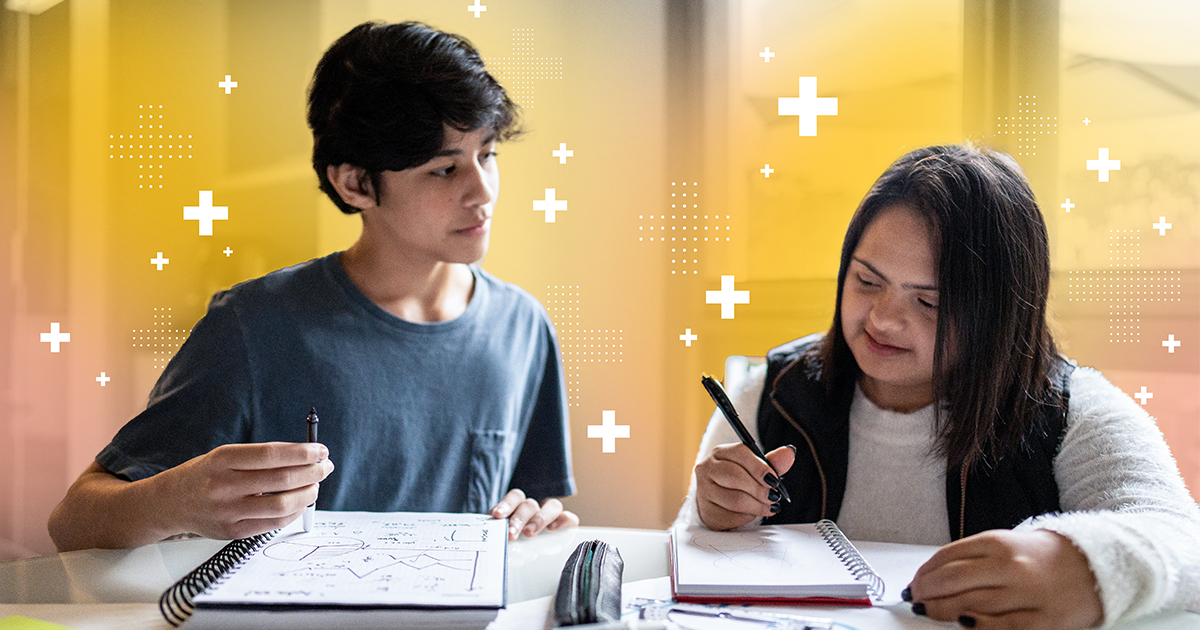
- February–Present: We pivot to an "adult-in-the-loop" AI model. By positioning AI as a tool for us—the adults—to facilitate his learning, rather than an independent tutor for the child, the dynamic shifts entirely.
Supporting Data: Why "Adult-in-the-Loop" Works
The efficacy of this model relies on three distinct technological strengths:
- Optical Character Recognition (OCR) and Analysis: AI can now ingest handwritten work via photo upload. It does not just solve the problem; it identifies the specific point of failure in a multi-step equation. This allows for pinpoint feedback that a teacher, grading 150 papers a night, simply cannot provide.
- Pedagogical Scaffolding: Rather than providing a "cheat code" or the final answer, AI can be prompted to provide the "next step" or to explain a concept using analogies tailored to the student’s specific interests.
- Targeted Practice Generation: Finding problems that match a specific curriculum’s difficulty level is a notorious time-sink for educators and parents. AI can generate an infinite array of practice problems at a specific, needed level of complexity, complete with worked-out solutions for the parent to verify.
Official Perspectives: The Industry’s "Goldilocks" Dilemma
The industry at large remains split on how to deploy these tools. OpenAI and Khan Academy, through their work on Khanmigo, are aiming for the "Holy Grail": an AI that maintains the tone and rapport of a human mentor. This is a monumental task involving massive data training and high latency costs.
Critics argue that by aiming for the "Human Tutor in a Box," these organizations are ignoring the immediate, low-hanging fruit of the "Assistant" model. Educational theorists note that the "human element" of teaching—the emotional support, the classroom management, and the intuition regarding a student’s bad day—is not something that can be scaled through a Large Language Model (LLM).
Official responses from school districts regarding AI generally fall into two camps: the "Ban and Protect" approach, fearing academic integrity issues, and the "Experimental Integration" approach, which focuses on teacher productivity. The latter is gaining ground as teacher burnout rates reach historic highs.
Implications for the Future of Education
The most significant implication of this shift is the realization that AI does not need to be a replacement for the human authority figure to be revolutionary.
1. The Redefinition of Teacher Productivity
If teachers can use AI to draft personalized explanations for the most common mistakes found in a set of algebra quizzes, they gain back hours of time. This time can be reinvested in the one thing AI cannot do: direct, face-to-face intervention with students who are struggling emotionally or behaviorally.
2. The Empowerment of the "Home-School" Connection
Parents are often the missing link in a student’s success. When parents are equipped with AI tools to help their children, they become partners in the learning process rather than just supervisors of homework completion. This creates a more consistent learning environment between the school and the home.
3. Ethical and Developmental Constraints
We must acknowledge the danger of unsupervised AI usage. A 15-year-old, when left alone with an AI, is susceptible to the temptation of "shortcut behavior." This is why the "adult-in-the-loop" model is not just a preference; it is a necessity for cognitive development. The goal of mathematics is to build internal mental models, not to outsource the thinking process to a machine.
Conclusion: A Practical Path Forward
The discourse surrounding AI in education has been too focused on the "Teacher vs. Robot" narrative. This is a false dichotomy. The true potential of AI lies in its ability to handle the "valuable but non-scalable" aspects of education.
We do not need a world where every student has a robot tutor. We need a world where every teacher, tutor, and parent has an AI assistant that can parse complex data, generate targeted practice, and provide the written feedback necessary for a student to truly grasp the logic of mathematics.
By embracing this middle ground, we move away from the hype of "AI as a savior" and toward the reality of "AI as an accelerator." We do not have to pretend that AI solves the human work of teaching. We only have to acknowledge that it can provide the structural support that makes that human work more effective, more efficient, and ultimately, more successful. The revolution in math education will not be an AI tutor in every pocket—it will be an AI assistant behind every desk, enabling the humans in the room to focus on what matters most: the student.