Bridging the Divide: How the School for Ethics and Global Leadership is Revolutionizing Classroom Discourse
By the Editorial Staff
Published in Education & Society Insights
Main Facts
In an era defined by hyper-polarization, navigating a difference of opinion on almost any subject—from geopolitics to social policy—frequently risks emotional outbursts, fractured relationships, and toxic standoffs. Nowhere is this tension more palpable than in modern classrooms, where educators are increasingly hesitant to introduce controversial topics for fear of igniting volatile classroom dynamics.
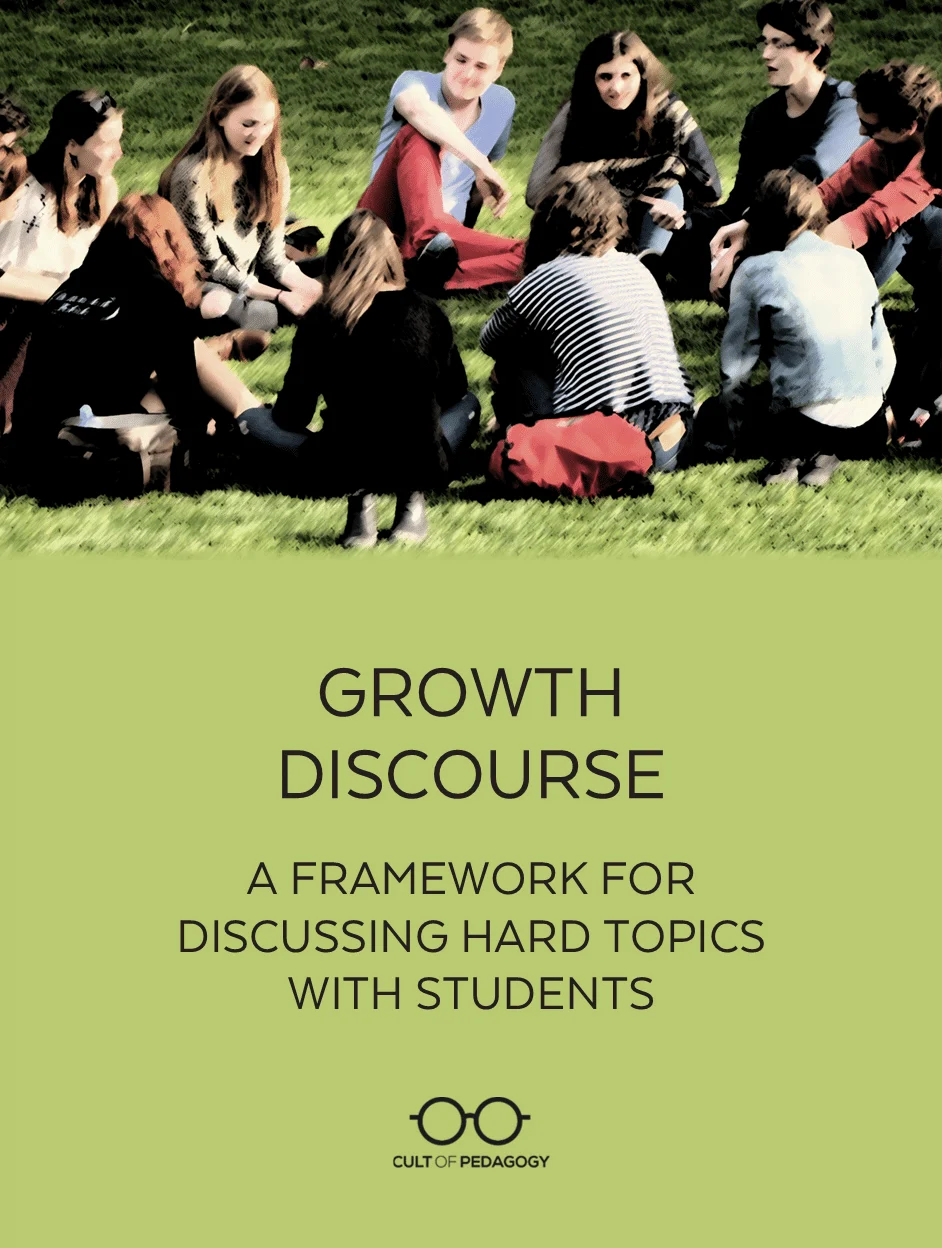
Enter the growth discourse framework, a pedagogical model developed by the School for Ethics and Global Leadership (SEGL). Designed for high school juniors participating in SEGL’s semester-long residential program, the framework deliberately shifts the paradigm away from merely keeping discussions "nice" or civil. Instead, it equips students with the critical thinking, emotional resilience, and structural guidelines required to transform deep disagreements into vehicles for personal and intellectual growth.
The framework rests on four core pillars:
- Begin with Belonging: Ensuring a diverse student body feels secure and valued before tackling high-stakes topics.
- Value Intent and Impact: Balancing personal accountability for hurtful words with a rejection of quick-to-anger assumptions.
- Avoid Echo Chambers: Using safe spaces not as retreats from reality, but as launchpads for re-engaging with complex viewpoints.
- Follow the STAR Model (See, Think, Act, Reflect): A structured critical-thinking protocol adapted from Harvard’s Project Zero to guide students from observation to ethical action.
Chronology
The evolution of SEGL’s discourse model reflects a systematic, decade-long response to the changing landscape of American civic and academic life.

- 2009: Noah Bopp founds the School for Ethics and Global Leadership in Washington, D.C., establishing a residential semester program focused on ethical thinking, leadership development, and international affairs. Early programming recognizes the need for structured dialogue among politically and culturally diverse cohorts.
- 2014–2018: As polarization intensifies across the United States, SEGL faculty refine their internal discussion guidelines. They move away from the traditional concept of "civil discourse"—which many students view as toothless or overly polite—and officially coin the term growth discourse.
- 2019–2021: The framework is further integrated with adapted thinking routines from Harvard University’s Project Zero. SEGL introduces the STAR model, adding explicit components for Action and Reflection to ensure that high school leaders not only analyze ethical dilemmas but also operationalize their decisions in the real world.
- 2024–2025: Facing unprecedented levels of youth anxiety surrounding political polarization, SEGL expands its outreach. Founder and Head of School Noah Bopp partners with professional development platforms—such as the Cult of Pedagogy podcast—to make the growth discourse framework accessible to mainstream K-12 educators seeking scalable tools for their own classrooms.
Supporting Data & Conceptual Frameworks
To understand why the growth discourse framework succeeds where traditional moderation fails, educators must examine how it addresses the pitfalls of contemporary educational environments: bothsidesism and ideological homogeneity.
Dismantling Bothsidesism Without Neutrality
A critical challenge in teaching ethics and current events is avoiding false equivalence—the practice of treating evidence-backed realities and baseless assertions as equally valid (known as "bothsidesism").
Noah Bopp clarifies SEGL’s stance: "SEGL is nonpartisan. SEGL is not neutral." While the school does not debate settled historical facts or scientific consensus (such as the reality of the Holocaust or climate change), it systematically explores topics where reasonable, educated individuals genuinely disagree. By introducing students to guest speakers who represent the highest-caliber arguments from across the political and ideological spectrum, the school teaches students how to think rather than what to think.
"If we err on the side of teaching students what to think—which is so easy to do—we shortcut the critical thinking process and we make that kid susceptible to the next demagogue who comes along," Bopp warns.
The STAR Protocol in Practice
Adapted from Harvard Project Zero’s thinking routines, the STAR model breaks down ethical decision-making into four sequential stages:

- See: Gathering exhaustive information, analyzing primary sources, consulting expert voices, and identifying whose perspectives might be missing from the current narrative.
- Think: Deliberating on the ethical dimensions of the situation, weighing competing moral obligations, and formulating a reasoned judgment.
- Act: Determining the real-world consequences of a decision and committing to a course of action (e.g., voting, choosing integrity over convenience, or standing up for a peer).
- Reflect: Evaluating the outcome of the action taken. Crucially, the "Reflect" stage feeds directly back into the "See" phase of future dilemmas, creating a continuous feedback loop of moral development.
Official Responses and Perspectives
Educators and institutional leaders who have engaged with the growth discourse model praise its practicality and psychological depth. Rather than treating emotions as a liability in the classroom, the SEGL framework explicitly acknowledges that vulnerability and affect play heavy roles in political and social discussions.
In interviews detailing the framework, academic leaders have highlighted several key takeaways:
- Shifting Mindsets: When teachers frame a discussion around "growth" rather than mere "civility," students stop worrying about stepping on eggshells and start focusing on expanding their worldview.
- Intent vs. Impact Nuance: The model rejects the extremes of discourse toxicity. It teaches students that dismissing harm with a casual "that wasn’t my intent" is inadequate, while simultaneously cautioning against weaponizing personal offense to shut down opposing viewpoints prematurely.
- Democratic Resilience: Proponents argue that by practicing structured, high-stakes dialogue in controlled educational environments, students build the psychological stamina needed to sustain healthy democratic institutions later in life.
Implications for K-12 Classrooms and Beyond
The implications of adopting growth discourse extend far beyond elite residential programs like SEGL. As public school systems across the nation grapple with book challenges, curriculum censorship, and polarized communities, teachers are desperately seeking frameworks that preserve academic freedom while maintaining psychological safety.
1. Scalability for Everyday Teachers
Because the growth discourse guidelines are straightforward and modular, high school and middle school teachers do not need a specialized residential facility to implement them. By setting clear norms around belonging, mapping out the STAR model during social studies or literature units, and intentionally curating diverse viewpoints, everyday educators can transform hostile or apathetic classrooms into vibrant hubs of inquiry.
2. Combating Democratic Decay
At its core, the growth discourse framework addresses a profound existential threat to modern democracies: the collapse of shared reality and constructive debate. By instilling critical evaluation skills early, educators empower the next generation to resist extremist rhetoric and demagoguery.

As Bopp notes, reflecting on Plato’s Republic, effective education relies on the fundamental premise that the capacity for wisdom and goodness already resides within the learner:
"The effective educator assumes that the power to learn is already present in the soul of the learner… The goal of the educator is to give the learner places to look and questions to ask. I have enormous faith that if we can give students places to look—the current challenges that face our world—and questions to ask, which are the classic ethical questions that cross culture and time, the goodness that is already present in the learner will be uncovered."
For teachers interested in implementing this framework, resources, sample lesson plans, and direct faculty mentorship are available through the School for Ethics and Global Leadership.