Bridging the Distance: How Community Health Leaders are Transforming Maternal and Newborn Care in Rural Ethiopia
ADDIS ABABA — In the rugged, breathtaking expanses of Ethiopia’s remote agrarian and pastoralist regions, the landscape is defined by its dramatic topography. Steep hills, jagged rock formations, and deep ravines carve up the earth, creating natural fortresses of isolation. For decades, this unforgiving terrain has presented a lethal barrier for pregnant women when their time to deliver arrives. Cut off from formal infrastructure, emergency transport, and professional medical personnel, expectant mothers in these remote pockets of the country have long faced childbirth in terrifying isolation.
Historically, this geographical isolation has not existed in a vacuum. It has been heavily compounded by deep-seated sociocultural barriers, pervasive stigmas, and an overreliance on traditional practices. The consequences of this multi-layered crisis have been devastating: a persistent cycle of high home births and tragically preventable maternal and neonatal fatalities. Before recent interventions, institutional delivery rates in these vulnerable regions hovered at a dismal 17 percent.
For the women of rural Ethiopia, giving birth was a high-stakes gamble with life and death. But a transformative implementation research project launched in 2023 is steadily shifting those odds.
Main Facts: The cMNH Model and the Path to Universal Access
To tackle the root causes of maternal mortality in Ethiopia’s most neglected regions, a powerful collaborative effort was deployed. JSI and Amref Health Africa, working hand-in-hand with regional community health leaders, rolled out the Community-Based Life-Saving Maternal and Newborn Health Service Delivery Model (cMNH).
The cMNH is an implementation research project strategically designed to target 38 highly vulnerable communities—comprising eight agrarian zones and 30 pastoral regions characterized by historically high rates of home deliveries. Operating across seven primary health centers, the initiative directly serves a total population of 210,787 people.
At the core of the cMNH model is a remarkably simple yet profoundly effective human resource: Village Health Leaders (VHLs). These are trusted community volunteers who undergo rigorous specialized training to act as vital human bridges, connecting isolated households directly to the formal primary health care system.
Rather than waiting for patients to navigate treacherous mountain paths to reach a distant clinic, the cMNH model brings critical health care and education directly to the threshold of the home. Regional health bureaus and woreda (district) health office experts recruited and trained 187 VHLs. Their mandate is clear: map and track every pregnant woman within their respective communities, establish continuous contact, conduct structured home visits, and distribute life-saving medical commodities well in advance of labor.
Chronology: From Isolation to Intervention
The rollout of the cMNH project represents a meticulous, phased approach to primary health care delivery in low-resource settings.
Phase 1: Mobilization and Recruitment (Early 2023)
The initiative began with extensive stakeholder engagement involving regional health bureaus, woreda health offices, and local community elders. Recognizing that external interventions often fail without local buy-in, project organizers prioritized the recruitment of local residents to serve as Village Health Leaders. A total of 187 VHLs were selected based on their standing within the community, trustworthiness, and commitment to public health.
Phase 2: Mapping and Training
Once selected, the VHLs underwent comprehensive training facilitated by health experts. They were instructed in community surveillance techniques, allowing them to map out their territories and actively identify and register women in the early stages of pregnancy. This systematic tracking ensured that no expectant mother slipped through the cracks of the rural social fabric.
Phase 3: The Three-Contact Care Protocol
At the heart of the operational methodology is a structured visitation schedule. VHLs maintain continuous contact with registered mothers through at least three scheduled interactions per pregnancy:
- Antenatal Contact 1 (Early-to-Mid Pregnancy): Initial registration, health assessment, distribution of early-stage commodities (such as iron and folic acid), and baseline counseling.
- Antenatal Contact 2 (Late Pregnancy): Advanced preparation, review of birth plans, and distribution of essential delivery commodities.
- Postpartum Contact (Post-Delivery): Follow-up care, assessment of maternal and newborn health, and promotion of exclusive breastfeeding and postnatal check-ups.
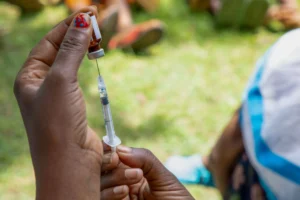
During these targeted home visits, VHLs manage the advance distribution of essential commodities. They place life-saving medical supplies directly into the hands of pregnant women, including misoprostol (to prevent postpartum hemorrhage), chlorhexidine (for umbilical cord care), iron and folic acid tablets (to combat anemia), and progestin-only pills.
Crucially, behavior change communication is seamlessly integrated into every visit. VHLs conduct counseling sessions focused on birth preparedness, complication readiness, and the active promotion of facility-based deliveries.
Supporting Data: Client Reflections and Lived Experiences
While macro-level statistics provide an overview of public health success, the true measure of the cMNH model is found in the individual stories of mothers whose lives—and whose children’s lives—were forever altered by the intervention.
Iftu Abajebel: Navigating Toward a Safe Facility Delivery
Iftu Abajebel’s journey illustrates the power of early identification and proactive counseling. Identified and registered by her local VHL during her fourth month of pregnancy, Iftu received the standard series of three VHL home visits.
During her initial visits, she received a two-month supply of iron and folic acid alongside targeted birth-preparedness counseling that heavily emphasized the medical advantages of giving birth in a health facility. Armed with information, a clear transit plan, and the psychological confidence fostered by her interactions with the VHL, Iftu successfully planned for and achieved an institutional delivery at her nearest health facility.
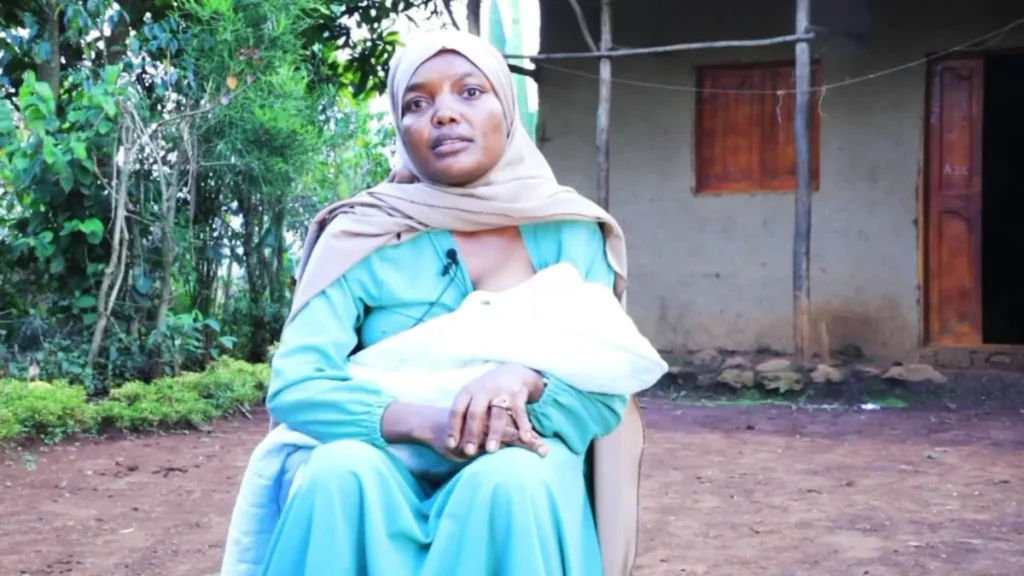
"The home visits, counseling, and information from the VHLs gave me the preparation and confidence I needed for a facility birth," Iftu asserts, reflecting on her experience.
Adanech Bayu: Contingency Care in the Shadows of Stigma
Not every young woman in rural Ethiopia enjoys a supportive family environment during pregnancy. For Adanech Bayu, a teenager facing an unplanned pregnancy, the reality was marked by severe familial conflict and profound social isolation. To protect the family’s social standing, Adanech was strictly confined to her home, completely cut off from the outside world and any possibility of seeking formal medical care.
Had it not been for the diligence of the local VHL, Adanech’s story could have ended in tragedy. During routine community surveillance, the VHL identified Adanech’s situation and established a confidential, discreet channel of care.
Recognizing the extreme sociocultural pressures Adanech faced, the VHL pragmatically assessed that a facility delivery was highly unlikely due to her family’s insistence on keeping the pregnancy entirely hidden. Rather than abandoning her, the VHL adapted to the reality on the ground: she equipped Adanech with the cMNH emergency package and meticulously trained her on safe home-delivery protocols.
When labor finally commenced in secret, Adanech was not helpless. She had the knowledge and the tools to save her own life and that of her child.
"Just as the VHL had instructed, I wrapped the baby in a clean cloth, and the umbilical cord was cut using a boiled razor blade," Adanech recalls. "When I took the medication she gave me for post-delivery care, the placenta came out safely. She also gave me an ointment to apply to the umbilical cord, which I used. Today, my child is completely healthy."
Adanech’s case highlights the pragmatic brilliance of the cMNH model. While the primary objective remains the promotion of institutional deliveries, the model recognizes that systemic change takes time and that real-world contingencies require practical, harm-reduction safety nets. If a mother is forced by circumstance to deliver at home, she is not left to traditional, often hazardous methods; instead, she is empowered with clean, medical-grade protocols.
Official Responses and Systemic Integration
The implementation research project has not operated in isolation; it has actively worked to fortify the broader regional health architecture. Beyond direct household counseling and commodity distribution, VHLs act as logistical catalysts, strengthening broader system linkages. They optimize local referral networks and promote the utilization of maternity waiting homes—facilities near health centers where women from remote areas can stay in the final weeks of their pregnancies, waiting safely for labor to begin.
Public health officials and researchers tracking the cMNH intervention have noted profound systemic benefits. An exhaustive endline household survey evaluated 1,867 women who delivered during the active intervention period. The data revealed statistically significant improvements across key maternal and newborn health indicators, proving that decentralized, community-led care can penetrate even the most challenging geographical barriers.
Project leaders emphasize that the success of the model rests on mutual trust. Village Health Leaders are not viewed as clinical intruders, but as trusted neighbors who understand the cultural nuances, linguistic dialects, and daily struggles of the communities they serve. This grassroots trust dismantles the fear and stigma that have historically kept women away from formal health centers.
Implications: A Scalable Blueprint for Global Health
The findings emerging from Ethiopia’s agrarian and pastoralist regions carry profound implications for global health policy, primary health care reform, and maternal mortality reduction strategies across the Global South.
- Feasibility in Low-Resource Settings: The research conclusively demonstrates that community-based delivery of an integrated maternal and newborn health package by trained, non-professional community agents is entirely feasible, clinically safe, and culturally acceptable within highly underserved populations.
- Overcoming Dual Barriers: By simultaneously addressing both physical geography (distance, terrain) and social geography (stigma, family pressure, cultural taboos), the cMNH model provides a holistic framework that traditional clinic-centric models fail to achieve.
- Scalability and Evidence-Based Policy: As governments and international NGOs search for cost-effective ways to achieve Sustainable Development Goal (SDG) targets related to maternal and child mortality, the cMNH model offers a scalable, evidence-based blueprint.
By optimizing primary health care linkages, respecting local realities through pragmatic contingency planning, and placing life-saving commodities directly into the hands of mothers, Ethiopia is demonstrating how grassroots leadership can turn the tide against preventable maternal mortality. The rugged hills and deep ravines of rural Ethiopia will not vanish, but thanks to the dedication of Village Health Leaders and the cMNH model, they no longer represent an insurmountable wall between a mother and her right to a safe, healthy delivery.