The Shadow University: How the Commercialization of College Athletics is Remaking Higher Education
The modern American university is increasingly becoming a house divided. On one side, the traditional academic mission of research, teaching, and degree completion persists. On the other, a high-octane, multi-billion-dollar entertainment machine—the collegiate athletic department—operates with a different set of rules, financial structures, and cultural priorities.
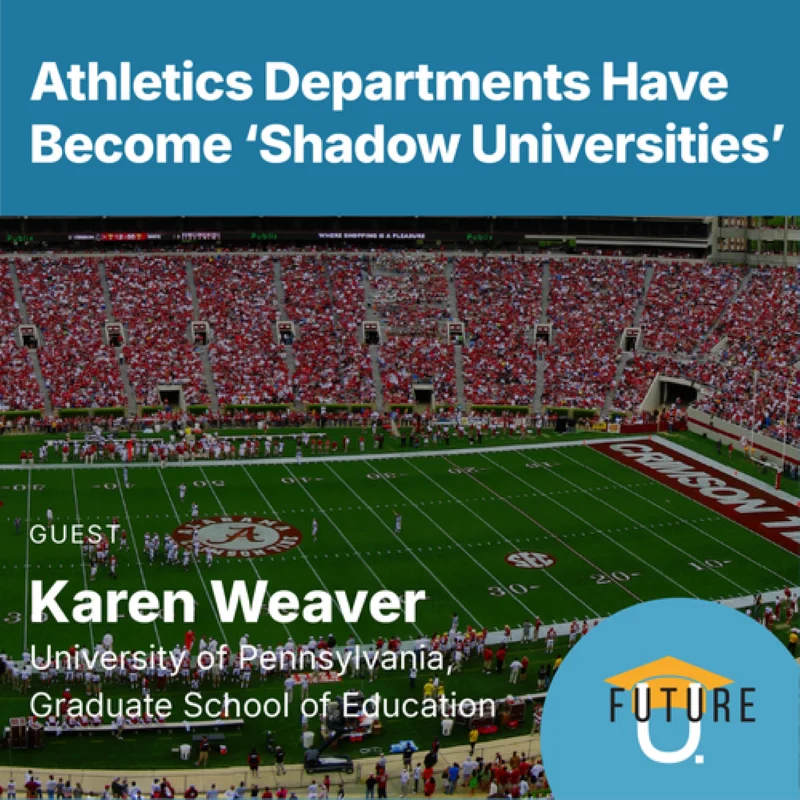
In a recent episode of the Future U podcast, hosts Michael Horn and Jeff Selingo sat down with Dr. Karen Weaver, the academic director of the collegiate athletic certificate program at the University of Pennsylvania, to dissect this growing divide. Weaver, a veteran of athletic administration, characterizes these departments as "shadow universities"—autonomous entities that operate with separate systems, processes, and fiscal goals, often to the detriment of the institutions that house them.
The Evolution of the "Shadow University"
To understand the current crisis in college sports, one must look at the historical trajectory of the NCAA and its member institutions. What began as extracurricular student activity in the late 19th century has morphed into a professionalized industry.
For decades, the NCAA maintained a veneer of amateurism. However, the rise of massive television rights deals, the commodification of individual athlete "brands," and the intense pressure to keep up with the "arms race" of facility upgrades have pushed athletic departments into a stratosphere of spending that bears little resemblance to the rest of the campus.
As Dr. Weaver explains, the athletic department often functions as a silo. "They have their own HR, their own legal teams, their own donor relations, and their own budgeting cycles," she notes. "When you look at the financials, the athletic department is essentially running a business that happens to share a zip code with an academic institution."
Chronology of a Crisis: From Amateurism to Employment
The transformation of collegiate athletics has been marked by several key turning points:
- The Rise of Broadcasting (1980s–1990s): The Supreme Court ruling in NCAA v. Board of Regents of the University of Oklahoma (1984) broke the NCAA’s monopoly on television rights. This opened the floodgates for conferences to negotiate their own lucrative media deals.
- The "Arms Race" (2000s): Universities began spending record sums on state-of-the-art training facilities, luxury locker rooms, and coaching salaries that surpassed those of university presidents.
- The Transfer Portal Era (2021–Present): The introduction of the NCAA transfer portal, combined with the liberalization of Name, Image, and Likeness (NIL) rules, has essentially created a free-agency market.
- Legal Challenges to Amateurism: Recent court rulings, such as Alston v. NCAA, have weakened the NCAA’s ability to limit athlete compensation, forcing a fundamental rethink of the "student-athlete" model.
Supporting Data: The Financial Strain
The financial data regarding modern athletic departments is sobering. While top-tier programs at schools like Alabama, Ohio State, or Texas generate massive revenue, they are the exception, not the rule.
According to various financial disclosures, the vast majority of athletic departments in the NCAA’s "Power Five" (now often referred to as the "Power Four" or "Power Two") run at a deficit. These deficits are frequently subsidized by student fees or direct institutional support taken from the university’s general fund.
"When you are pulling money from academic budgets to fund a coach’s multi-million dollar salary or a new weight room, you are essentially asking the sociology department or the library to subsidize a minor-league professional franchise," Dr. Weaver points out.
The pressure to compete in the transfer portal has exacerbated these costs. Coaches are now under constant pressure to recruit and retain talent, leading to a "treadmill" effect where athletic directors are constantly seeking new revenue streams to avoid falling behind conference rivals.
Weaver’s Solution: The Great Divorce
Dr. Weaver argues that the current NCAA classification structure is functionally obsolete. The gap between a Division III school, where athletics are truly extracurricular, and an SEC football program is now so vast that they can no longer exist under the same regulatory umbrella.
"I think the highest level should break away," Weaver tells Future U. "And that way, they can talk about collective bargaining, they can talk about employment, and they can even discuss whether college athletes should be full-time students. They would be free to build a model that acknowledges the professional nature of their work."
For the vast majority of institutions, Weaver suggests a "step back" approach. She believes these schools would welcome the opportunity to exit the unsustainable arms race and return athletics to a model that emphasizes the student experience rather than the professionalization of the athlete.
Official Responses and the Industry Pulse
The NCAA and university leadership are currently in a state of reactive flux. The organization has been forced to lobby Congress for a federal standard on NIL, fearing that a patchwork of state laws will render national competition impossible.
Athletic directors are caught in the middle. Many privately echo Dr. Weaver’s concerns, admitting that the current model is fiscally unsustainable, yet they fear being the first to "opt out" of the high-stakes game. The fear of donor backlash and the perceived prestige associated with big-time football remain powerful incentives for maintaining the status quo.
However, the "shadow university" concept is gaining traction in academic circles. Faculty senates across the country are increasingly vocal about the lack of transparency in athletic department budgeting. They are asking pointed questions about why university presidents, who are tasked with prioritizing the academic mission, seem to have so little oversight over the athletic enterprise.
Implications for the Future of Higher Education
The implications of this shift are profound. If the top-tier programs do indeed break away to form their own professionalized tier, the fundamental definition of the "student-athlete" will be permanently altered.
1. The Death of the "Student-Athlete" Myth
If athletes are classified as employees, the traditional academic requirements—such as degree progress and minimum GPA—may be negotiated away in collective bargaining agreements. This would effectively separate the "athlete" from the "student," creating a distinct class of university employees who happen to wear the school’s colors.
2. The Financial Rebalancing
For schools that do not participate in the elite tier, the "de-escalation" of sports could be a financial lifeline. By scaling back the professionalized infrastructure, these universities could redirect millions of dollars toward faculty salaries, student financial aid, and core research initiatives.
3. Cultural Realignment
The role of the university in American society is being debated on many fronts, from the value of a degree to the purpose of tenure. The "shadow university" phenomenon is a microcosm of this larger struggle: does the university exist to provide a public good, or is it merely a brand-management firm that utilizes sports to garner national attention?
Conclusion: A Call for Sustainability
The conversation initiated by Karen Weaver on Future U is not merely an athletic issue; it is an institutional survival issue. As the lines between campus life and professional sports continue to blur, the risk is that the "shadow university" will eventually cast a darkness over the academic heart of the institution.
The "treadmill" of commercialization is, as Weaver warns, unsustainable. Whether through a formal split or a massive internal restructuring, the American university system must decide what it values most. The dream of the scholar-athlete is fading, replaced by the reality of the athletic employee. Navigating this transition will require the very thing that academic institutions are supposed to excel at: critical thinking, long-term planning, and the courage to challenge long-standing, yet outdated, paradigms.
For those interested in the future of our campuses, the message is clear: the status quo is a luxury that few, if any, can afford for much longer.
To listen to the full discussion on the "shadow university" and the future of college athletics, visit Future U Podcast.