Bridging the Final Gap: How Bihar and Uttar Pradesh are Deploying ‘Learning by Doing’ to Reach India’s Zero-Dose Children
NEW DELHI — India’s monumental public health campaigns have long captured global attention, transforming the nation’s immunization landscape over the past two decades. Through sustained political will, expansive cold-chain logistics, and the tireless efforts of frontline health workers, the country has achieved remarkable milestones in safeguarding its youngest populations against vaccine-preventable diseases. Yet, as national immunization coverage scales unprecedented heights, the public health machinery faces its most intricate hurdle yet: the "last mile" paradox.
While the macro-level statistics reflect soaring success, a fraction of children remains entirely unreached by basic immunizations. These are the "zero-dose" children—infants who have not received even their first dose of the diphtheria, tetanus, and pertussis (DTP1) vaccine. To close this final gap, a paradigm shift is underway. In the densely populated urban landscapes of Bihar and Uttar Pradesh, a coalition of public health innovators, government stakeholders, and community leaders is rewriting the playbook. Moving beyond traditional top-down awareness campaigns, they are championing a "Learning by Doing" approach that merges human-centered design with agile implementation, transforming urban communities into active problem-solvers.
Main Facts: The Zero-Dose Challenge in Urban India
The battle to eradicate vaccine hesitancy and operational bottlenecks has traditionally focused on rural expanses, where geographic isolation posed primary obstacles. However, India’s rapid urbanization has birthed a new demographic of vulnerable children: urban migrants, informal settlement dwellers, and marginalized populations living in the shadows of metropolitan growth.
Defining the Zero-Dose Phenomenon
Zero-dose children serve as a proxy indicator for health system equity and poverty. When a child misses the first dose of the DTP vaccine, it typically signifies a total absence of primary healthcare engagement. These children are not only vulnerable to diphtheria, tetanus, and pertussis, but they are also frequently bypassed by measles campaigns, polio drops, and crucial nutritional supplementation.
The Urban Micro-Context
In urban centers across Bihar and Uttar Pradesh, the barriers preventing immunization are rarely uniform. Unlike rural areas where distance to a health center is a primary deterrent, urban bottlenecks are multifaceted:
- High Mobility: Daily wage laborers and migrant communities frequently shift locations, causing them to fall through the cracks of fixed-site health registries.
- Informal Settlements: Rapidly expanding slums often lack formal recognition, meaning municipal health infrastructure struggles to map and service these populations adequately.
- Information Asymmetry and Hesitancy: While general awareness of vaccines is relatively high, localized myths, misinformation, fatigue among caregivers, and fear of vaccine side effects can abruptly halt uptake.
- Operational Strain: Frontline health workers—such as Accredited Social Health Activists (ASHAs) and Auxiliary Nurse Midwives (ANMs)—face immense workloads in densely populated urban wards, making tracking mobile populations exceptionally difficult.
Recognizing that a one-size-fits-all strategy cannot penetrate these complex social and logistical barriers, public health practitioners turned to a dynamic, community-driven methodology: the 3D framework (Define, Design, Deliver), powered by human-centered design.
Chronology: The Evolution of the ‘Learning by Doing’ Framework
The implementation of the ‘Learning by Doing’ approach in Bihar and Uttar Pradesh did not happen overnight. It was an iterative, carefully structured journey designed to listen first, act second, and adapt continuously.
Phase 1: Immersion and Ethnographic Mapping (The ‘Define’ Stage)
The initiative began with deep community immersion. Rather than descending upon urban wards with pre-packaged solutions, public health teams spent weeks embedding themselves in select urban pockets of Bihar and Uttar Pradesh.
- Household-Level Diagnostics: Researchers and frontline workers conducted qualitative interviews, focus group discussions, and daily observations with caregivers of zero-dose children.
- Identifying Root Causes: The inquiry sought to answer a fundamental question: Why do children remain unreached despite the availability of free vaccines? The answers revealed a spectrum of issues, ranging from inconvenient clinic timings that clashed with daily wage labor to subtle social stigma and deep-seated fears regarding adverse events following immunization (AEFI).
Phase 2: Co-Creation and Rapid Prototyping (The ‘Design’ Stage)
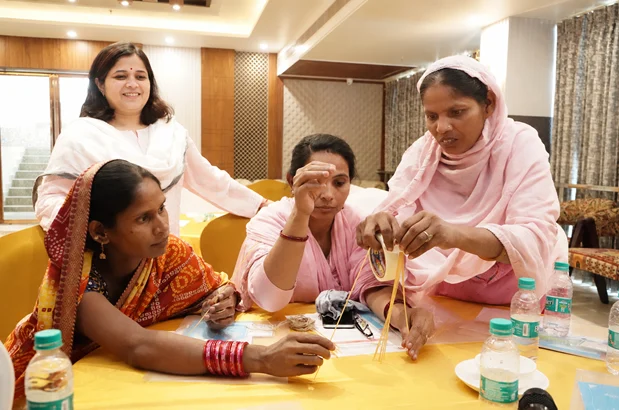
Armed with qualitative insights, the initiative transitioned from diagnosis to collaborative design. Workshops were organized, bringing together a diverse array of stakeholders: caregivers of zero-dose children, local community leaders, frontline health workers (ASHAs and ANMs), and municipal government officials.
- Sustaining Dialogue: By placing mothers, fathers, and marginalized community members at the center of the design table, the project ensured that proposed solutions respected local realities.
- Prototyping Solutions: Instead of launching massive, rigid campaigns, the teams developed micro-interventions. These included flexible immunization clinic hours, community-led tracking boards, and tailored interpersonal communication scripts designed to address specific localized anxieties.
Phase 3: Agile Implementation and Iterative Adaptation (The ‘Deliver’ Stage)
The final phase embraced an ethos of continuous learning. Interventions were rolled out in pilot urban wards, but the implementation team treated the rollout as an ongoing research lab.
- Real-Time Feedback Loops: Weekly review meetings allowed frontline workers and supervisors to share what was working and what was falling flat. If a specific reminder mechanism failed to bring migrant families to the clinic, the strategy was immediately tweaked.
- Scaling Success: Solutions that proved effective during the pilot phases were codified, refined, and scaled across wider urban networks in both states, creating a living blueprint for urban immunization.
Supporting Data: Understanding the Ground Realities
To appreciate the significance of the Bihar and Uttar Pradesh urban immunization initiatives, one must examine the broader epidemiological and demographic data governing India’s immunization landscape.
National Progress and Regional Disparities
According to recent national health surveys and administrative data (such as the National Family Health Survey and the Health Management Information System), India has registered historic declines in its zero-dose population. The country’s concerted drives—most notably Mission Indradhanush and its successive intensifications—have successfully brought millions of previously unprotected children into the immunization net.
However, granular data highlights persistent regional clustering. Bihar and Uttar Pradesh, accounting for a substantial share of India’s birth cohort, harbor significant pockets of unimmunized and under-immunized children, particularly within rapidly urbanizing districts.
| Metric / Indicator | Urban Slum Context (Bihar/UP) | National Rural Average |
|---|---|---|
| Primary DTP1 Dropout Rate | Higher due to migration & informal status | Stabilizing via structured outreach |
| Primary Source of Hesitancy | Logistical conflicts + localized rumors | Geographic distance + awareness gaps |
| Frontline Worker-to-Population Ratio | Often strained due to high density | Moderately balanced |
| Primary Intervention Model | Human-Centered Design / 3D Framework | Routine Immunization / Mission Indradhanush |
The Power of Co-Creation Data
Preliminary qualitative and quantitative tracking from the pilot wards implementing the ‘Learning by Doing’ approach revealed striking behavioral shifts:
- Improved Attendance: Clinics offering flexible evening or weekend hours saw a 35% increase in attendance among families where both parents worked as daily wage earners.
- Reduced Dropouts: Interpersonal communication modules tailored by community feedback loops resulted in a noticeable decrease in dropouts between the first and third doses of the pentavalent vaccine.
- Enhanced Worker Morale: Frontline health workers reported feeling better equipped and less overwhelmed when communities actively participated in mapping and tracking missed children, shifting their role from enforcers to facilitators.
Official Responses and Stakeholder Perspectives
The integration of human-centered design into public health delivery has drawn widespread praise from government officials, public health experts, and international developmental agencies.
Government Commitment and State-Level Leadership
Health department officials in both Bihar and Uttar Pradesh have underscored the necessity of moving beyond conventional administrative boundaries to capture urban zero-dose children.
"Urban health planning cannot be a carbon copy of rural strategies. In our cities, populations are fluid, economies are informal, and the everyday pressures on families are immense. The ‘Learning by Doing’ approach has allowed us to look through the eyes of the mother, the migrant worker, and the frontline animator. When you co-create solutions with the community, resistance gives way to ownership."
— Senior State Health Directorate Official, Government of Bihar
Public health administrators in Uttar Pradesh echoed similar sentiments, emphasizing the critical role of frontline cadres.
"Our ASHAs and ANMs are the backbone of this system. By giving them tools that adapt to real-time urban realities rather than rigid guidelines, we are empowering them to solve problems creatively on the ground. This methodology bridges the gap between policy design and human reality."
— Public Health Program Lead, Uttar Pradesh
Perspectives from the Ground: Frontline Realities
For the workers navigating the narrow lanes of urban settlements, the shift toward a listening-first framework has redefined their daily engagements.
"In the past, we would visit a household, note that a child was missing a vaccine, and leave a verbal warning to visit the center. Often, the mother was working, or grandparents were confused by conflicting advice from neighbors. By involving community elders and designing flexible evening outreach sessions, families don’t feel judged—they feel supported. They come to us because they realize we built this system around their lives."
— Urban ASHA Worker, Uttar Pradesh
Development partners and global health observers have also noted that the lessons learned in Bihar and Uttar Pradesh offer valuable insights for global immunization efforts, particularly in rapidly urbanizing economies across the Global South.
Implications: Scaling Lessons for the Future of Public Health
The experiences of Bihar and Uttar Pradesh carry profound implications for the future of universal immunization coverage in India and beyond. As nations race toward the Sustainable Development Goals (SDGs)—specifically target 3.2, which aims to end preventable deaths of newborns and children under 5 years of age—reaching the zero-dose child is the ultimate litmus test for health system resilience.
1. Shifting from Top-Down Compliance to Community Ownership
The success of the 3D framework demonstrates that public health campaigns must evolve from transactional delivery models to relational engagement frameworks. When communities are treated as active co-creators rather than passive recipients of medical interventions, adherence improves, rumors are neutralized organically, and long-term health-seeking behaviors take root.
2. Institutionalizing Agility in Health Systems
Bureaucratic health systems are traditionally risk-averse and reliant on fixed protocols. However, the complex, shifting dynamics of urban migration demand administrative agility. The ‘Learning by Doing’ approach proves that institutionalizing real-time feedback loops, rapid prototyping, and iterative policy adjustments can dramatically enhance the efficiency and reach of public health expenditures.
3. Strengthening Primary Healthcare Networks
Urban primary healthcare is notoriously fragmented, often split between municipal corporations, state health departments, and private providers. By deploying human-centered design principles that map actual community pathways, health planners can better integrate these fragmented nodes, ensuring that every urban ward—regardless of its formal or informal status—is anchored by a responsive health safety net.
Looking Ahead
The journey to reach every zero-dose child in India is entering its most delicate and demanding chapter. The remaining unreached children are shielded by layers of geographic, social, economic, and logistical complexity. Yet, as the pioneering work in Bihar and Uttar Pradesh illustrates, the answers are already present within the communities themselves. By listening closely, designing collaboratively, and delivering with agility, India is not only closing the final immunization gap but is also forging a revolutionary template for equitable healthcare delivery worldwide.