Beyond the Classroom: Seven Washington Districts Pilot AI to Transform School Operations
In a bold move to modernize the backbone of K-12 education, seven Washington state school districts have been selected to spearhead a pioneering initiative aimed at integrating artificial intelligence (AI) into the often-overlooked realm of district operations.
The Center on Reinventing Public Education (CRPE), in strategic partnership with Education First and StrategicEDU, has launched the second phase of the "Washington K-12 Innovation with AI Community of Practice." This initiative moves beyond the common discourse surrounding AI—which typically centers on chatbots and student-facing generative tools—to address the systemic, technical, and operational "silos" that have long hampered school district efficiency.
The participating districts—Ferndale School District, Highline Public Schools, Impact Public Schools, Kalama School District, Sequim School District, Summit Public Schools, and Yakima School District—will each receive innovation grants of up to $45,000. These funds are designated to pilot AI-enabled solutions that untangle complex data systems, improve interoperability, and bridge the gaps between disparate data sets regarding attendance, student achievement, behavior, and overall well-being.
The Operational Imperative: Why Data Matters
While the public focus remains fixed on AI in the classroom, the true revolution in K-12 education may lie in the engine room. For decades, school districts have struggled with "data fragmentation." Student information is frequently siloed in incompatible software platforms, making it difficult for administrators to form a holistic view of a student’s needs.
By applying AI to these backend systems, the participating districts aim to create a more cohesive data infrastructure. This shift is intended to empower educators and administrators to make data-informed instructional decisions with unprecedented speed and accuracy, all while maintaining rigorous standards for student privacy and data security.
Chronology of the Initiative: From Readiness to Implementation
The current phase of the program is the culmination of a deliberate, multi-stage strategy.
- Initial Readiness Phase: Earlier this year, the selected districts engaged in a foundational readiness program. During this period, teams assessed their existing data architecture, identified primary operational bottlenecks, and established the governance frameworks necessary for responsible AI adoption.
- The Selection Process: Following the successful completion of the readiness work, CRPE and its partners selected these seven districts based on their demonstrated commitment to innovation and their capacity to execute meaningful pilot projects.
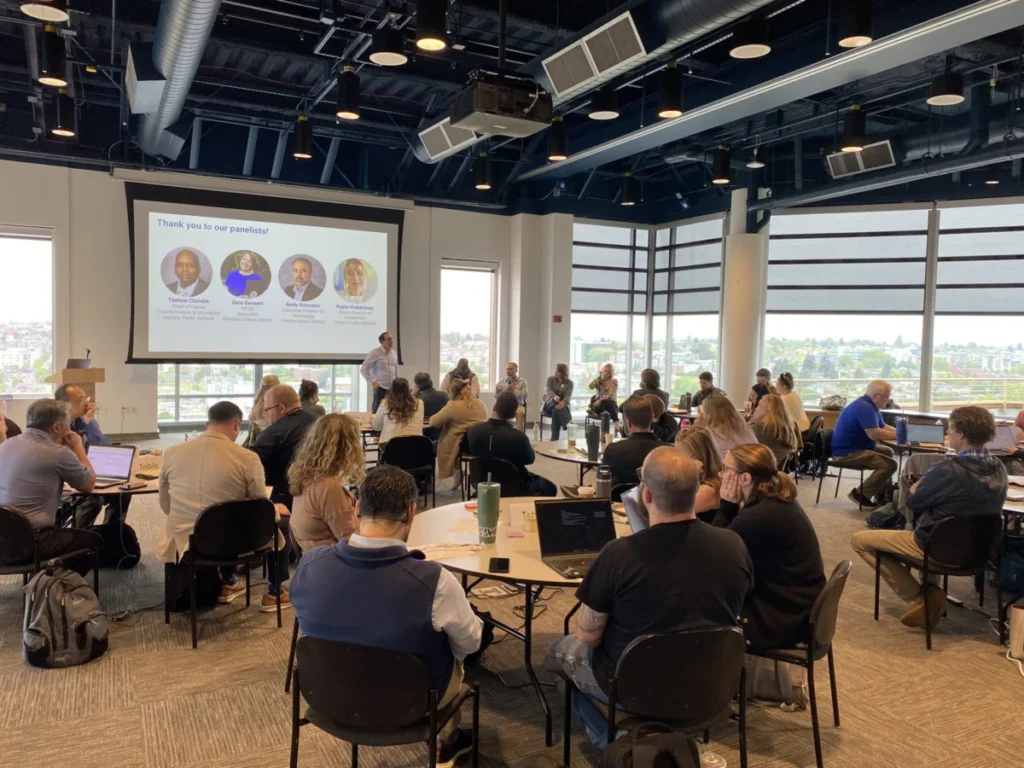
- The Upcoming Year (The Pilot Phase): Throughout the current school year, the districts will move from theory to practice. They will receive customized coaching from Education First and StrategicEDU, participate in collaborative planning sessions, and engage in peer-to-peer learning to share successes and troubleshoot failures in real-time.
- Knowledge Dissemination: As the projects evolve, CRPE will document the journey, tracking what works and what does not. The ultimate goal is to synthesize these findings into a roadmap that can be replicated by other states and districts nationwide.
Supporting Data and the "Invisible" Infrastructure
The necessity of this work is supported by a growing body of research. The "invisible" work of managing a school district—often involving hundreds of thousands of data points—is currently labor-intensive and prone to human error. By automating the integration of these systems, districts can potentially reclaim thousands of hours of administrative time.
According to preliminary data gathered by the CRPE, the primary hurdles for districts are not just technical, but cultural. The challenge lies in "interoperability"—the ability of different systems to communicate effectively. When data on student well-being is isolated from data on academic performance, educators often lose the ability to see the "whole child." The pilots funded by this initiative are designed to bridge these gaps, ensuring that when a student is struggling, the data tells the full story, allowing for proactive, rather than reactive, intervention.
Official Responses and Strategic Vision
The initiative is backed by the Bill & Melinda Gates Foundation, reflecting a strategic investment in the future of public education infrastructure.
Leaders from the partner organizations emphasize that this is a long-term play. "This is not about installing a piece of software and walking away," noted a representative from the program. "This is about building the capacity for districts to be the architects of their own digital evolution."
The participating districts, which range from rural to urban environments, provide a diverse testing ground. By including both traditional public schools and public charter networks like Impact and Summit, the program ensures that the resulting models for AI adoption are adaptable to various institutional contexts.
Implications for State Policy and Future Investment
The ripple effects of this initiative are expected to be felt far beyond the borders of Washington state. The findings from these seven pilots will serve as a primary resource for:
- State Policy Recommendations: By documenting the legal and ethical considerations of using AI for administrative data, the project will help inform state-level guidance on data privacy and AI governance.
- Readiness Tools: The project aims to produce "readiness kits" that other districts can use to self-assess their capacity for AI integration, reducing the barrier to entry for smaller or less-resourced districts.
- Sustainable AI Strategies: By demonstrating a model where funders, partners, and districts collaborate, the initiative offers a blueprint for sustainable, non-profit-driven technological advancement in public education.
Addressing the Challenges of AI Adoption
The project is not blind to the risks associated with AI. The initiative places a heavy emphasis on "responsible and secure AI adoption." As districts move to integrate their data, they must navigate a complex landscape of federal and state privacy laws, including FERPA (Family Educational Rights and Privacy Act).
The coaching provided by Education First and StrategicEDU is specifically designed to address these concerns, ensuring that as districts innovate, they do not compromise the trust of the families they serve. The documentation process led by CRPE will be transparent, highlighting not only the triumphs of these pilots but also the ethical pitfalls and technical dead-ends that other districts should avoid.
A Call to Action for Stakeholders
As the 2024-2025 school year begins, the eyes of the educational technology sector are turned toward these seven districts. The upcoming webinar on September 18th—where organizers will share early lessons from the first phase of the work—serves as an invitation for the broader educational community to engage with these findings.
For administrators, policymakers, and educators, the message is clear: the AI revolution in education is not just coming to the classroom; it is already rewriting the rules of school district management. By focusing on the "less visible" work of data management, these Washington districts are setting the stage for a more efficient, equitable, and data-responsive school system.
Looking Ahead: Building a Model for the Future
The ambition of this program is high, but the potential rewards are higher. In an era where schools are increasingly asked to do more with less, the ability to leverage AI to handle the heavy lifting of data analysis is not just a luxury—it is a necessity.
As the seven pilot projects progress, they will contribute to a growing library of insights that will define the next decade of K-12 policy. By bridging the gap between cutting-edge technology and the practical, daily realities of school operations, this initiative represents a significant step toward a future where schools are truly powered by the best tools available, guided by the best information, and focused on the most important outcome: the success of every student.
For those interested in following the progress of these districts, the CRPE continues to publish reports and case studies. The collaborative nature of this project—where lessons are treated as public goods rather than proprietary secrets—is perhaps its most valuable contribution to the field of American education.
For those interested in learning more about the early phases of this work, the Center on Reinventing Public Education is hosting a webinar on Friday, September 18th. Attendees will gain insight into the first phase of the Washington K-12 Innovation with AI Community of Practice. Click here to register.