The Slow-Learning Revolution: Can AI Force Students to Think Deeper?

In an era where generative artificial intelligence is often criticized for providing instant shortcuts, a new study suggests a counterintuitive reality: the most effective use of AI in the classroom may not be to speed up learning, but to force students to slow down.
For many educators, the rise of AI in schools has been a double-edged sword. While tools like ChatGPT offer personalized explanations, they also carry the risk of "short-circuiting" the cognitive process by handing students answers on a silver platter. However, a landmark experiment involving over 6,000 middle school students in Tennessee has provided a glimpse into how AI can be programmed to act as a rigorous pedagogical coach rather than an easy answer machine.
The study, titled "Making AI Tutoring Productive: Evidence from a Mastery-Based Math Practice Experiment," found that when AI was paired with a "mastery learning" requirement—forcing students to prove their competence by answering three consecutive problems correctly—student performance improved significantly compared to conventional computer-based instruction.
The Experiment: A Comparative Analysis of Digital Pedagogy
The research, conducted by a team from the University of Toronto and the University of Pennsylvania’s Wharton School, sought to move beyond the hype surrounding AI. Instead of asking if AI is "good" or "bad," the researchers wanted to isolate specific functional traits: Does AI help when it acts as an interactive tutor? And does that help improve when combined with stricter mastery benchmarks?
To answer these questions, the team designed an experiment that utilized proprietary software similar in function to popular platforms like Khan Academy. Over the course of a 50-minute math class, 6,000 students were assigned to one of four groups:
- Conventional Instruction: Standard computer-based exercises without AI intervention.
- Mastery-Only Instruction: Conventional exercises requiring three correct answers in a row to move on.
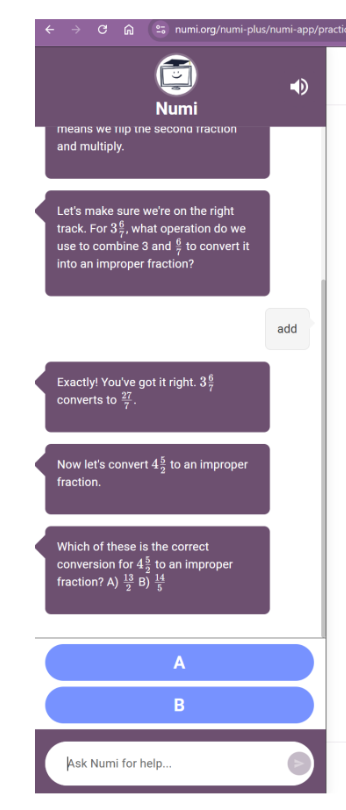
- AI Tutoring Only: Standard software enhanced with an AI tutor (named "Numi") that provided step-by-step guidance.
- The Combined Approach: AI tutoring integrated with the three-question mastery requirement.
A week after the initial 50-minute intervention, the students took a 15-minute retention test. The results were telling: the group that engaged with the "AI plus mastery" model outperformed their peers by approximately 3 percentage points. While the researchers characterize this margin as "small," it represents a statistically significant victory in an educational landscape where student engagement is notoriously difficult to sustain.

Chronology of the Study’s Implementation
The timeline of the research reflects a meticulous effort to ensure that the findings were grounded in real-world classroom conditions rather than laboratory simulations.
- Pre-Implementation (Spring 2024): Researchers finalized the software architecture, ensuring the AI tutor, Numi, was equipped to handle specific fraction-related logic. Unlike static platforms that simply show a correct solution, Numi was designed to probe student understanding.
- Intervention Phase (August 2024): The 50-minute classroom sessions were conducted across Tennessee middle schools. Students interacted with the software during their regular curriculum time, ensuring the data reflected authentic student attention spans.
- Assessment Phase (One Week Later): The retention exam was administered to gauge long-term absorption of the fraction concepts taught during the intervention.
- Draft Analysis (August 2025): The research team compiled the final data sets.
- Publication Timeline: A working paper detailing these findings is scheduled for circulation by the National Bureau of Economic Research (NBER) on August 17, with formal peer-reviewed publication expected in the coming months.
Data Breakdown: Why "Slowing Down" Matters
The data provides a compelling look at the behavioral shifts caused by the AI tutor. In traditional software, if a student encounters a difficult fraction problem, they often click through a static "step-by-step" explanation. If the student is disengaged, they simply glance at the final answer and move on, failing to internalize the logic required to solve the next iteration.
The Numi AI, however, behaved differently. When a student made a mistake, Numi didn’t just display the solution; it engaged in a dialogue, guiding the student through each step and encouraging them to revisit specific parts of the process.
Behavioral Metrics
- Time-on-Task: Students in the "AI-plus-mastery" group spent significantly more time per question than any other group. The researchers interpreted this not as a lack of efficiency, but as a sign of deeper cognitive engagement.
- Error Recovery: These students were demonstrably more likely to solve the subsequent question correctly after an initial failure.
- The Mastery Threshold: The requirement of answering three questions correctly in a row served as a "gatekeeper" that prevented students from guessing their way through the lesson. By forcing repetition, the AI ensured that the students didn’t just "get lucky" on one problem, but demonstrated a consistent grasp of the concept.
Official Responses and Researcher Perspectives
Philip Oreopoulos, the lead author of the study and a professor of economics at the University of Toronto, has been careful to manage expectations. While the results are encouraging, he warns against viewing AI as a "silver bullet."
"I don’t want to jump out and say we’ve demonstrated that AI is going to be the game changer that we hope it is," Oreopoulos noted during an interview regarding the draft paper. "But it might be the first kind of evidence that shows there’s at least some hints that it has some positive value against no AI at all."
His perspective is echoed by others in the field of educational technology, who note that the "AI effect" is currently in its infancy. The focus, according to the research team, is to continue iterating on the software features. The goal is not just to replace teachers, but to create "intelligent" practice tools that can adapt to a student’s unique learning pace.
Implications: The Limits and Future of AI Tutoring
While the study is a milestone, it also highlights the limitations of current AI in education. Notably, the benefits of the AI-plus-mastery approach were largely confined to the simplest fraction problems—the ones most closely aligned with the exercises practiced in class. The advantage did not translate as effectively to more complex or abstract mathematical reasoning.
Furthermore, the study was a 50-minute "snapshot." Critics and supporters alike agree that one hour of instruction is not enough to determine if these gains will hold over a full academic semester or if they lead to a deeper, more transferable understanding of mathematics.
The "Transferability" Gap
One of the most important takeaways is the realization that AI did not necessarily produce a "deeper" conceptual understanding. While students mastered the specific mechanics of the fraction problems they were presented with, the research did not provide evidence that this knowledge was fully synthesized for use in more complex, real-world applications.
Moving Forward
The researchers view this as a starting point. The ambition is to keep testing different AI features against one another. By treating the classroom as a laboratory for software optimization, educators and developers hope to find the "sweet spot" where AI provides enough assistance to keep students from getting frustrated, but enough challenge to prevent them from becoming passive.
Ultimately, the most significant implication of the study is a shift in philosophy. For years, the ed-tech industry has pushed for "faster" learning—more content, shorter videos, and immediate gratification. This research suggests that the next generation of effective educational tools might be those designed to do exactly the opposite: to build in friction, to require mastery, and to compel the student to slow down, reflect, and truly learn the material at hand.
As AI continues to integrate into the modern classroom, the lesson from this study is clear: it is not the intelligence of the machine that matters, but how it is instructed to interact with the developing mind of the student. By nudging students toward mastery rather than just completion, AI may yet prove to be a constructive force in the pursuit of academic excellence.