Bridging the Literacy Gap: Why Writing Instruction Needs a Brain-Based Revolution

By Educational Insights Desk
Published in collaboration with pedagogical research updates
Main Facts
While contemporary educational debates are saturated with intense discussions surrounding phonics, reading comprehension, and literacy fluency, a critical pillar of academic success is consistently left out of the national conversation: writing. Despite being deeply intertwined with reading, writing instruction rarely commands the same policy focus, professional development funding, or public discourse.

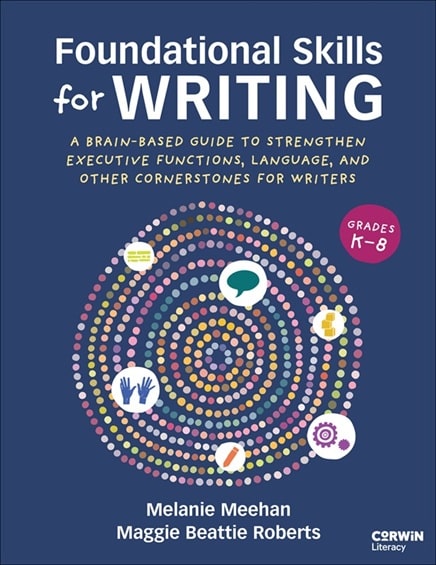
To bridge this glaring divide, former curriculum coordinator Melanie Meehan and veteran literacy consultant Maggie Roberts have released a groundbreaking new book, Foundational Skills for Writing: A Brain-Based Guide to Strengthen Executive Functions, Language, and Other Cornerstones for Writers.
Published earlier this month, the text reframes writing not merely as a creative exercise, but as a complex cognitive load that requires the synchronization of multiple neurological systems. Meehan and Roberts argue that when students struggle with writing, it is frequently because foundational components—such as transcription skills, oral language structures, and executive functioning—have not been adequately automated. To solve this, the authors introduce "Minute Moves": quick, low-stakes, highly flexible activities designed to strengthen neural pathways in just a few minutes a day.
Chronology of an Overlooked Crisis
For decades, national literacy initiatives have prioritized the "Science of Reading," steering classrooms toward explicit instruction in decoding and comprehension. However, the chronological evolution of literacy policy left composition trailing far behind.
- The Late 20th Century: Writing instruction largely shifted toward "process writing," emphasizing drafting, revising, and free expression, but often lacking explicit skill-building for struggling learners.
- The 2010s: Common Core standards raised the bar for written output across grade levels, demanding evidence-based arguments and complex text analysis, yet provided educators with minimal guidance on how to teach the mechanics required to execute these tasks.
- The Recent Literacy Shift (2020–Present): The post-pandemic push to recover lost instructional time turbocharged reading intervention efforts. Phonics programs received massive overhauls, while writing instruction was frequently sidelined as an optional or secondary priority.
- Early 2026: Recognizing that students were arriving at middle and high schools unable to manage sustained writing tasks—not due to a lack of ideas, but due to cognitive overload—Meehan and Roberts synthesized years of classroom practice and cognitive science into their new guide.
Supporting Data and Underlying Mechanisms
Writing is widely considered one of the most complex tasks we ask the human brain to perform. It requires the simultaneous activation of physical motor skills, linguistic rules, and high-level cognitive control. Meehan and Roberts categorize these demands into three core pillars:

- Transcription Skills: Physical mechanics such as handwriting, keyboarding, spelling, and fine-motor control. When these are not automatic, they consume precious cognitive bandwidth.
- Oral Language: Speaking and listening precursors, including sentence construction and vocabulary acquisition.
- Executive Functioning: Working memory, inhibitory control, and cognitive flexibility.
The "Minute Moves" Framework
To build these pathways without burning out students or eating into core instructional hours, the authors propose eight bite-sized strategies categorized by domain:
Spelling and Etymology
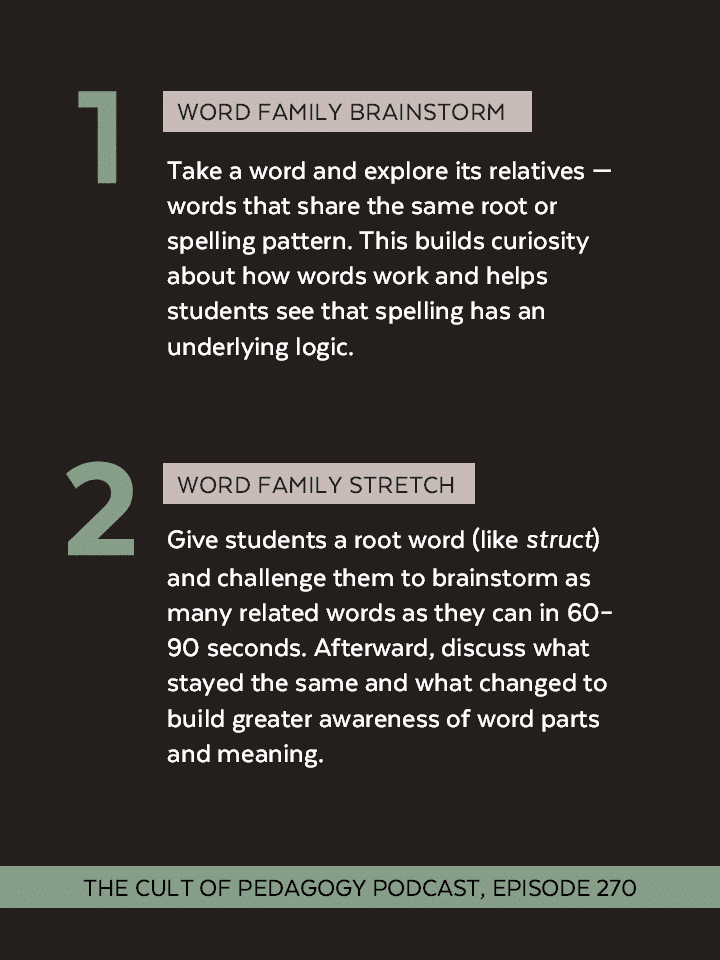
- Word Family Brainstorm: Moving away from rote memorization of isolated homophones (like two, to, and too) by tying words to conceptual relatives (e.g., connecting two to twin and twenty). Tracing Latin roots (like decide, incision, and scissors sharing a root meaning "to cut") builds a deeper, curiosity-driven understanding of orthography.
- Word Family Stretch: Utilizing a 60-to-90-second timer to generate words around a bound root (like struct) or a free root (like form), followed by a debrief on prefixes and suffixes.
- Prefix Swap: Helping multilingual and native learners alike discover how swapping prefixes (reform, transform, inform, deform) alters meaning, cementing patterns in the brain.
Sentence Construction
- Sentence Scramble: Giving students physical index cards with individual words to physically manipulate, negotiate, and reassemble, building an intuitive grasp of syntax.
- Sentence Expander: Moving away from abstract terms like "subject" and "predicate" in favor of "doer" and "doing," asking guiding questions (Who? What color? Where? When?) to grow a kernel sentence into a complex, rich thought.
- Sentence Combining: Providing bare-bones sentences for students to merge using conjunctions, allowing them to naturally transition from choppy, elementary writing to sophisticated, fluid prose.
Executive Functioning
- What’s Another Way?: Cultivating cognitive flexibility by forcing students to rewrite a single sentence multiple times—shifting clauses, altering pronouns, or varying lengths for dramatic impact.
- New Angle: Zooming out to the narrative level by retelling familiar stories, historical events, or short Pixar films (like Snack Attack) from alternative character perspectives, fostering both literary skill and social empathy.
Official Responses and Expert Insights
Educational stakeholders have responded warmly to the framework, praising its practicality and grounding in cognitive science.

"Literacy has always been a hot topic in education, but in most of those conversations, we rarely bring up writing," Meehan explains. By shifting the focus toward how the brain processes language, educators can diagnose why a student is stumbling rather than simply grading the final product.
Maggie Roberts emphasizes the immediate transferability of these micro-interventions. Speaking on sentence combining, Roberts notes:
"Sentence combining is a really high-impact, quick way for kids to graduate from writing a series of simple sentences to ones that are more syntactically complex, interesting, and precise."
Furthermore, the authors stress the broader psychological impact of naming these skills for students. When a struggling writer is told they are actively practicing cognitive flexibility, the framing changes entirely. It transforms remediation into an empowering exercise in high-level thinking.
Implications for the Future of Classrooms
The release of Foundational Skills for Writing arrives at a pivotal moment for schools grappling with declining writing proficiency scores. The implications of this research span multiple facets of modern education:
- Curriculum Design: School districts are being urged to integrate explicit, short-form writing mechanics directly into daily literacy blocks, rather than treating writing as an isolated event that occurs only during designated composition hours.
- Cognitive Load Reduction: By automating transcription and sentence-level mechanics through "Minute Moves," students free up working memory to focus on higher-order tasks like argumentation, emotional resonance, and critical analysis.
- Democratic and Social Growth: As Meehan points out during discussions on perspective-taking exercises (such as the New Angle strategy), writing instruction carries implications far beyond the classroom. Teaching children to inhabit multiple viewpoints simultaneously nurtures empathy and foundational skills required for civic engagement in a diverse society.
Ultimately, Meehan and Roberts’ work signals a much-needed evolution in literacy reform—reminding educators that teaching a child to write is, at its core, about helping them map their own mind onto the page.