The Leadership Ledger: A Month of Seismic Shifts, Sudden Resignations, and Non-Traditional Appointments Across U.S. Higher Education
By Higher Education News Desk
November Update
Executive Summary: The Fall Turnover
October proved to be a month of profound paradoxes for higher education across the United States. Often characterized by the changing of the academic seasons, this particular month brought a flurry of dramatic institutional transformations, unexpected departures, and notable arrivals. From major public university systems restructuring their executive teams to private institutions grappling with sudden vacancies, boards of trustees nationwide found themselves thrust into the spotlight.
While public university systems in Georgia and Wisconsin successfully concluded high-profile searches to fill vacancies stemming from earlier departures, the private sector experienced sudden shocks. Two prominent private universities saw their presidents abruptly resign, with one administration offering sparse insight into the motivations behind the executive’s sudden departure. As higher education continues to navigate severe financial headwinds, enrollment cliffs, and intense public scrutiny, October’s leadership ledger serves as a snapshot of an industry in rapid, sometimes turbulent, evolution.
Main Facts: The Key Leadership Appointments and Departures
The overarching narrative of October’s higher education landscape is defined by a mix of corporate cross-overs, sudden ousters, and strategic interim appointments. Below are the primary leadership shifts recorded nationwide:
- University System of Georgia (USG): Former Southern Company CEO Thomas Fanning was confirmed as the next chancellor, succeeding Sonny Perdue. Fanning marks a continuation of USG’s trend of appointing non-traditional leaders from outside the academic sector.
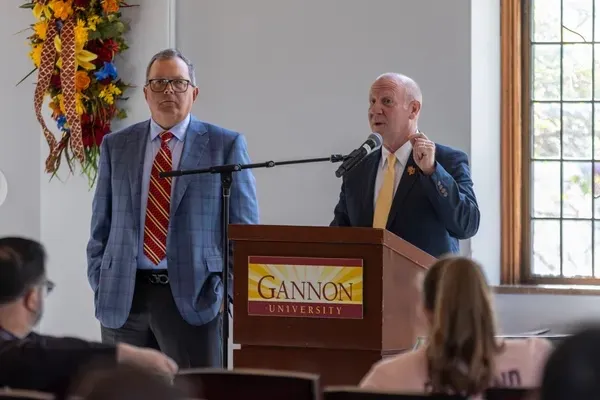
- Gannon University: President Walter Iwanenko stepped down abruptly on October 8, paving the way for former president Keith Taylor to return on a temporary basis as the university navigates a major institutional merger and workforce reductions.
- Texas Christian University (TCU): Chancellor Daniel Pullin abruptly resigned on October 22 after less than two years in office. Longtime former leader Victor Boschini was reinstated by the board to helm the institution once more.
- Colorado State University (CSU): President Amy Parsons announced she will step down on December 31, leading the university as it implements a staggering $39 million budget cut due to flat state funding and mandatory tuition caps.
- Bard College: Marvin Krislov, former president of Oberlin College and current head of Pace University, was tapped as Bard’s 16th president, stepping into an institution still reeling from the fallout of its previous long-serving leader’s ties to Jeffrey Epstein.
- Universities of Wisconsin: Tonjanita Johnson, a senior administrator from the University of Alabama system, was unanimously elected by the Board of Regents to lead the state’s public university network following the contentious ouster of former president Jay Rothman earlier in the year.
Chronology of October’s Executive Shakeups
The unfolding of events throughout October created a fast-paced news cycle for higher education watchers. The timeline of announcements highlights how quickly institutional strategies can pivot:
Early October: System-Level Confirmations and Mergers
- October 1: The governing board of the University System of Georgia officially confirmed Thomas Fanning as its incoming chancellor, setting the stage for a January 1 transition.
- October 8–9: Gannon University announced that Walter Iwanenko had stepped down as president, effective immediately, to allow the institution to finalize its complex merger with Ursuline College. Former president Keith Taylor was quickly brought out of retirement to manage the interim transition and impending structural reorganizations.
Mid-October: Sudden Private Resignations
- October 22: In a move that caught campus stakeholders by surprise, Texas Christian University announced the abrupt resignation of Chancellor Daniel Pullin. The board swiftly moved to reinstate Victor Boschini, who had previously retired in 2025 after a two-decade tenure.
- October 23: Bard College’s board officially announced Marvin Krislov as its next president, securing a three-year contract beginning July 1, 2026, as the private New York institution seeks stability following a summer of intense reputational challenges.
Late October: Public Sector Departures and Appointments
- October 28: Colorado State University President Amy Parsons released a campus-wide letter detailing her decision to step down by the end of the calendar year, making way for former interim leader Rick Miranda to step back into the acting role in January.
- October 29: Bard College faced fresh headlines as former president Leon Botstein officially severed his remaining ties with the institution, stepping down from his professorship following new allegations regarding his historical relationship with Jeffrey Epstein.
- October 30: The Universities of Wisconsin Board of Regents voted unanimously to appoint Tonjanita Johnson as the system’s next permanent president, bringing a close to months of administrative uncertainty following the abrupt firing of Jay Rothman in April.
Supporting Data and Institutional Context
Behind each leadership change lies a complex web of financial pressures, demographic shifts, and operational challenges. A closer look at the data reveals why these transitions are occurring with such frequency.
The Financial Squeeze at Colorado State and Gannon
Public institutions are facing unprecedented economic strains. At Colorado State University, flat higher education funding in the state’s fiscal 2027 budget—combined with a strict 3.5% cap on in-state tuition increases—has left administrators with few options. To balance its books, CSU is enacting approximately $39 million in budget cuts, heavily reliant on staff layoffs.
Similarly, Gannon University’s leadership pivot under interim president Keith Taylor comes amidst declining enrollments. Erie News Now reported that Gannon is actively preparing for workforce reductions and a broad restructuring. These measures are designed to streamline operations as the university absorbs Ursuline College, a merger intended to create operational efficiencies in a shrinking regional higher education market.
Corporate Backgrounds in the Boardroom
The appointment of Thomas Fanning at the University System of Georgia highlights a growing appetite among governing boards for corporate executives over traditional academic scholars. Fanning brings over four decades of leadership experience from Southern Company—a major utility holding company—into a higher education landscape that increasingly values balance-sheet management, public-private partnerships, and strategic restructuring over traditional faculty governance and tenure-track experience. This mirrors the tenure of his predecessor, Sonny Perdue, a former politician and agricultural secretary whose business-oriented approach resulted in the installation of 14 new campus presidents across USG’s 25 institutions and record-breaking fall enrollments.
Official Responses and Stakeholder Reactions
Reactions to October’s leadership developments varied from cautious optimism to stark silence, depending on the transparency of the governing boards involved.
The Silence at TCU
The abrupt departure of TCU Chancellor Daniel Pullin was met with minimal official explanation. In a campus-wide email distributed by returning Chancellor Victor Boschini, the university provided no specific rationale for Pullin’s sudden exit after less than two years on the job. The lack of institutional transparency drew immediate questions from campus media and alumni networks, though the swift reinstatement of Boschini was largely framed by the board as a stabilizing maneuver designed to restore institutional continuity.
System-Level Endorsements in Wisconsin and Georgia
In contrast, public system transitions were heavily messaged by regents seeking to project unity and forward momentum.
- Regarding the selection of Tonjanita Johnson at the Universities of Wisconsin, board leadership emphasized her deep administrative experience across multiple southern institutions, positioning her as a unifying figure to heal divisions left in the wake of Jay Rothman’s contentious ouster.
- For USG, regents praised Fanning’s extensive corporate governance background, asserting that his leadership acumen will help guide the state’s sprawling public network through upcoming economic transformations.
Bard’s Path Forward
At Bard College, the transition to Marvin Krislov represents a deliberate step toward institutional rehabilitation. Following the turbulent departure of longtime leader Leon Botstein—prompted by intense scrutiny over his professional proximity to Jeffrey Epstein—Bard’s board is leaning on Krislov’s veteran administrative track record at Pace University and Oberlin College. The move is widely seen as an effort to rebuild trust and steer public attention back toward academic excellence.
Implications for the Future of Higher Education
The cluster of executive changes witnessed in October points to broader, systemic shifts within the American higher education ecosystem.
- Erosion of Tenure and Traditional Leadership Paths: The continued reliance on corporate executives and non-traditional figures (such as Fanning in Georgia) signals that boards view fiscal solvency and crisis management as more pressing than academic pedigree. As universities grapple with operating deficits, traditional faculty-track deans and provosts may find themselves increasingly bypassed for top executive roles in favor of crisis managers and business leaders.
- The Toll of External Pressures: The sudden resignations at institutions like TCU and Gannon, alongside the planned departures tied to budget deficits at CSU, underscore the immense personal and professional strain resting on modern college presidents. Navigating deep budget cuts, enrollment cliffs, donor relations, and socio-political flashpoints has turned the university presidency into an increasingly high-attrition role.
- Governance and Transparency Demands: The secretive nature surrounding departures like Daniel Pullin’s at TCU and the bitter ouster of Jay Rothman in Wisconsin highlight an ongoing tension between institutional governing boards and campus communities. As stakeholders demand greater accountability, the lack of transparency during high-level transitions risks alienating faculty, students, and donors alike.
As higher education enters the final stretch of the academic year, the newly minted leaders stepping into office in the coming months will face immediate trials by fire. Whether through managing multi-million-dollar budget deficits, executing institutional mergers, or restoring reputational trust, the incoming class of presidents and chancellors will define the operational reality of American colleges and universities for years to come.