Rethinking Education: What U.S. Schools Can Learn from the Simplicity and Trust of the Danish Model
By Global Education Desk
Main Facts
The ongoing debate over the systemic shortcomings of the United States educational system often looks abroad for inspiration, frequently pointing to Scandinavian models as the gold standard of holistic learning. In a recent installment of the Cult of Pedagogy podcast, host Jennifer Gonzalez sat down with educator, author, and literacy advocate Pernille Ripp to explore a profound cross-cultural comparison.
Having taught in both the United States and her native Denmark, Ripp offered a unique lens on the stark contrasts between the two school systems. Rather than focusing solely on how Denmark’s system outperforms the U.S., the conversation shifted toward actionable, structural subtractions. The core thesis of their discussion challenges a deeply ingrained American impulse: rather than constantly adding new programs, mandates, and software to fix struggling schools, U.S. educators might find success by doing less.
The Danish model is anchored by three foundational pillars:
- Professional trust in teachers as autonomous experts.
- The deliberate fostering of student autonomy as a developmental necessity.
- A systemic commitment to pacing that prioritizes well-being, play, and community over frantic academic urgency.
Crucially, Ripp argues that importing these elements does not require massive systemic funding or sweeping legislative overhauls. Instead, it relies on a cultural adjustment of expectations, proving that human-built systems can be reshaped by the people operating them.
Chronology
To fully understand the insights shared in the interview, it is helpful to trace the trajectory of Ripp’s career and the evolution of cross-national education comparisons:
- Early Career and U.S. Tenures: For over a decade, Ripp has documented her journey as an educator through her popular blog and acclaimed books, such as Passionate Learners. Her early work focused heavily on cultivating a love for reading within traditional U.S. public school frameworks, famously highlighted in her previous podcast appearance, How to Stop Killing the Love of Reading.
- The Transatlantic Transition: Several years ago, Ripp made the significant personal and professional move from the United States back to her native Denmark, returning to a public education system operating under entirely different philosophies.
- Informal Transatlantic Dialogues: Over the past few years, informal conversations between Gonzalez and Ripp frequently centered on the psychological and operational differences Ripp experienced firsthand in Danish classrooms versus her American tenure.
- The Deep Dive (Present): Recognizing the universal applicability of these comparative observations, Gonzalez formally interviewed Ripp to dissect specific structural differences, analyzing how U.S. schools might pilot similar practices at micro- and macro-levels.
Supporting Data and Comparative Analysis
A close examination of the operational parameters in Danish schools versus American institutions reveals staggering disparities in workload, student pressure, and institutional trust.
Professional Work Conditions and Workload
- Time Distribution: In Denmark, Ripp operates on a standard 40-hour work week. Crucially, only 20 of those hours are spent in direct contact instruction with students.
- The Sub-Plan Paradigm: When a teacher falls ill in Denmark, the protocol requires merely a phone call before 7:00 AM. There are no mandatory, painstakingly crafted sub plans. Schools utilize a permanent pool of building substitutes who know the students and arrive equipped with independent activities.
- Curricular Flexibility: The Danish government recently slashed its national educational goals from hundreds of micro-checkboxes down to roughly ten broad, age-based outcomes.
Student Pressure and Academic Milestones
- Delay of Formal Grading and Testing: Formal grading is entirely absent in Danish schools until seventh grade.
- Literacy Milestones: Formal reading instruction does not begin until the Danish equivalent of first grade (mirroring second-grade milestones in the U.S.). Entering kindergarten without recognizing alphabet letters is treated as standard developmental behavior.
Official Responses and Expert Perspectives
The insights provided by Ripp challenge the prevailing administrative culture found in many U.S. school districts. Her perspectives highlight a stark philosophical divide between control-based systems and trust-based systems.
1. The System Assumes Teachers Are Competent
In the United States, teachers are frequently treated as implementation agents rather than pedagogical experts. Scripted curricula, rigid pacing guides, and standardized checklists dominate the landscape. In contrast, Ripp notes that the Danish educational philosophy operates under a powerful default assumption: “The system assumes that I know what I’m talking about and that the experience that I have with my students is one that is valid and also valuable.”
2. Trust Over Control
U.S. teachers navigate a maze of liability forms, restrictive sign-out policies, and rigid movement parameters. Ripp contrasts this with her experience in Denmark, where professional trust is the baseline.
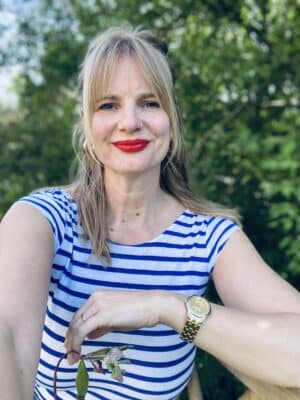
"There is a huge professional trust in me and it’s given to me until I lose it," Ripp explains. "It’s mine to lose rather than mine to gain."
3. Design for Regulation, Not Control
Danish schools view physical movement, outdoor access, and unstructured play not as rewards to be earned, but as fundamental biological requirements for student regulation. Recess happens regardless of weather, and schools actively accommodate physical play—such as designated snowball-fight zones—rather than policing minor infractions.
Furthermore, student wellbeing is prioritized over hyper-individualism. Through dedicated community hours, students tackle social friction collaboratively, reinforcing the notion that schools exist to build functioning communities rather than isolated academic performers.
Implications for U.S. Schools and Educators
While individual teachers in the U.S. often feel powerless against district mandates, state testing pressures, and cultural expectations, Ripp offers a roadmap for grassroots transformation through intentional subtraction.
How U.S. Administrators Can Pivot:
- Audit Restrictions: School leadership should systematically review field trip protocols, sign-out rules, and permission processes to identify unnecessary administrative friction that drains teacher energy.
- Protect Prep Time: True planning time must be protected from intercom announcements, drop-in interruptions, and emergency coverage requests. Restructuring schedules into longer, uninterrupted blocks can yield massive psychological benefits.
- Overhaul Sub-Cultures: By investing in permanent building substitutes and school-wide contingency activities, schools can eliminate the crushing burden placed on sick teachers to write exhaustive sub plans.
How U.S. Teachers Can Reclaim Their Practice:
- Embrace "Good Enough": Ripp’s primary piece of advice to American educators is to grant themselves grace by aiming for "good enough." Teachers can purposefully slow down their pacing, cut peripheral units ("killing your darlings"), and focus on going deeper into fewer topics.
- Experiment with an 80% Mindset: Ripp suggests a thought experiment for overwhelmed teachers: Imagine you have been placed on an 80% contract instead of full-time. What would you have to cut from your schedule? Once identified, educators should actively remove those elements from their daily routines and channel that recovered energy into personal well-being.
- Empower Student Autonomy: Rather than micromanaging every hallway transition or classroom movement, teachers can incrementally shift responsibility back to students, treating developmental missteps as teachable moments rather than systemic failures.
Ultimately, the Danish educational model proves that academic rigor does not require a constant state of emergency. By trading hyper-control for professional trust, and an endless to-do list for intentional simplicity, school systems can become humane, enriching spaces for both the educators who guide them and the students who inhabit them.