Rethinking Performance Assessment: Moving Beyond Rote Memorization to Authentic Learning with Jay McTighe
By Educational Insights Desk
Published: October 2026
Main Facts
Education systems worldwide have long relied on traditional, standardized testing to quantify student knowledge. However, renowned curriculum and assessment expert Jay McTighe argues that standard examinations fail to measure a student’s true capacity to apply, adapt, and transfer knowledge in real-world scenarios. In a recent interview, McTighe—co-author of the seminal text Understanding by Design alongside Grant Wiggins—joined forces with Kristina Doubet and Eric Carbaugh to release Designing Authentic Performance Tasks and Projects: Tools for Meaningful Learning and Assessment.
The core thesis of McTighe’s recent work centers on "performance tasks": assignments where students demonstrate mastery by executing meaningful actions, such as solving authentic problems, crafting persuasive proposals, and creating products for actual audiences. Rather than treating these assessments as end-of-unit add-ons, McTighe advocates for backward design, embedding performance tasks at the very inception of a unit. This methodology ensures that instruction targets practical application and higher-order thinking rather than mere rote memorization.
Chronology and Historical Context
The conversation surrounding educational reform and authentic assessment has evolved over decades, heavily influenced by cognitive science and the shifting demands of the modern workforce.

- The Late 20th Century: Traditional American schooling prioritized content coverage, standardized testing, and the recall of fragmented facts. Instruction often operated on a "coverage model," where teachers rushed through textbooks to prepare students for multiple-choice exams.
- The 1990s and Early 2000s: The publication of Understanding by Design by Jay McTighe and Grant Wiggins introduced the concept of "backward design." Educators were urged to begin curriculum planning by identifying desired results and acceptable evidence of learning—sparking early interest in performance-based assessments.
- The 2010s: As the global economy shifted toward critical thinking, problem-solving, and adaptability, traditional testing methods faced increasing scrutiny. Educators realized that knowing facts was insufficient; students needed to know what to do with those facts.
- The Present Era: McTighe, building upon his past frameworks and collaborating with contemporary experts like Kristina Doubet and Eric Carbaugh, has focused heavily on refining the architecture of performance tasks. His latest initiatives aim to prevent common design mistakes, ensuring that performance assessments genuinely measure deep conceptual understanding rather than surface-level aesthetic polish.
Supporting Data and Conceptual Frameworks
To help educators transition from theoretical concepts to practical execution, McTighe emphasizes specific pedagogical frameworks and design elements.
The Sports Metaphor: Playbook vs. The Game
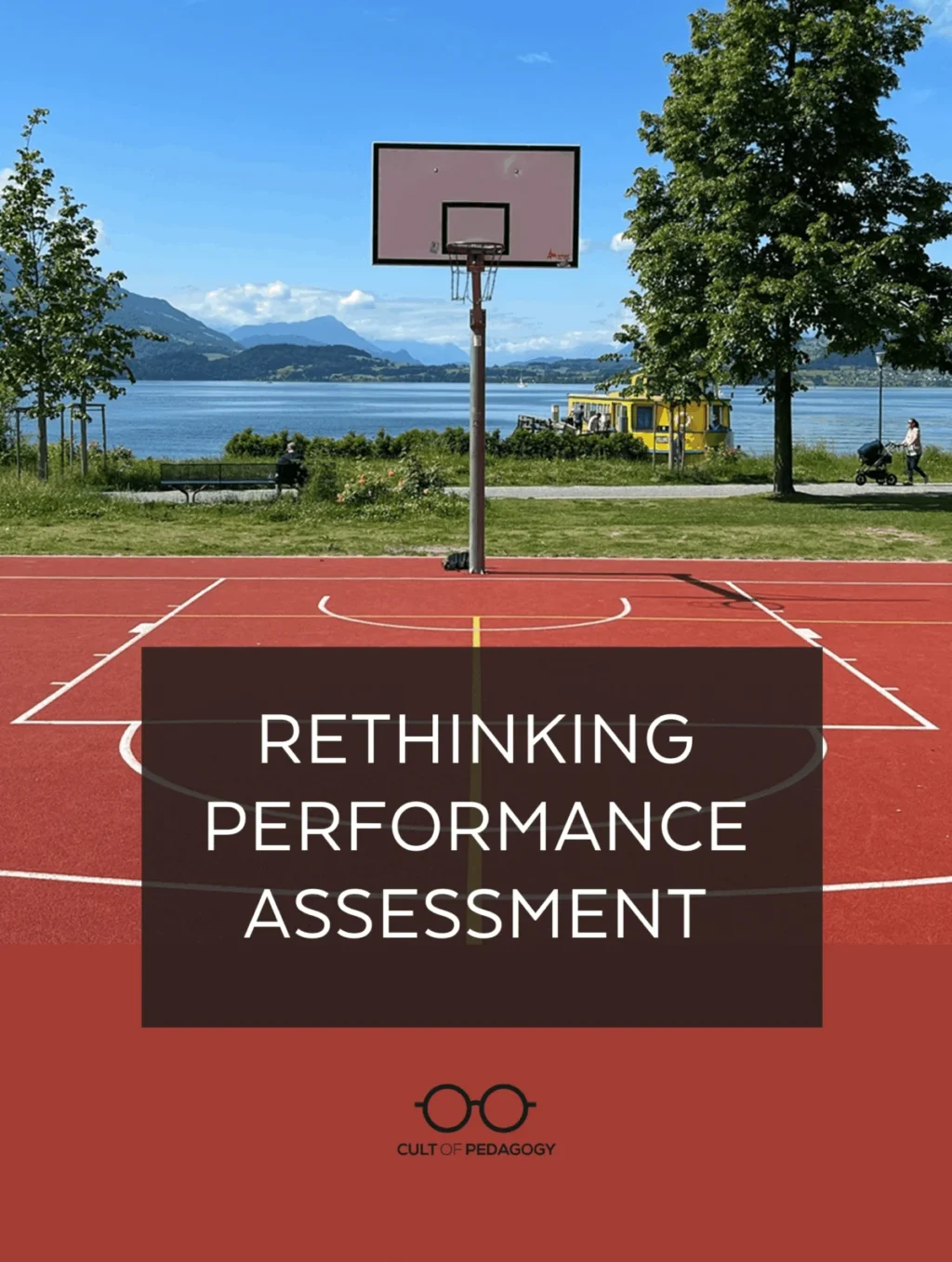
McTighe frequently utilizes a sports analogy to illuminate systemic flaws in traditional instruction. He notes that a basketball coach would never spend an entire season teaching passing, dribbling, and shooting through isolated drills without ever letting players participate in an actual game. Yet, classrooms routinely instruct students on discrete skills and concepts, culminating in written tests that isolate knowledge from practical application.
Similarly, a theater director would not spend a semester teaching vocal projection and blocking without putting on a play. Authentic performance tasks provide the "game" context, making sense of the "playbook" drills.
Core Ingredients of Effective Performance Tasks
According to McTighe, a robust performance task must incorporate four primary pillars:
- Application and Explanation: Students must do more than regurgitate information; they must apply their skills to a unique situation and defend their reasoning.
- Authenticity: Tasks should replicate the kinds of challenges professionals face in the real world, grounding abstract academic concepts in tangible purposes.
- Open-Endedness: Effective tasks avoid rigid, single-answer solutions, allowing multiple viable pathways to achieve a goal.
- Higher-Order Thinking: Assessments should demand cognitive rigor matching Norman Webb’s Depth of Knowledge (DOK) Level 3 or 4, involving multi-step problem-solving, evaluation, and critique.
Real-World Task Examples
- State Tour (History/Geography): Students act as tourism advisors, crafting a comprehensive four-day itinerary that highlights economic assets, history, and geographical features, justifying their strategic choices.
- Responsible Citizen (Civics): Students identify a tangible community or school issue, develop a viable solution, and pitch it persuasively to an authority figure, such as a principal or city council member.
- Making the Grade (Math): When studying central tendency, students analyze their own academic performance to determine whether the mean, median, or mode yields the most favorable grade, defending their calculation to their teacher.
The GRASPS Framework
To assist educators in building realistic scenarios, McTighe and Wiggins developed the GRASPS mnemonic:
- Goal: What challenge or problem must the student solve?
- Role: What persona or professional role is the student adopting?
- Audience: Who is the target beneficiary or evaluator of the work?
- Situation: What is the real-world context framing the challenge?
- Product: What artifact, proposal, or solution is being created?
- Standards: What criteria will be used to evaluate the success of the outcome?
Official Responses and Expert Insights
Educators, curriculum specialists, and school administrators have responded enthusiastically to McTighe’s systematic approach, though many acknowledge the institutional hurdles involved in transforming traditional grading cultures.
Supporters of the performance task methodology highlight its profound impact on student engagement. When students are given choice, relevance, and the opportunity to direct their own learning toward authentic audiences, intrinsic motivation increases dramatically. Teachers note that struggling learners who often disengage during traditional lecture-and-test cycles frequently shine when asked to design physical solutions or present persuasive arguments.
Conversely, critics and cautious administrators point to structural challenges:

- Time Constraints: Designing open-ended tasks and grading qualitative, multifaceted rubrics requires significantly more planning and evaluation time than grading automated multiple-choice tests.
- Standardized Testing Pressures: Many school districts remain bound by high-stakes state exams that continue to reward rote memorization, creating a tension between teaching for authentic understanding and teaching to the test.
- Subjectivity in Grading: Without well-calibrated rubrics and impact-focused assessment criteria, evaluating performance tasks can introduce instructor bias. McTighe combats this by urging educators to focus rubrics strictly on targeted learning objectives rather than superficial elements like presentation neatness.
Implications for the Future of Education
The widespread integration of authentic performance tasks carries profound implications for classrooms, teacher preparation programs, and institutional assessment policies.
Shifting the Teacher’s Role
As classrooms move toward performance-based paradigms, the teacher transitions from being a dispenser of information to a facilitator and coach. Formative assessments begin to mirror sports "scrimmages"—smaller, low-stakes tasks where students practice integrating skills and receiving constructive feedback before executing independent performance tasks.
Grading and Equity
McTighe’s warning against "assessing the wrong things" has major implications for educational equity. When teachers penalize students for minor spelling or formatting errors on a science project that requires deep scientific reasoning, they conflate communication mechanics with conceptual comprehension. Adopting "impact criteria"—evaluating whether an error actually impedes the effectiveness of a student’s argument—ensures that grading remains focused on core academic competencies.
Redefining Rigor
Ultimately, the push for authentic performance assessment redefines what academic rigor means in the 21st century. Rigor is no longer measured by the volume of content a student can memorize for a Friday quiz, but by their ability to transfer learning across contexts, solve novel problems, and defend logical conclusions. As Jay McTighe aptly summarizes: "Our job is not to cover the playbook. The playbook is a resource. The game is what we’re preparing for."