The Artificial Intelligence Classroom Crisis: Why Journalism Education is Our Best Defense Against Automated Apathy
By Educational Technology & Civil Society Desk
Published in Partnership with eSchool News
Main Facts
The rapid, largely unregulated integration of generative Artificial Intelligence into modern education poses an existential threat to the cognitive development of students, according to a landmark report by the Brookings Institution’s Center for Universal Education. Following an exhaustive year-long study—which included extensive focus groups and interviews with over 500 students, parents, and educators—researchers warned that an uncritical, overreliance on large language models and automated chatbots risks stunting foundational human competencies, particularly critical thinking, source evaluation, and independent problem-solving.
However, the report emphasizes a crucial caveat: the encroaching tide of educational technology does not have to spell the end of human intellect. Brookings posits that generative AI can theoretically amplify learning outcomes rather than supplant them—provided that young people are taught to think autonomously before they are handed the algorithmic keys to their education.
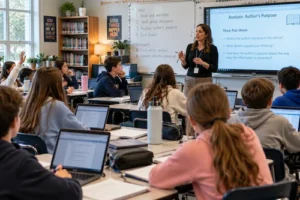
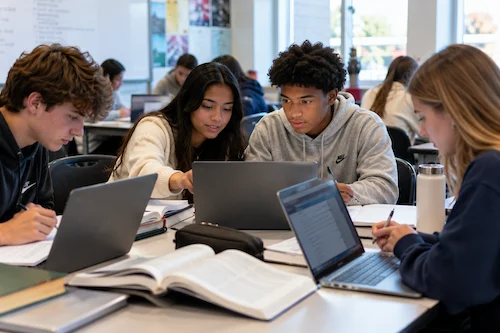
Nowhere is this pedagogical philosophy more urgently needed, or more successfully applied, than in the middle and high school journalism classroom. Educators on the front lines, such as Sireesha N. Rutter of Jupiter Middle School in Palm Beach County, Florida, argue that the traditional newsroom model serves as the ultimate "AI-proof" laboratory. By forcing students to wrestle with raw data, verify facts through human interviews, navigate complex ethical dilemmas, and construct original narratives without the crutch of automated text generation, journalism classes are quietly producing a generation of critical thinkers uniquely equipped to withstand the seductions of digital automation.
Chronology of a Crisis: How We Got Here
To understand the current panic surrounding generative AI in classrooms, one must trace the dizzying trajectory of educational technology over the past decade.
- Pre-2022 (The Digital Transition): Schools rapidly adopted 1:1 laptop initiatives and cloud-based learning management systems. While intended to bridge the digital divide, these tools increasingly shifted student interaction from interpersonal discourse to screen-bound isolation.
- Late 2022 (The Generative Explosion): The public release of OpenAI’s ChatGPT and subsequent generative models upended traditional pedagogical assessment. Overnight, essay writing, problem-solving, and basic research could be outsourced to a machine in seconds.
- 2023–2024 (The Panic and Prohibition Phase): School districts nationwide scrambled to draft policies. Many initially outright banned AI tools, fearing rampant academic dishonesty, while others embraced them with little understanding of their psychological and cognitive fallout.
- 2025–2026 (The Reckoning): Comprehensive studies—culminating in the recent Brookings Institution report—began to document the long-term cognitive costs of outsourcing mental labor. Educators reported a measurable decline in students’ attention spans, source-checking abilities, and resilience when faced with ambiguous intellectual tasks.
- The Present Day: Progressive educators are shifting away from reactionary bans toward foundational resistance. In classrooms like Rutter’s newsroom in Jupiter, Florida, educators are utilizing age-old journalistic traditions—fact-checking, editorial meetings, and deadline pressures—as a bulwark against cognitive offloading.
Supporting Data: What the Research Shows
The warnings issued by the Brookings Institution are supported by a growing body of independent psychological and sociological data regarding the intersection of artificial intelligence and human cognition.
- The Brookings Findings: Out of the 500 stakeholders surveyed (students, parents, and educators), a clear consensus emerged that systemic risks—such as algorithmic bias, diminished attention spans, and the atrophy of analytical reasoning—currently outweigh the speculative productivity benefits of generative AI in early education.
- The APA Data: Recent studies highlighted by the American Psychological Association (APA) indicate a direct correlation between early, unmonitored reliance on automated assistance tools and a measurable reduction in workforce-ready critical thinking skills among adolescents.
- The "Filter Bubble" Effect: Modern adolescents spend an average of seven hours a day interacting with personalized social media feeds and conversational bots. This hyper-curated digital diet has been shown to degrade empathy and narrow ideological exposure, making deliberate exercises in perspective-taking critically urgent.
- News Literacy Deficits: According to ongoing national assessments by organizations like the News Literacy Project, students who rely primarily on social media algorithms (such as TikTok feeds) for news consumption display significantly lower capacity to distinguish between native advertising, subjective opinion, and verified factual reporting compared to peers trained in basic journalistic verification.
Official Responses and Perspectives
The friction between technological advancement and human-centric education has sparked intense debate among policymakers, educational theorists, and classroom practitioners.
The Institutional Warning: The Brookings Institution
Researchers at the Brookings Center for Universal Education emphasize that technology developers and school administrators have rushed to digitize classrooms without adequately planning for the human cost.
"Overreliance on AI could stunt skills like critical thinking before students have had the chance to learn them," the Brookings report states. "It doesn’t have to be this way… AI technology can enhance student learning instead of supplanting it—if young people learn to think for themselves first."
The Frontline Perspective: Sireesha N. Rutter
Speaking at the National News Literacy Conference, Rutter, who teaches English Language Arts and journalism at Jupiter Middle School, highlighted the irreplaceable value of human friction in the learning process. In a classroom converted into a functioning newsroom, Rutter’s students do not open browser windows to ask an LLM to write their articles. Instead, they chase down leads, verify press passes, and debate the ethical framing of stories.
"They rely on their own brain power instead of offloading difficult tasks to a chatbot," Rutter notes. "In the process, they’re not only learning how to think for themselves but also getting an education in what it means to be an informed and engaged member of their community."
Rutter points to a powerful real-world example from her classroom last year. A student wanted to investigate the efficacy of school safety lockdown drills. Given that Jupiter Middle School is located just an hour’s drive from Parkland, Florida—the site of the tragic 2018 mass shooting at Marjory Stoneman Douglas High School—the topic was profoundly sensitive.
"She was genuinely nervous about writing the story," Rutter recalls. "She worried that questioning a practice designed to protect students might be perceived as criticizing it."
Instead of letting the student use a shortcut or drop the uncomfortable topic, Rutter steered her toward core journalistic responsibility: "Her job was to ask a legitimate question and then do the work necessary to answer it responsibly. She researched the purpose and effectiveness of safety drills, sought out credible information like case studies and statistics, and considered perspectives beyond her own experience as a student."
Implications: The Future of Gen Alpha and Human Agency
The implications of this educational pivot extend far beyond the middle school classroom. As Generation Alpha (those born from 2010 onward) moves toward higher education and the workforce, society faces a stark fork in the road.
1. The Death of Nuance vs. The Revival of Inquiry
If schools continue to permit generative AI to serve as an intellectual surrogate—writing essays, summarizing complex texts, and generating ideas without human friction—we risk cultivating a generation incapable of navigating gray areas. Journalism classes demand nuance. They force students to actively seek out opposing viewpoints, weigh competing ethical obligations, and defend their conclusions under the weight of peer review and editorial oversight.
2. Civic Health and the Combat Against Disinformation
In an era dominated by deepfakes, synthetic text, and polarized echo chambers, the ability to discern fact from fiction is a matter of democratic survival. When sixth graders are taught to evaluate the credibility of a TikTok post versus a vetted news source, they are not merely learning how to write a school paper; they are learning how to be citizens.
"Credible information doesn’t happen by accident; it requires responsibility and care," Rutter observes. "When tweens and teens are trusted to produce real journalism, they begin to understand their role in contributing thoughtfully to their community."
3. Re-allocating Educational Resources
To stave off the cognitive erosion warned of by the Brookings Institution, school districts must rethink how they invest their limited funding. Rather than chasing the latest costly subscription-based AI learning platform, educational systems should prioritize robust, experiential curricula like news literacy and journalism.
The ultimate goal of modern schooling in the age of algorithms is not to manufacture a factory floor of professional journalists. Rather, it is to equip every student with the human capacity to ask hard questions, listen attentively to complicated answers, and maintain the intellectual autonomy that defines our humanity.
As artificial intelligence accelerates its infiltration into our daily lives, the humble newsroom stands as a vital sanctuary—proving that some tasks, particularly the messy, beautiful, and essential work of human thought, can never be safely outsourced to a machine.