The Mechanics of Innovation: How Simple Machines Shape Our World and Inspire Future Engineers
At their core, the tools that define modern civilization are not complex, high-speed microprocessors or intricate software architectures. Instead, they are rooted in six fundamental mechanical devices: the lever, the inclined plane, the wedge, the screw, the wheel and axle, and the pulley. These "simple machines" represent the building blocks of human ingenuity. By requiring few or no moving parts, they allow us to manipulate force, distance, and direction, effectively making the impossible possible.
Whether it is a child pushing a toy car across the floor or a skyscraper’s elevator ascending hundreds of feet, we are surrounded by these mechanical marvels. Understanding them is not merely an academic exercise in physics; it is the first step toward developing the critical thinking skills required for engineering and design.
Defining "Work" in the Physical Sense
To appreciate why these machines are so vital, one must first redefine the concept of "work." In physics, work is not the effort exerted during a long day at the office or the act of studying; it is a precise mathematical calculation. Work ($W$) is defined as the product of the force ($F$) applied to an object and the distance ($d$) over which that force is applied. The formula is expressed as:
$W = F times d$
This distinction is crucial. If you attempt to lift a heavy elevator by hand, you are applying a force, but the sheer magnitude of the mass makes the distance component of the work impossible to achieve for a human. A pulley system, however, does not necessarily reduce the total amount of work required—the law of conservation of energy dictates that the work input remains constant. Instead, the pulley provides a "mechanical advantage," allowing a user to apply less force over a greater distance or over a longer period. This is the hallmark of human engineering: the ability to circumvent physical limitations through clever mechanical design.
The Chronology of Mechanics: From Ancient Foundations to Modern STEM
The study of simple machines dates back to the Third Century BCE, when Greek polymath Archimedes laid the groundwork for classical mechanics. His famous declaration, "Give me a place to stand, and I will move the Earth," was a direct reference to the power of the lever.
Throughout history, these machines facilitated the construction of the Great Pyramids, the development of irrigation systems, and the birth of the Industrial Revolution. As we transitioned into the 21st century, the focus shifted from pure utility to educational application. Today, these ancient concepts are the bedrock of STEM (Science, Technology, Engineering, and Mathematics) curricula. By engaging with these principles, students bridge the gap between abstract physics equations and tangible, real-world solutions.
Supporting Data: Why Hands-On Projects Matter
Educational research consistently demonstrates that experiential learning—specifically "tinkering"—improves cognitive retention. A study on STEM integration in primary schools indicates that students who engage in hands-on building activities are 40% more likely to pursue advanced coursework in physics and engineering.
The following projects serve as a practical demonstration of these mechanical principles, transforming abstract theories into tactile reality.
1. The Pulley: Reducing Effort
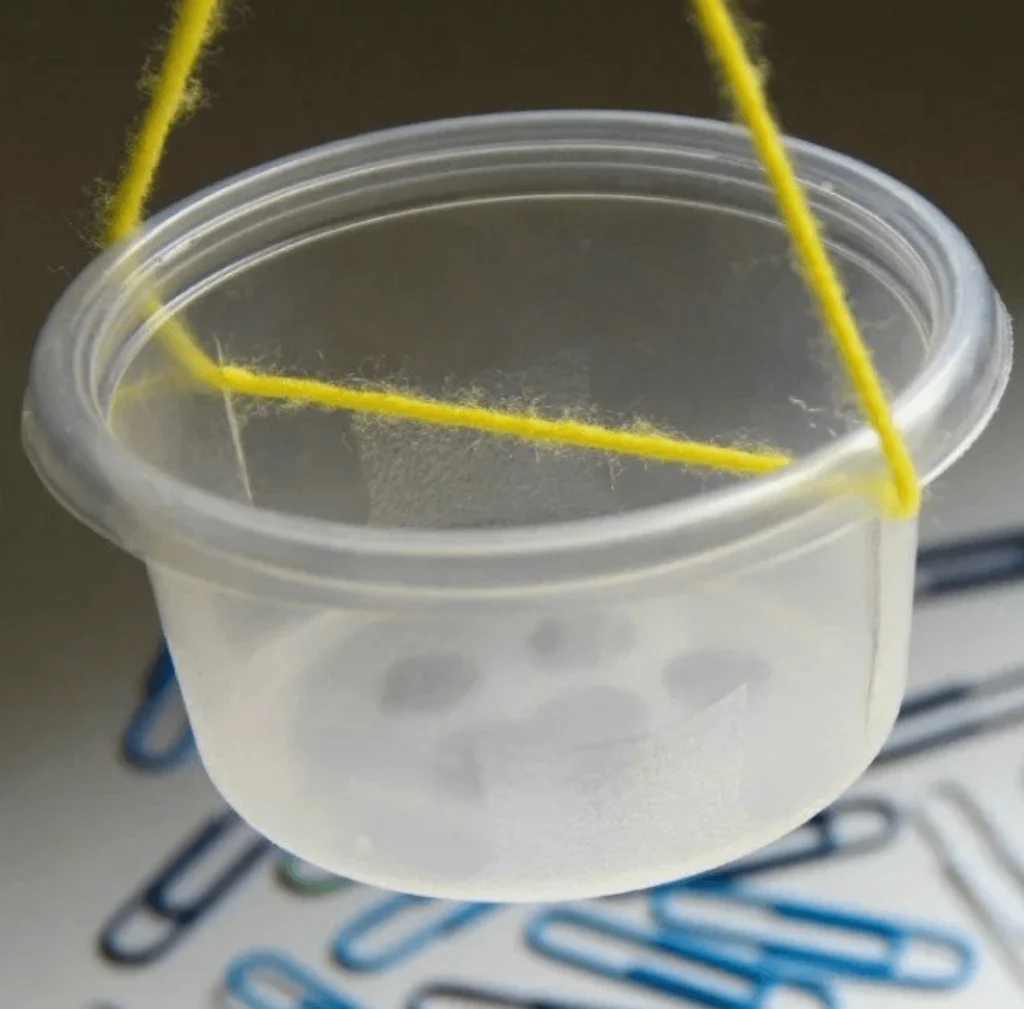
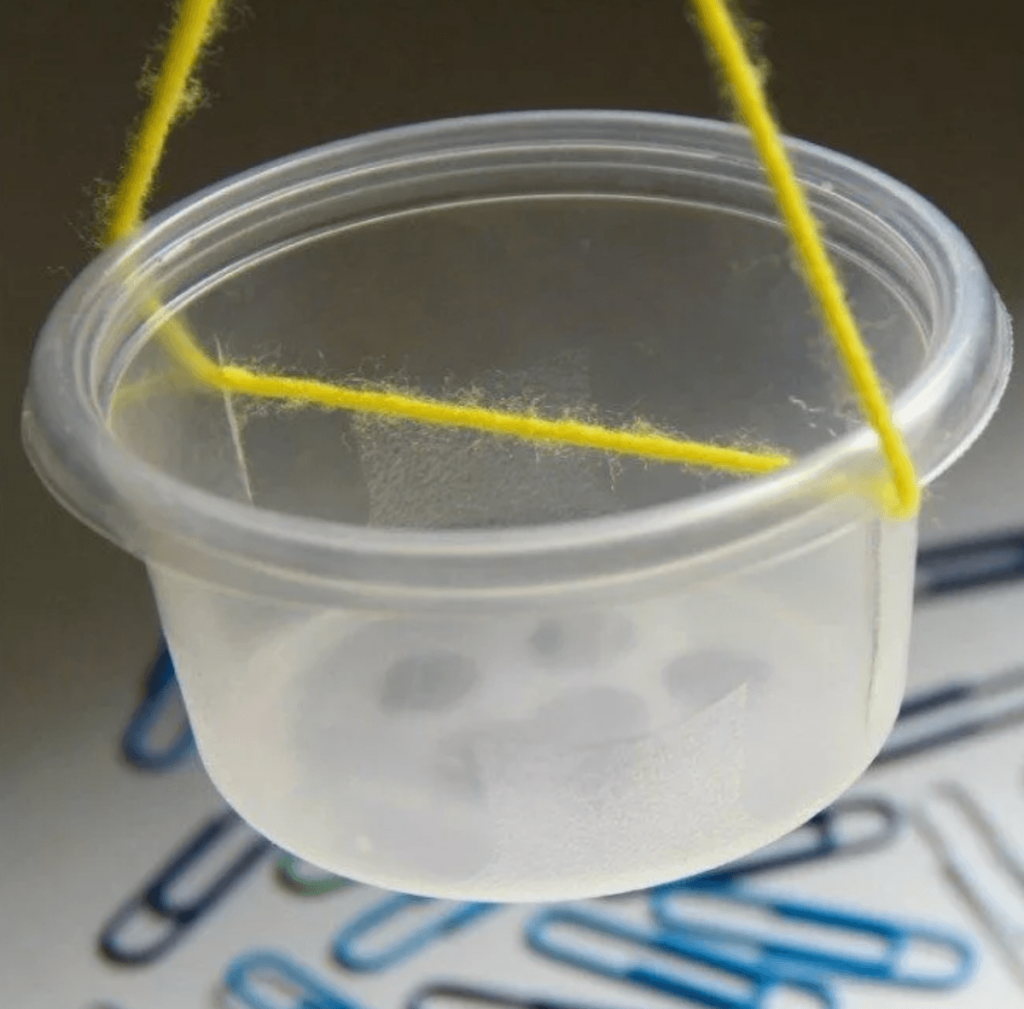
By creating a DIY pulley system using string and a spool, students can witness the reduction of effort firsthand. By rigging a load to a pulley, the force required to lift it becomes significantly more manageable compared to a direct vertical lift.
2. The Inclined Plane: The Geometry of Movement
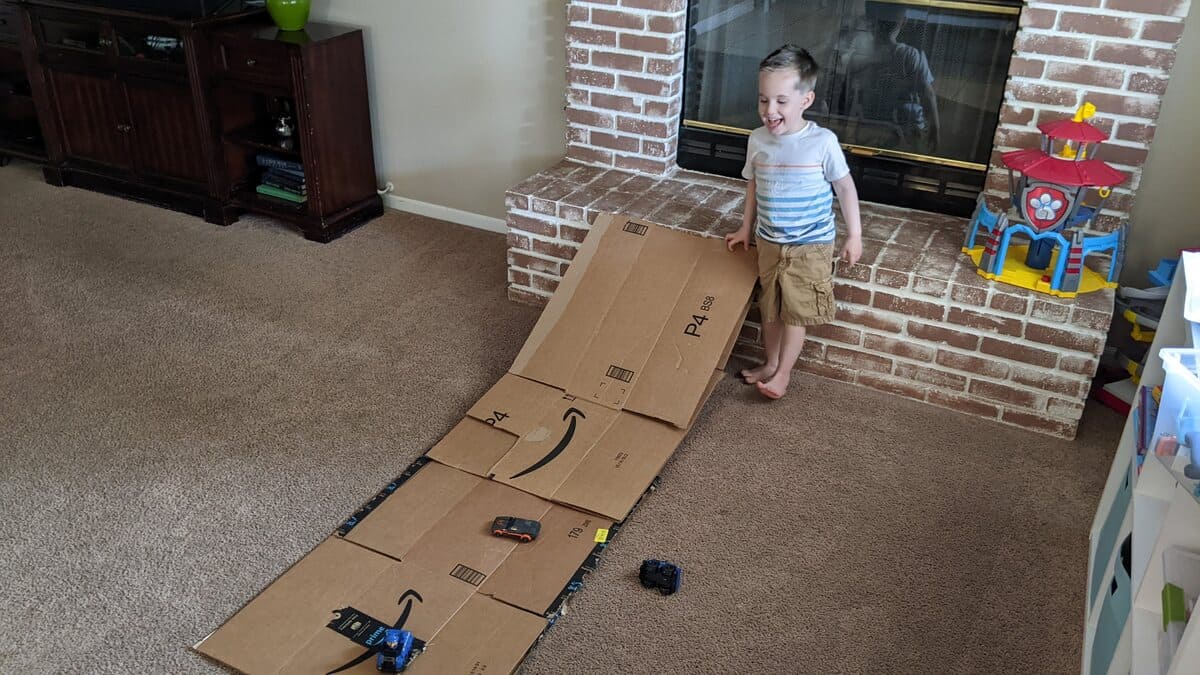
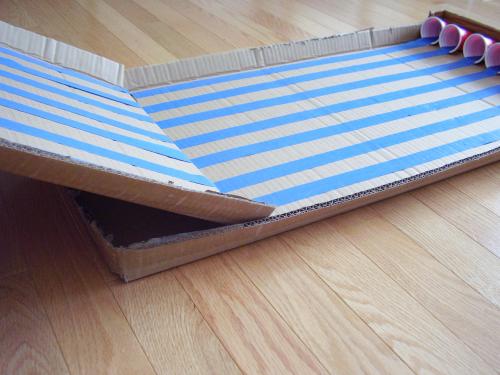
An inclined plane, such as a marble run or a ramp, illustrates how force can be distributed over a longer distance. Racing marbles down various slopes of different angles allows students to calculate how the inclination affects velocity and the force required to maintain motion.
3. The Lever: The Fulcrum’s Role
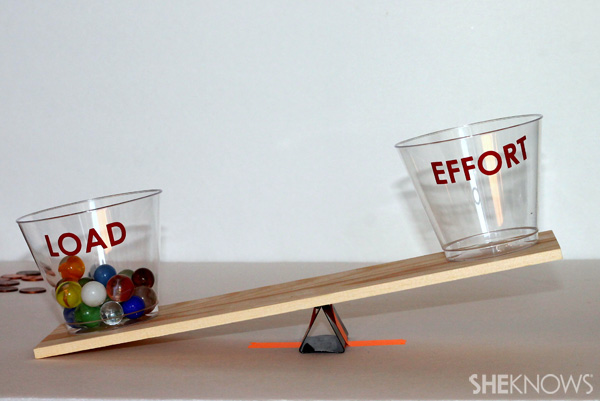
Using a simple binder clip and a ruler, one can construct a functional lever. By adjusting the position of the fulcrum—the pivot point—students can observe how the "load" and "effort" arms interact. This experiment provides a clear visual representation of how small forces can move significant loads.
4. The Wedge: Splitting Forces
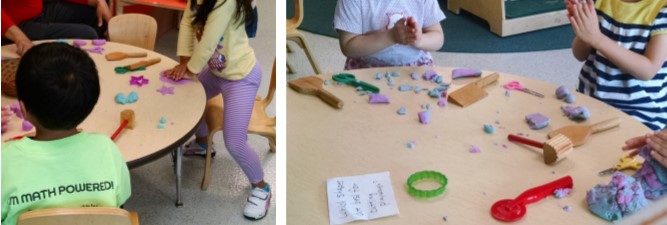
While an ax is the most recognizable wedge, it is dangerous for classroom settings. Using play-dough to simulate "logs" and wooden triangular wedges demonstrates how a thin edge converts forward force into lateral force, effectively splitting the material.
5. The Screw: The Inclined Plane in a Spiral
Demonstrating the screw is best done through a comparison: trying to push a nail into wood manually versus driving a screw into the same material. The screw acts as a rotating inclined plane, allowing for greater grip and force application with less human effort.
6. The Wheel and Axle: Reducing Friction
By repurposing cardboard tubes and plastic bottle caps, students can create rudimentary vehicles. This project underscores how the wheel and axle combination drastically reduces the friction that would otherwise occur if an object were dragged across a surface.
Official Perspectives: Addressing Common Misconceptions
Despite their simplicity, common misconceptions often hinder a full understanding of these machines. Educators frequently highlight three areas of confusion:
- The Uniformity of Levers: Many believe all levers function identically. In reality, they are categorized into three classes based on the arrangement of the fulcrum, the load, and the effort. Understanding these distinctions is essential for identifying why a seesaw (first-class), a wheelbarrow (second-class), and a pair of tongs (third-class) have such different mechanical outputs.
- The Role of Friction: Friction is often viewed as a purely detrimental force. However, engineers acknowledge it as a necessity. A wedge would be useless without the friction that grips the material, and a wheel would spin uselessly on the ground without the friction required for traction.
- The "Work-Reduction" Myth: The most pervasive misconception is that machines reduce the total amount of work performed. In physics, the work required to move an object from point A to point B is constant. Simple machines change how that work is performed—usually by trading force for distance—but they do not eliminate the work itself.
Implications for Future Engineers
The implications of mastering simple machines extend far beyond the classroom. These devices are the fundamental "vocabulary" of complex machines. A modern car, for example, is a massive compound machine—a collection of wheels, axles, screws, and levers working in tandem.
When a student learns to build a simple marble run or a cardboard car, they are not just playing; they are learning to think like a systems engineer. They are learning to identify a problem (e.g., "this load is too heavy"), choose the appropriate mechanical advantage (e.g., "a pulley will distribute the weight"), and execute a design.
As we look toward an increasingly automated future, the ability to decompose complex tasks into simple mechanical steps remains the most valuable skill an engineer can possess. Whether it is designing a robotics arm or a sustainable transport system, the principles established by Archimedes remain as relevant today as they were millennia ago.
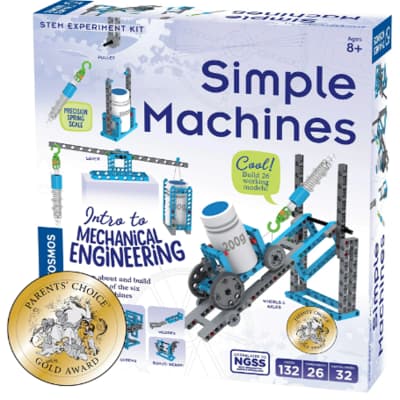
By fostering this curiosity through STEM subscription boxes or DIY model kits, we ensure that the next generation is not only capable of using the tools of the modern world but is also prepared to innovate and build the next generation of mechanical solutions. The journey of engineering begins with the simple realization that we can make the world work a little bit easier, one machine at a time.