TASH in Action: Safeguarding Disability Rights Amidst a Shifting Policy Landscape
As the summer of 2026 unfolds, the disability advocacy community finds itself at a critical crossroads. With the Fourth of July serving as a poignant reminder of the nation’s foundational promises of liberty and equality, organizations like TASH are doubling down on their mission to ensure these rights extend fully to people with disabilities. From challenging federal administrative reorganizations to navigating a volatile legal environment regarding community living, the advocacy landscape is more active—and more essential—than ever.

The State of Federal Advocacy: A Time of High Stakes
In his recent address to the TASH community, Executive Director Michael Brogioli emphasized that the organization’s commitment to the rights and dignity of individuals with disabilities remains “steadfast.” However, this commitment is currently being tested by significant shifts in federal governance.

The Reorganization of OSERS and OCR
The most pressing concern involves the administration’s proposal to restructure federal oversight of disability programs. Specifically, there are active plans to transfer the Office of Special Education and Rehabilitative Services (OSERS) from the U.S. Department of Education to the Administration for Community Living (ACL). Simultaneously, the Office for Civil Rights (OCR) faces a potential move to the Department of Justice.

TASH has formally expressed deep concerns regarding these interagency agreements. According to the organization, these moves raise critical questions about:

- Accountability: How will federal oversight maintain its teeth when departments are shuffled?
- Educational Integrity: Will the focus on inclusive education be diluted if special education oversight is moved away from the Department of Education?
- Civil Rights Enforcement: Can the Department of Justice manage the breadth of OCR’s responsibilities while maintaining the same level of focus on student-specific rights?
Brogioli urges stakeholders to review the official TASH statement, which highlights that federal leadership is the bedrock of inclusive education. Without a strong, centralized presence in the Department of Education, advocates fear that decades of progress toward inclusive schooling could be eroded.
Chronology of Recent Developments: June 2026
The past month has been a whirlwind of policy challenges and advocacy milestones. Below is a timeline of the key events shaping the current discourse:

- June 3: PennTASH releases its webinar, Community Life Engagement (CLE) in Action, featuring experts Dr. Jennifer Sulewski and Dr. Kelly Doran, highlighting the necessity of meaningful daily engagement for people with significant support needs.
- June 9–11: TASH leadership attends the 19th Annual Conference of State Parties (COSP19) to the Convention on the Rights of Persons with Disabilities (CRPD) at the United Nations. Executive Director Michael Brogioli met with Ambassador Luis Gallegos, a key architect of the historic UN Convention.
- June 18: The Department of Justice, Office of Legal Counsel (OLC), releases a controversial legal opinion asserting that the Rehabilitation Act, the Americans with Disabilities Act (ADA), and the Olmstead v. L.C. Supreme Court decision do not legally mandate states to provide services in community settings.
- June 23: TASH exhibits at the 150th AAIDD Annual Meeting, fostering collaborative relationships with other disability-focused organizations.
- Late June: TASH releases its Washington Update, providing critical analysis of federal funding changes in the House Fiscal Year 2027 Labor-HHS-Education Funding Bill and new developments in Medicaid work requirements.
The Olmstead Challenge: A Threat to Community Living
The most alarming development for disability advocates this summer is the June 18th legal opinion issued by the Department of Justice’s Office of Legal Counsel. The opinion challenges the interpretation of the landmark Olmstead v. L.C. decision, which has served for over 25 years as the primary legal shield protecting individuals with disabilities from unnecessary institutionalization.

The Legal Implications
By suggesting that the ADA and the Rehabilitation Act do not explicitly require community-based services, the OLC memo provides states with a potential roadmap to roll back support systems that allow people with disabilities to live, work, and thrive in their own homes.
Unified Opposition
The disability community has responded with swift and overwhelming condemnation. A coalition of the nation’s leading civil rights organizations—including the ACLU, The Arc, the Autistic Self Advocacy Network (ASAN), and the Bazelon Center for Mental Health Law—have all issued statements denouncing the memo. These groups argue that the opinion ignores decades of judicial precedent and threatens the very independence that the Americans with Disabilities Act was designed to uphold.

Strengthening the Pipeline: Education and Employment
Despite the challenging political climate, TASH continues to push forward on its mission to foster inclusion through professional development and policy advocacy.

The Outstanding Leadership in Disability Law Symposium
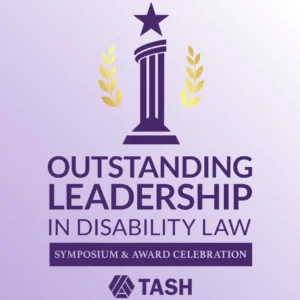
On July 21, 2026, TASH will host its Outstanding Leadership in Disability Law Symposium and Awards Celebration. This event is designed to equip attorneys, policymakers, and advocates with the tools necessary to defend disability rights in an increasingly complex legal environment.

A central highlight of the program will be a panel examining the rapidly changing landscape of special education. As schools grapple with shifting federal guidelines and the integration of new technologies, this symposium aims to provide clarity for families and educators who are often on the front lines of these policy battles. Notably, the symposium offers Continuing Legal Education (CLE) credits, which can be earned either in person or via video conference, ensuring broad access for professionals across the country.

Driving Independence in the Workforce
On July 14, 2026, the Disability Employment Technical Assistance Center (DETAC) will host a critical webinar: Driving Independence: Integrating Transportation Supports into Workforce Development.

Transportation remains one of the most significant barriers to competitive, integrated employment for people with disabilities. By partnering with national experts like Dr. Judy L. Shanley of Easterseals, the webinar will explore how to:

- Identify and coordinate local transportation resources.
- Leverage mobility management and travel training.
- Build partnerships with employers to ensure that transportation is treated as a core component of workforce development rather than an afterthought.
Looking Ahead: The 2026 TASH Conference
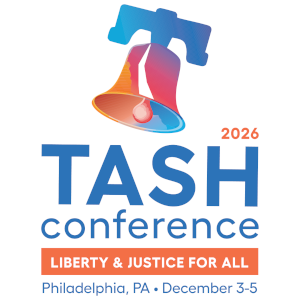
The year will culminate in Philadelphia, Pennsylvania, at the 2026 TASH Conference, scheduled for December 3–5. With the theme Liberty and Justice for All, the conference will serve as a hub for the latest research, advocacy strategies, and community-building efforts.

As the host city for the signing of the Declaration of Independence, Philadelphia provides a fitting backdrop for a conference focused on the unfinished work of expanding freedom and belonging. The event will feature a comprehensive schedule, including sessions on inclusive education, community life engagement, and the evolving role of technology in disability advocacy. Registration is currently open, and prospective attendees are encouraged to visit the official conference website to secure early discounts and hotel accommodations.

Supporting the Mission: The Power of Community
The progress made by TASH is fueled by its members, donors, and the broader disability community. As Michael Brogioli noted in his message to members, the work of expanding freedom, justice, and belonging is a collective endeavor.

How to Engage
- Join the TASH Career Center: Whether you are an employer seeking a values-based team member or a professional looking to make your next career move, the TASH Career Center provides a platform that prioritizes equity and inclusion.
- Stay Informed: Subscribing to the Washington Update and following TASH’s social media channels (including Facebook, Threads, LinkedIn, and YouTube) is essential for staying abreast of federal policy changes that impact the disability community.
- Contribute to Research: With new articles from Research and Practice for Persons with Severe Disabilities (RPSD) now available online, members have access to the latest peer-reviewed evidence to support their local advocacy efforts.
Conclusion: A Resilient Future
The summer of 2026 serves as a reminder that the rights of people with disabilities are not guaranteed; they are earned through persistent advocacy, rigorous research, and unwavering solidarity. While the recent DOJ memo and the proposed federal restructuring present significant hurdles, the TASH community remains undeterred.

By grounding its efforts in the principles of equity and inclusion, and by fostering collaboration between policymakers, legal experts, and families, TASH continues to pave the way toward a society where every individual is valued and empowered to participate fully in all aspects of life. As we look toward the fall and the upcoming national conference, the call to action is clear: the work of justice is ongoing, and it requires the participation of us all.