The Danish Blueprint: How Radical Trust and ‘Professional Subtraction’ are Redefining Educational Success
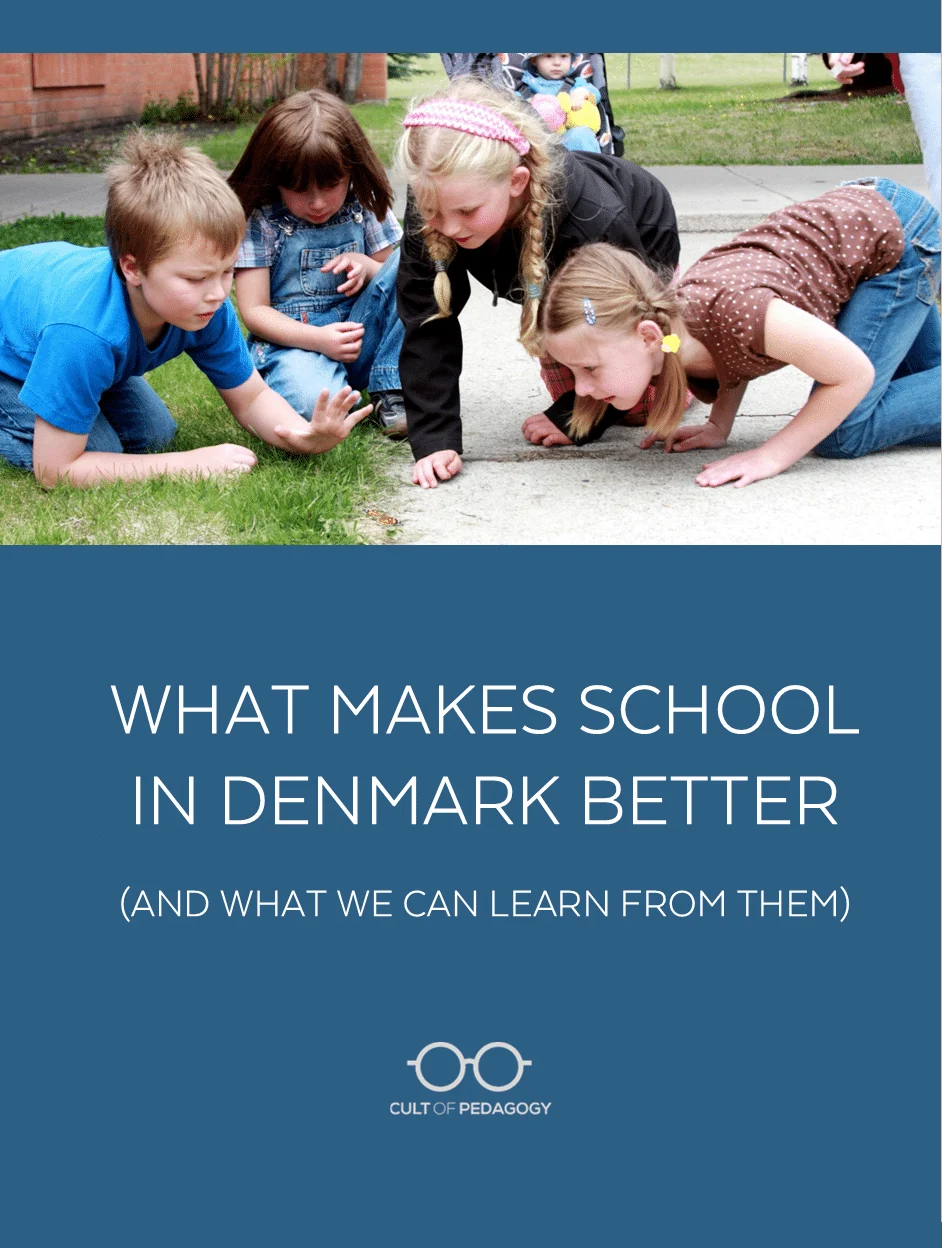
COPENHAGEN — In the landscape of global education reform, the United States has long looked toward international models to solve its mounting crises of teacher burnout, declining literacy rates, and student anxiety. While the focus often falls on the high-pressure, high-test-score environments of East Asia, a growing movement of educators is turning its gaze toward Scandinavia—specifically Denmark.
Pernille Ripp, a renowned author and literacy expert who spent over a decade teaching in the American Midwest before returning to her native Denmark, has become a pivotal voice in this cross-cultural dialogue. In a comprehensive analysis of the two systems, Ripp suggests that the secret to Danish educational success is not found in more programs or increased funding, but in a radical philosophy of "subtraction" and professional trust.
Main Facts: A Tale of Two Philosophies
The fundamental divide between U.S. and Danish schooling lies in the perception of the teacher’s role. In the United States, the educational climate has increasingly trended toward "teacher-proofing" the classroom—relying on scripted curricula, rigid pacing guides, and high-stakes standardized testing to ensure "accountability."
By contrast, the Danish system operates on a default of professional autonomy. According to Ripp, the Danish Ministry of Education recently performed a drastic pruning of its national standards, reducing hundreds of granular requirements to approximately ten broad, age-based goals. This shift empowers individual schools and teachers to determine the "how" of education, provided they meet the "what" of the overarching objectives.
Key distinctions identified in the Danish model include:
- The 50/50 Rule: A standard 40-hour workweek for teachers includes only 20 hours of direct student instruction, leaving the remainder for collaborative planning, assessment, and professional development.
- The Trust Default: Teachers do not require administrative permission for local field trips or curriculum adjustments; professional competence is assumed until proven otherwise.
- Developmental Patience: Formal grading is non-existent until the seventh grade, and formal reading instruction often begins significantly later than in the U.S., focusing first on oral language and social integration.
- Structural Support: Schools employ permanent, building-based substitute teachers, eliminating the need for "sub plans" and allowing ill teachers to focus entirely on recovery.
Chronology: From the American Heartland to the Baltic Coast
Pernille Ripp’s journey serves as a living case study for these systemic differences. For over ten years, Ripp was a prominent figure in American education, writing the influential book Passionate Learners and founding the Global Read Aloud. Her work in the U.S. was characterized by a constant battle against "compliance culture"—the pressure to meet data points that often felt at odds with the humanity of her students.
Several years ago, Ripp moved her family back to Denmark, transitioning her career into the Danish public school system. This move provided a "before-and-after" perspective on the toll that American educational expectations take on both faculty and students.
Upon entering the Danish system, Ripp noted a significant period of "unlearning." In the U.S., her daughter’s school experience had been highly curated; materials were provided, and schedules were strictly managed by adults. In Denmark, her daughter was expected to pack her own lunch and manage her own materials by the third grade. This transition highlighted a chronological shift in when autonomy is granted: in the U.S., autonomy is often treated as a reward to be earned; in Denmark, it is treated as a developmental requirement to be practiced from day one.

In recent years, as the U.S. has grappled with a post-pandemic teacher shortage and a "reading war" over phonics and literacy instruction, the Danish model has remained remarkably stable. This stability is attributed to a decades-long cultural commitment to Folkeskole (the "People’s School") philosophy, which prioritizes the development of the "whole human" over the "productive worker."
Supporting Data: The Logistics of a Human-Centric System
The efficacy of the Danish model is supported by structural data that challenges the American "more is better" mantra.
1. Time and Labor Allocation
In many U.S. districts, teachers are in front of students for six to seven hours a day, with a single 45-minute planning period that is often consumed by meetings or "covering" other classes. Danish teachers, however, operate on a 20-hour instructional cap per week. This 1:1 ratio of instruction to preparation is a cornerstone of the system. Data suggests that this reduces "decision fatigue," allowing teachers to be more present and creative during their active teaching hours.
2. The Economics of Substitution
The U.S. faces a chronic substitute teacher shortage, often requiring teachers to write exhaustive "emergency sub plans" even when incapacitated. Denmark’s investment in permanent building substitutes—staff members who are part of the school community—ensures that the curriculum does not grind to a halt when a lead teacher is absent. This eliminates the "hidden labor" of being sick in the American system.
3. Academic Timing and Literacy
While U.S. policy (such as "No Child Left Behind" and subsequent iterations) pushed rigorous academic standards into Kindergarten, Denmark maintains a play-based approach until age six or seven. Longitudinal observations noted by Ripp show that while Danish students may start reading "later" by U.S. standards, the gap closes rapidly by age nine or ten, often with lower rates of "reading resistance" and higher levels of intrinsic motivation.
Institutional Perspectives and Professional Responses
The reaction to these comparisons within the American educational establishment is often one of "qualified envy." Administrators frequently cite "liability" and "accountability" as the primary barriers to adopting Danish-style trust.
However, Ripp’s dialogue with Jennifer Gonzalez of The Cult of Pedagogy suggests that many of these barriers are cultural rather than legal. Ripp argues that while U.S. administrators often say they trust their teachers, the policies they implement—such as mandatory sign-out sheets for leaving the building or required "Learning Objectives" written on whiteboards—communicate the opposite.
"There is a huge professional trust in me and it’s given to me until I lose it," Ripp explains regarding her Danish experience. "In the U.S., trust is often something you have to spend years gaining, and even then, it can be revoked by a change in district leadership."
In response to the "Denmark is too small/homogeneous" critique often leveled at Scandinavian comparisons, proponents of Ripp’s view argue that "trust" and "subtraction" are not scale-dependent. They are choices made at the building level. Educational consultants are beginning to advise U.S. principals to perform "expectation audits"—identifying which mandates actually improve student outcomes and which merely serve to soothe administrative anxiety.
Implications: The Power of Subtraction
The implications of the Danish model for the future of U.S. education are profound, particularly regarding the retention of the teaching workforce. The "Danish Way" suggests that the solution to the teacher exodus is not higher pay alone (though Danish teachers are well-compensated), but a restoration of professional dignity.
For Teachers:
The primary implication is the need for "grace in good enough." Ripp advocates for American teachers to "kill their darlings"—to look at their overstuffed curricula and purposefully slow down. By choosing to teach 80 percent of the material at 100 percent depth, rather than 100 percent of the material at 50 percent depth, teachers can reclaim their mental health and improve student engagement.
For Students:
The Danish model implies that "risky play" and autonomy are essential for self-regulation. By removing the constant surveillance of the American school day—where every hallway transition is a controlled march—schools can allow students to develop the "social muscles" required for democracy. The Danish Klassens time (Class Hour), a dedicated weekly period for students to discuss community conflicts and social dynamics, offers a blueprint for organic Social-Emotional Learning (SEL) that feels less like a lecture and more like a town hall.
For Policy Makers:
The success of Denmark’s reduction of national goals suggests that "less is more" in the realm of standards. When the list of requirements is short, teachers can innovate. When it is long, they can only comply.
Conclusion: A Shift in Perspective
As the American educational system reaches a breaking point, the Danish model offers a compelling alternative: a system built on the assumption of competence rather than the fear of failure. Pernille Ripp’s experience suggests that the most effective changes are often the ones that cost the least.
"It wouldn’t necessarily require more money or new programs," Ripp notes, "just an adjustment of expectations to make them more realistic."
The challenge for U.S. schools is whether they can summon the courage to subtract. In a culture that equates "more" with "better," the Danish lesson is clear: to save the profession of teaching and the joy of learning, we may simply need to do less.
Pernille Ripp is the author of several books, including "Passionate Learners: How to Engage and Empower Your Students." She currently teaches in Denmark and continues to consult with educators worldwide on literacy and student agency.