Cultivating Resilience: How Benin’s Youth are Rewriting the Future of Agroforestry
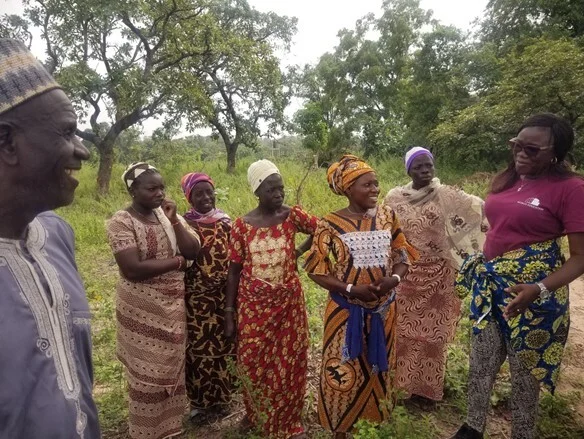
In the sun-drenched savannas of Northern Benin, a quiet revolution is taking root beneath the surface of the soil. It is a transformation driven not by top-down mandates, but by the digital-age insights of local youth, whose research into biodiversity is reshaping the landscape of African agriculture. Through the "AgroNative" initiative—a project facilitated by World Education, a JSI Initiative—young researchers are proving that the future of the green economy lies in the symbiosis between native ecosystems and entrepreneurial innovation.
By leveraging data-driven behavioral science and participatory research, these young pioneers are moving beyond traditional subsistence farming. They are building a collaborative network that mirrors the very mycelial webs beneath their feet: decentralized, adaptive, and profoundly interconnected.
The Genesis of a Green Paradigm
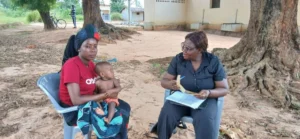
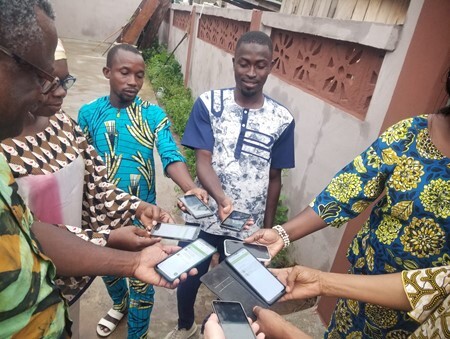
The story of this transformation begins in Wèrèkè, a community where the divide between ancestral agricultural practices and modern economic expectations once seemed insurmountable. In 2022, World Education initiated a youth-led research program designed to capture the vision of the next generation. Armed with smartphones, clipboards, and an insatiable curiosity, these young researchers set out to bridge the gap between their community’s potential and the reality of the global market.
The researchers were driven by pragmatic questions: Can ecological health be a catalyst for economic growth? Why do traditional family expectations push youth toward desk jobs when the land remains underutilized? Through behavioral surveys and field observations—such as documenting how birds from the Néré (Parkia biglobosa) tree naturally control grasshopper populations that threaten soya crops—the youth began to build an empirical case for eco-entrepreneurship.
Their findings were clear: thriving biodiversity is not just an environmental ideal; it is the essential infrastructure for agricultural output.
Chronology of Change: From Research to Implementation
2022: The Data Collection Phase
The initiative began with intensive participatory research. Young researchers interviewed community elders and parents, cataloging soundbites of local fauna and surveying crop health. This period served as a "proof of concept" phase, validating the hypothesis that agroforestry could provide a sustainable, profitable alternative to traditional labor.
2023–2025: The WSAB Project
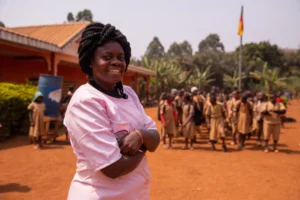
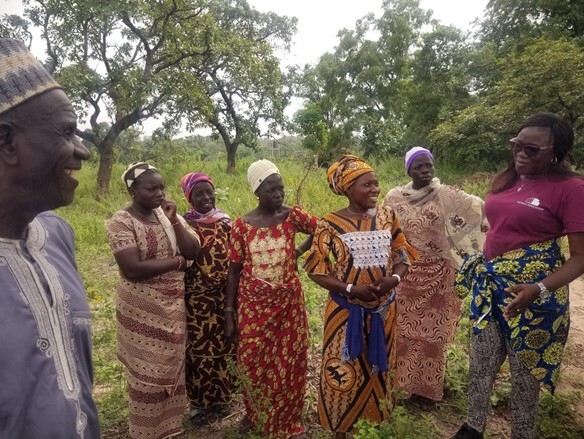
Building on the momentum of the Darwin Initiative-funded "Women-led, School-based Agroforestry in Benin" (WSAB) project, the focus shifted to action. This phase prioritized the inclusion of Mothers of Students Associations (AMEs) in the restoration of degraded land.
- The Results: 9.5 hectares of land were restored, 360 participants joined in community planting, and the microenterprises generated 1,180,000 FCFA in revenue. A portion of these funds was funneled directly back into school canteens, demonstrating the immediate socio-economic impact of the model.
2024–2026: The AgroNative Initiative
The current "AgroNative" project represents the scaling phase. Recognizing that individual labor was exhausting the women in the cooperative, the youth stepped in to restructure the cooperative model. They divided plots into sub-parcels, creating a rental system that empowered youth to manage individual startup enterprises while remaining part of a larger, collective whole. This phase expanded to five new villages and established Natural Resource Management Committees (NRMCs).
Supporting Data and Environmental Impact
The success of the initiative is anchored in hard metrics that demonstrate the viability of decentralized agro-business.
- Financial Sustainability: By implementing a symbolic monthly rental fee of 1,000 FCFA for sub-parcels, the youth have created a self-sustaining financial model. This allows them to treat the land as a business asset while contributing to the collective maintenance of the native canopy.
- Ecological Restoration: The project has moved beyond the constraints of Decree No 96-271. While the government decree requires one tree every 10 meters, the youth research identified that this density is insufficient to sustain the underground mycelial networks necessary for true ecosystem health. By pushing for higher tree density, the project is creating "living corridors" that support greater biodiversity.
- Community Reach: Through the work of the NRMCs, 150 members are actively overseeing production, with a target of benefiting 3,000 people across the region. Over 170 individuals have participated in "BioBlitzes," cataloging local flora to ensure that agricultural growth does not come at the cost of native species.
Official Perspectives and Structural Challenges
The project is a testament to the power of community-led policy adaptation. While Decree No 96-271 provides a legal framework, the youth researchers identified a "social disconnect" between this policy and the reality of farm management.
"Isolated trees mark a fractured ecosystem," note the researchers. Their work has highlighted that for agroforestry to succeed, it must be treated as a collective endeavor rather than a series of isolated, donor-funded plots.
In a recent evaluation, the youth discovered a critical lesson: when individual farmers receive direct asset donations without a group-cooperative structure, engagement drops, and the wider ecosystem suffers from fragmentation. Consequently, the AgroNative project has shifted its focus to reinforce collective cooperatives, ensuring that resources are shared and that the "mycelial web" of community collaboration remains intact.
Implications: Building a Symbiotic Future
The implications of the Benin model extend far beyond the borders of Wèrèkè. It offers a blueprint for how rural communities can bypass the traditional pitfalls of developmental aid by focusing on:
- Decentralized Leadership: Moving away from top-down mandates toward community-governed committees that act on local data.
- Adaptive Resilience: Learning from the natural world. Just as mycelium senses environmental shifts and dispatches resources to where they are needed, the NRMCs act as a responsive, human-centered network that protects saplings and guards resources against drought and livestock.
- Eco-Entrepreneurship: By framing conservation as a profitable business venture, the project has successfully engaged the youth demographic, preventing the "brain drain" of talent moving toward urban desk jobs.
A Lesson in Symbiosis
As the project looks toward the future, the focus remains on resilience. The collaboration between the youth, the mothers, and government counterparts is more than a professional partnership; it is a cultural shift. By "decomposing" the old, fractured paradigms of isolated farming, they are cultivating a fertile ground for new, sustainable practices.
The young people hauling water to saplings are not just farmers; they are engineers of a new climate-resilient economy. They have recognized that their future is inextricably linked to the health of the Néré trees and the vitality of the soil. As the mycelial web continues to spread beneath the earth, so too does the influence of the AgroNative initiative, proving that when local communities are given the tools to research and lead, the results are as persistent and life-giving as the forests they are working to restore.
About World Education
World Education, a JSI Initiative, remains committed to fostering enduring partnerships across the globe. By providing expertise in education systems strengthening, policy development, and applied research, they continue to empower communities to define their own path to sustainability. As the AgroNative project continues through 2026, the focus remains on scaling these successes, ensuring that the lessons learned in the soil of Northern Benin provide a template for regenerative agriculture worldwide.
To learn more about how World Education partners with communities to advance sustainable development, visit their website or subscribe to their newsletter for ongoing updates on their global initiatives.