The Digital Playground: A Parent’s Guide to Navigating Childhood in the Age of Constant Connectivity

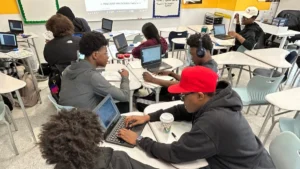
In the contemporary landscape of childhood, the traditional boundaries of play have been fundamentally redrawn. What once occurred on neighborhood playgrounds and cul-de-sacs now unfolds within the vast, borderless architecture of the internet. For today’s youth, "hanging out" is synonymous with digital platforms like Roblox and Snapchat, and even academic collaboration has migrated to shared online workspaces. While this digital fluency offers unprecedented opportunities for creativity and connection, it has also thrust parents into a complex role as digital stewards, often leaving them feeling ill-equipped to manage risks they may not fully comprehend.
The reality, according to digital safety experts, is that parents do not need to be software engineers to effectively protect their children. Instead, they require a framework based on foundational knowledge, proactive configuration of safety settings, and, most importantly, the cultivation of open, non-judgmental communication.
The Evolution of Online Risks: Why Vigilance is Essential
The misconception that apps labeled for "kids" are inherently safe is a primary driver of digital vulnerability. Many of the most popular platforms—even those aimed at younger demographics—were engineered with social features such as integrated chat, friend-request systems, and photo-sharing capabilities. These features, while designed to foster engagement, can inadvertently expose minors to cyberbullying, predatory behavior, exposure to age-inappropriate content, and the accidental disclosure of personally identifiable information (PII).
These platforms operate much like the physical world: they are environments that require parental guidance, situational awareness, and an understanding of the "neighborhoods" in which children choose to spend their time.
Roblox: Beyond the Gaming Interface
Roblox has transcended the definition of a simple video game to become a massive, user-generated virtual ecosystem. With millions of active daily users, it is a primary hub for elementary and middle school students to play, build, and socialize.
The Appeal and the Exposure
Children are drawn to Roblox for its limitless creative potential—the ability to craft entire worlds or participate in games designed by their peers. However, the platform’s social nature is precisely where the risks lie. Because Roblox allows users to interact with strangers globally, the potential for solicitation, exposure to toxic language, and sophisticated scams is significant.
Mitigating Risks through Strategic Settings
To create a safer environment on Roblox, parents should adopt a "defense-in-depth" strategy:
- Enable Account Restrictions: Navigate to the "Security" tab in settings to toggle on "Account Restrictions," which limits interactions to approved contacts or disables chat entirely.
- Monitor Spending: Roblox uses an internal currency called "Robux." Link your account to a parental dashboard to oversee transaction history and set spending limits.
- The "Classroom Rule": Implement a simple, relatable standard: "If you wouldn’t say it or share it with a friend sitting next to you in class, don’t say or share it in a digital chat."
Snapchat: The Illusion of Ephemerality
Snapchat’s core value proposition—content that "disappears" after viewing—has made it a mainstay for middle and high school students. However, this feature creates a false sense of security.
Understanding the Mechanism
While messages may vanish from a screen, they do not vanish from the digital ether. Screenshots can be taken, and third-party apps can archive data. Furthermore, features like "Snap Map," which allows users to track their friends’ real-time locations, pose a significant privacy risk if location sharing is not properly configured.
Proactive Safeguarding
- Ghost Mode: Ensure that "Ghost Mode" is enabled in Snap Map settings to prevent the child’s location from being broadcast to everyone on their friends list.
- Privacy Settings: Restrict who can contact the user or view their "Stories" to "Friends Only" rather than "Everyone."
- Open Dialogue: Discuss the permanence of digital footprints. Remind children that a "disappearing" photo can be saved by someone else and shared indefinitely, turning a momentary lapse in judgment into a long-term social consequence.
Broadening the Horizon: Identifying Emerging Red Flags
While specific apps rise and fall in popularity, the underlying risks remain consistent across platforms involving chat, media sharing, or location-based services. Parents should watch for these "red flag" behaviors:
- The "Secretive" App: Is the app hidden in a folder or password-protected?
- Unfamiliar Connections: Is the child communicating with people they do not know in the physical world?
- Behavioral Shifts: Is the child becoming withdrawn, irritable, or unusually anxious after using a specific platform?
If an app allows for private, unmonitored communication with strangers, it should be treated as a platform requiring active supervision.
Establishing a Family Safety Net
Technology safety is not a singular event; it is an iterative process. Establishing a "family safety net" involves creating rules that are both firm and empathetic.
A Proposed Framework for Families
- The "No-Blame" Clause: Guarantee that the child will not face disciplinary action for reporting a negative experience, even if they inadvertently violated a rule. This encourages transparency.
- Device-Free Zones: Designate specific areas, such as the dinner table or bedrooms at night, as tech-free zones to ensure a healthy balance between digital and physical life.
- The "Right to Audit": Maintain the prerogative to review device activity, but frame it as a safety check rather than a policing measure.
Engaging Without the Interrogation
The most effective way to gain insight into a child’s digital life is to approach the subject with curiosity rather than accusation. Rather than launching into a lecture, parents can use "discovery questions":
- "What is the most interesting thing you built on your game today?"
- "Who are you playing with, and how do you know them?"
- "What’s the most frustrating part of using that app?"
By listening first, parents build the trust necessary for children to come to them when they encounter a digital crisis. The goal is to move from being a "map-maker"—providing a fixed, outdated guide—to a "driving instructor," teaching the child how to navigate an ever-changing landscape with critical thinking and caution.
The Reality of Digital Parenting: A Conclusion
The anxiety surrounding online safety is a testament to how deeply digital life has become intertwined with human development. It is an overwhelming prospect, particularly when children appear to possess a more intuitive grasp of these platforms than their parents. However, perfection is not the requirement for protection.
The essential elements of digital parenting are not found in knowing every update of every app, but in the consistency of the bond between parent and child. By fostering an environment where mistakes are treated as learning opportunities and where safety is a collaborative, ongoing conversation, parents can provide their children with the most vital tool of all: the ability to discern, reflect, and protect themselves in a world that never logs off. When a child feels comfortable enough to confess to a digital mistake, the parent has succeeded in building a safety system far more effective than any software setting could ever be.