The Paper-and-Pencil Renaissance: How Modern EdTech is Stepping Back to Let Students Write
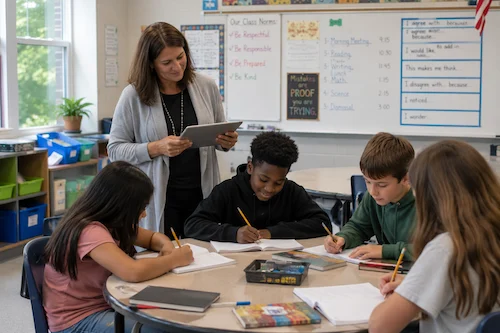
In an era dominated by digital transformation, the most revolutionary piece of classroom technology might actually be the humble yellow pencil.
For nearly two decades, the education technology (edtech) sector operated under a singular, dominant directive: put a screen in front of every child. From 1:1 tablet initiatives to gamified learning apps, the digitization of the American classroom was heralded as the ultimate equalizer. Yet, as classrooms emerge into the mid-2020s, a profound shift is occurring. Educational researchers, cognitive scientists, and even edtech developers themselves are arriving at a surprising consensus: when it comes to the core cognitive tasks of learning to read, write, and think, paper and pencil remain vastly superior to digital screens.
The real challenge facing modern education is not how to eliminate paper, but how to use technology to manage the immense administrative burden that paper creates for teachers. By shifting the role of technology from student-facing screens to background infrastructure, schools are beginning to construct a learning environment that honors human cognition while alleviating teacher burnout.
Main Facts: The New Paradigm of Classroom Technology
The emerging model of classroom design rests on three core pillars: the cognitive superiority of physical writing, the rise of High-Quality Instructional Materials (HQIM), and the re-engineering of edtech as an administrative assistant rather than a surrogate teacher.
For years, teachers have found themselves buried under a logistical avalanche. A single day of high-quality, paper-based teaching produces a mountain of worksheets, exit tickets, and formative assessments. Historically, managing this paper trail meant teachers spent hours grading after school, often receiving diagnostic data too late to help struggling students.
To solve this, early edtech tried to digitize the student experience, moving assignments to screens. However, cognitive science has revealed that this transition came with a steep pedagogical cost. Learning to read and write on screens impairs letter recognition, reading comprehension, and memory retention.
The solution gaining traction in 2026 is a hybrid approach. Students continue to work with physical pencils on high-quality paper curricula, while teachers use backend digital tools—such as mobile scanners, document cameras, and automated diagnostic software—to instantly capture, analyze, and aggregate student work. This keeps the student’s mind engaged with physical media while giving the teacher real-time, actionable insights to guide instruction.
Chronology: The Evolution of Classroom Tech (2009–2026)
The journey to this balanced classroom has been shaped by trial, error, and major shifts in educational policy over the last two and a half decades.
[2009] Era of Curricular Fragmentation & Early Screen Adoption
  │  • Teachers rely on "scavenger hunt" lesson planning.
  │  • Early digital tools enter classrooms; focus is on digitization.
  ▼
[2015] The Peak 1:1 Device Movement
  │  • Massive push for "one device per child."
  │  • Growing concerns over screen fatigue and declining reading comprehension.
  ▼
[2020] Pandemic-Era Remote Learning
  │  • Forced saturation of screen-based education.
  │  • Widespread recognition of the limits of purely digital student engagement.
  ▼
[2022] The Rise of HQIM (High-Quality Instructional Materials)
  │  • School districts shift toward unified, research-backed, paper-based curricula.
  │  • Realization that great paper curriculum is hard to manage logistically.
  ▼
[2026] The Backend Integration Era
     • Technology shifts to the background (scanning, real-time feedback).
     • Students work on paper; teachers use digital logistics tools.
2009–2015: The Curricular Scavenger Hunt and the Screen Boom
In 2009, classroom instruction was highly fragmented. Teachers frequently spent late nights designing their own lesson plans, pulling materials from state standards, past exams, and unverified online databases. Curricula were a patchwork, and teachers had to invent daily routines—like hand-written "exit tickets" at the end of class—to gauge student understanding.
Simultaneously, the first wave of the 1:1 device movement began. School districts invested billions of dollars to put iPads and laptops into the hands of primary school students, operating under the assumption that digital interaction would naturally accelerate literacy and mathematical competency.
2015–2022: Screen Fatigue and the Rise of HQIM
By the late 2010s, the limits of student-facing digital platforms became apparent. Teachers observed rising rates of distraction, and researchers began publishing troubling data regarding screen-based reading retention.
This period also saw a quiet but powerful shift in American education: the movement toward High-Quality Instructional Materials (HQIM). Education leaders realized that standardized, coherent, and research-backed curricula—sequenced so that lessons built upon one another systematically—had a massive impact on student learning. Crucially, the best of these curricula were designed to be executed on paper, using physical books, consumables, and trade novels.
However, implementing these rigorous paper curricula created a massive logistical bottleneck. Teachers were once again drowning in grading, making it difficult to keep up with the pacing of the program.
2023–2026: The "Invisible Tech" Revolution
By 2026, the edtech sector began to course-correct. Instead of trying to replace paper, developers focused on streamlining the logistics of paper-based classrooms. The modern classroom now utilizes technology to bridge the gap between cognitive science and administrative efficiency.
Students complete their work by hand, and teachers use mobile devices to instantly scan and analyze the papers, projecting anonymous student work onto the board for class-wide discussions and receiving automated, diagnostic feedback on student misconceptions within minutes.
Supporting Data: What the Science Says
The shift back to paper is not driven by nostalgia; it is backed by rigorous neuroscience and educational research.
       STUDY COMPASS: KEY PEDAGOGICAL RESEARCH
┌───────────────────────────┬────────────────────────────────────────┐
│ Research Study            │ Core Finding                           │
├───────────────────────────┼────────────────────────────────────────┤
│ James & Engelhardt (2012) │ Handwriting, not typing, activates the │
│                           │ brain's reading network (fusiform gyrus)│
├───────────────────────────┼────────────────────────────────────────┤
│ Ibaibarriaga et al. (2025)│ Handwriting condition: 61.6% accuracy  │
│                           │ Typing condition: 47.8% accuracy       │
├───────────────────────────┼────────────────────────────────────────┤
│ Delgado et al. (2018)     │ Meta-analysis shows consistent paper   │
│                           │ comprehension advantage (g = -0.21)    │
└───────────────────────────┴────────────────────────────────────────┘
1. Neurobiology and Letter Recognition
For young learners, physical writing is a foundational step in learning to read. A seminal brain-imaging study by James and Engelhardt (2012) observed pre-literate five-year-olds who practiced writing letters by hand, tracing them, or typing them on a keyboard.
When the children later looked at the letters inside an fMRI machine, only those who had practiced free-hand printing showed activation in the brain’s reading network, including the fusiform gyrus. The physical, sometimes messy act of using muscles to form a letter teaches the brain to recognize its geometry in a way that pressing a uniform key cannot match.
2. Word and Pseudoword Decoding
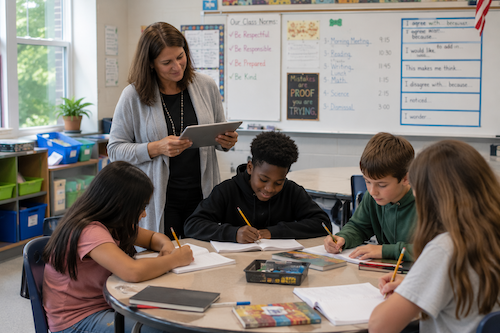
This neurological activation translates directly into literacy performance. In a controlled training study by Ibaibarriaga, Acha, and Perea (2025), kindergartners learned unfamiliar letters and pseudowords using either handwriting or typing.
The results were stark:
- Children in the handwriting group identified trained words with 61.6% accuracy.
- Children in the typing group achieved only 47.8% accuracy.
The largest performance gap occurred during dictation exercises, where the handwriting group outperformed the typing group by nearly double.
3. Generative Encoding and Memory Retention
The physical slowness of handwriting is actually its primary cognitive advantage. When students type notes, they can easily transcribe information verbatim without processing its meaning.
Research by Mueller and Oppenheimer (2014) on "generative encoding" demonstrated that students taking notes by hand outperformed laptop note-takers on conceptual questions. Because writing by hand is slower, it forces the brain to summarize, synthesize, and select what is most important.
While a 2019 replication study by Morehead, Dunlosky, and Rawson suggested these effects may vary depending on how students study their notes later, the consensus remains that manual writing encourages deeper immediate cognitive processing.
4. Reading Comprehension: Paper vs. Screen
The cognitive tax of reading on digital screens is well-documented. A massive meta-analysis by Delgado, Vargas, Ackerman, and Salmerón (2018), which analyzed 54 studies involving over 171,000 readers, identified a reliable advantage for reading comprehension on paper over screens (Hedges’ $g = -0.21$).
This "screen inferiority effect" was particularly pronounced during timed reading sessions and when reading informational texts, suggesting that the physical geography of a printed page helps readers build a more stable mental map of the text.
Official Responses and Industry Perspectives
The realization that edtech must support, rather than replace, physical writing has drawn responses from across the educational landscape.
School District Administrators
Many district leaders are re-evaluating their technology spending. Over the past decade, school boards faced immense pressure to buy devices for every student. Now, many administrators are dealing with screen fatigue and disappointing standardized test scores, leading them to look for ways to balance their technology investments.
"We realized we were spending millions on software licenses that kids were zoning out on," said one midwestern curriculum director. "By shifting our focus to High-Quality Instructional Materials on paper, and using technology strictly to help our teachers grade and analyze that paper, we are seeing higher engagement and better retention."
The EdTech Sector
Progressive edtech companies are shifting their design philosophies. Instead of creating student-facing virtual environments, developers are focusing on "invisible" backend utility tools.
Industry analysts note that the most successful startups in 2026 are those that design software to save teachers time outside of active instruction. This includes tools that scan hand-written math assignments, flag common student misconceptions, and suggest targeted, small-group interventions for the next day’s lesson.
Teacher Unions and Advocacy Groups
Educator advocates have welcomed the shift away from student screen time, pointing to the unsustainable administrative demands of the digital-first classroom.
"Teachers don’t want to be data entry clerks monitoring children on screens," said a representative from a national teachers’ union. "They want to interact with students who are writing, thinking, and talking. If technology can handle the logistics of scanning and grading papers so that teachers can spend their time working directly with students, that is a massive win for the profession."
Implications: The Classroom of the Future
The shift toward background educational technology has profound implications for the future of schooling, teacher retention, and educational equity.
Reducing Teacher Burnout
The primary driver of teacher turnover is often not the instruction itself, but the overwhelming workload outside of class. By using backend technology to automate the logistics of paper-based assignments, schools can give teachers their time back.
A teacher can collect an exit ticket, scan the stack with a mobile device, and receive a complete breakdown of class performance before the next period begins. This eliminates hours of late-night grading and allows teachers to walk into school the next morning with a clear plan for targeted interventions.
Closing Learning Gaps Early
When student work is graded and analyzed in real time, learning gaps are caught immediately. Instead of discovering that a student is struggling on a state test in May, a teacher can see on a Tuesday in October that four students missed the exact same step on a math problem.
The teacher can then pull those four students aside for a quick, targeted review while the rest of the class moves ahead. This prevents minor misunderstandings from turning into long-term learning gaps.
A Healthier Relationship with Technology
Ultimately, this evolution points toward a healthier, more balanced relationship with technology in our everyday lives. It acknowledges that while digital tools are unmatched in their ability to organize, analyze, and transmit data, they cannot replace the physical, tactile processes that human brains require to learn.
By keeping the student’s mind engaged with a pencil and paper, and using technology to support the teacher in the background, schools can create a learning environment that is both scientifically sound and human-centered. The classroom of the future is not one without screens—it is one where the screens are smart enough to stay out of the student’s way.