A Turning Point for Campus Well-being: National Education Compacts Unite to Tackle the Student Mental Health Crisis
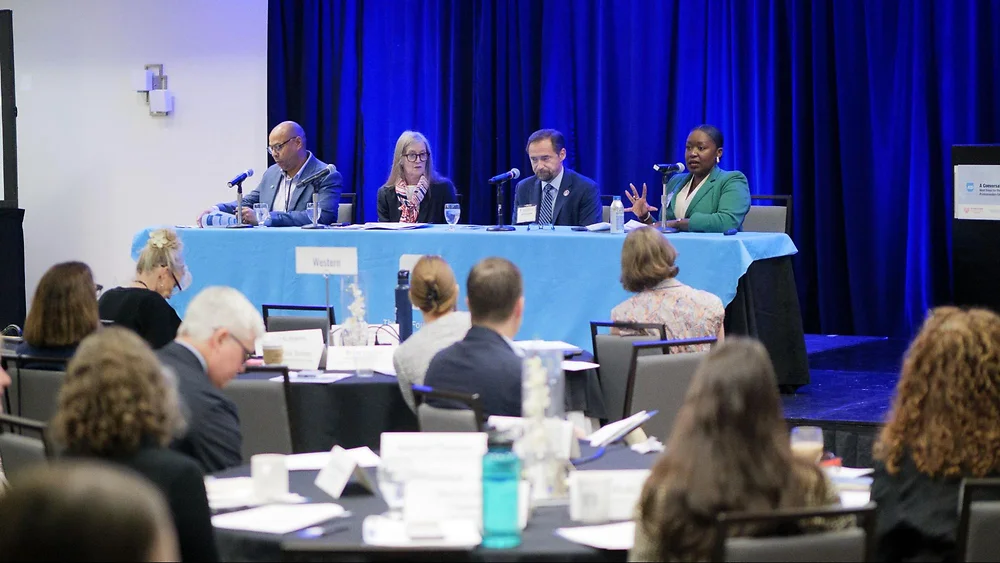
SALT LAKE CITY, Utah — In an unprecedented show of unity, the nation’s four regional higher education compacts—representing 47 states and territories—convened in Salt Lake City on June 16–17, 2026, for a landmark policy summit. The gathering, titled "A Conversation with the Compacts: Next Steps for States to Advance Behavioral Health in Postsecondary Education," marked the first time these powerful consortiums have joined forces with The Jed Foundation (JED), the Lumina Foundation, and the Trellis Foundation to fundamentally reshape how the United States approaches student mental health.
For decades, behavioral health was often treated as a peripheral concern on college campuses—an "elective resource" rather than a core institutional requirement. That paradigm shifted significantly during this two-day summit, as nearly 100 leaders from public health, academia, and policy-making circles declared mental health to be the foundational infrastructure of student success, institutional resilience, and future workforce readiness.
The Urgency of the Moment: Data-Driven Realities
The impetus for the meeting was rooted in sobering new data. During the summit, Stephanie Marken, Higher Education Practice Lead at Gallup, presented findings from the 2026 Lumina Foundation-Gallup State of Higher Education study. The data paints a stark picture: one in three students has considered withdrawing from their institution in the past six months.
The primary culprits? Emotional stress and mental health challenges.
This statistic transforms the conversation from a moral imperative into an economic and operational crisis. If higher education is to remain the engine of American social mobility, it must address the fact that mental health is now the primary driver of degree completion. Without stable, well-resourced support systems, the return on investment for both students and the public sector is jeopardized.
Chronology of the Convening: Building a Shared Agenda
The summit was structured to move beyond diagnostic discussions and into actionable policy design.
Day 1: Establishing the Framework
The opening sessions focused on aligning the four major compacts: the Midwestern Higher Education Compact (MHEC), the New England Board of Higher Education (NEBHE), the Southern Regional Education Board (SREB), and the Western Interstate Commission for Higher Education (WICHE).
Leaders engaged in high-level dialogues regarding the role of "compact power"—the ability of these regional organizations to set standards, share best practices across state lines, and exert influence on federal policy. JED CEO John MacPhee and Dr. Zainab Okolo, JED’s Senior Vice President of Policy, Advocacy, and Government Relations, guided participants through the transition from individual campus-based programs to systemic, state-level policy frameworks.
Day 2: Innovation and Federal Strategy
The second day shifted toward legislative innovation and future-proofing. Utah State Senator Ann Millner and State Representative Steve Eliason led a compelling fireside chat on the "Utah Model." They highlighted the success of state-sponsored behavioral health certification programs—short-term certificates that fast-track students into clinical social work and psychology roles.
The afternoon session, moderated by Dr. Tom Harnisch of the State Higher Education Executive Officers Association (SHEEO), addressed the volatile regulatory landscape. Discussions centered on the future of Medicaid funding for campus services, the evolution of Title IV requirements, and the necessity of building financial resilience as federal pandemic-era relief funds continue to sunset.
Voices from the Frontlines: Policymakers and Advocates
The summit was notable for its commitment to cross-partisan cooperation and youth inclusion.
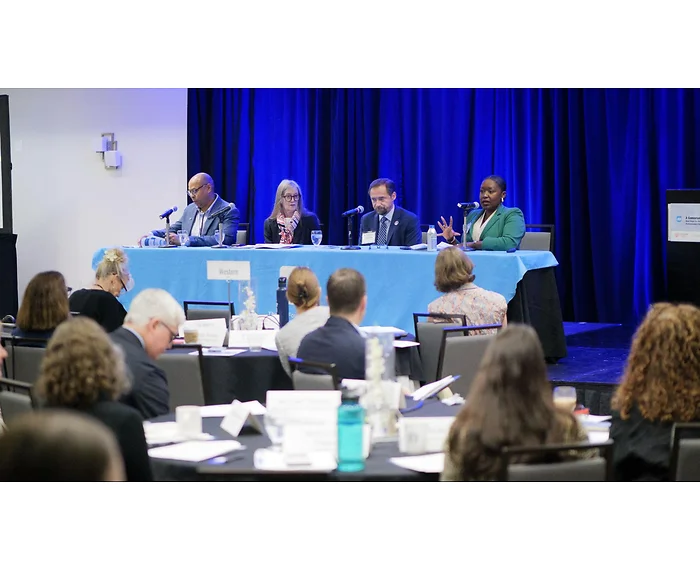
The Legislative Perspective
Senator Millner highlighted the practical success of legislative intervention, noting that Utah’s initiative to fast-track clinical certificates resulted in 80 graduates in its first phase, with a 99% placement rate. "To meet workforce needs, it takes partnership and innovation to ensure it will work in your state," Millner stated.
Representative Steve Eliason, who also serves as the Senior Director of Behavioral Health at the Huntsman Mental Health Institute, emphasized the importance of "upstream" prevention. "I was proud to help champion 988 at the federal level," Eliason remarked. "We need to build campuses and communities where every student has the support they need to succeed before they reach a crisis point."
The Student Perspective
Centering student voices, Saanvi Arora of the Youth Power Project, served as a crucial reminder that policies crafted in boardrooms must be grounded in the lived experiences of students. Arora advocated for a "seat at the table" for young people, noting that the convening served as a catalyst for future youth engagement. "My advocacy has evolved," she said. "I now see the urgency of connecting our on-the-ground experiences with the legislative realities of state and federal lawmakers."
Implications for the Future of Higher Education
The summit concluded with the development of a shared policy agenda. While the specific tenets of the agenda are currently being formalized, the consensus reached in Salt Lake City points toward three strategic pillars:
- Standardization of Care: Creating regional benchmarks for behavioral health services to ensure that students receive equitable support, regardless of which state they study in.
- Workforce Pipeline Development: Expanding the "Utah Model" of short-term clinical certification to address the national shortage of mental health professionals.
- Sustainable Financing: Moving away from the reliance on short-term grants and toward the integration of mental health funding into state-level higher education appropriations and Medicaid billing models.
Dr. Michael Thomas, President and CEO of NEBHE, reflected on the broader impact of the event: "Our students, institutions, and communities deserve the best that we can offer. The takeaways from this event will be the prime fuel for our further efforts."
A New Era of Collaboration
The participation of over 20 organizations—including the American Council on Education, the Association for University and College Counseling Center Directors, and the Yale School of Medicine—signals that the "siloed" approach to student mental health is officially over.
As JED’s Dr. Zainab Okolo noted, "No single institution or state can solve these challenges alone." The Salt Lake City convening was not merely an event; it was the birth of a coordinated national movement. By aligning these regional compacts, the stakeholders have created a mechanism for peer-to-peer accountability and shared advocacy.
For the millions of students navigating the complexities of modern higher education, this collaboration offers a glimmer of systemic hope. The message from the 2026 summit is clear: mental health is no longer an optional service. It is the essential infrastructure upon which the future of the American workforce, and the well-being of the next generation, depends.
About The Jed Foundation (JED)
The Jed Foundation is a national nonprofit that protects emotional health and prevents suicide for our nation’s teens and young adults. JED partners with high schools, colleges, and community-based organizations to strengthen their mental health, substance misuse, and suicide prevention programs. Through its comprehensive approach, JED provides schools with the skills and knowledge to help their students thrive.
For more information:
- Website: jedfoundation.org
- Media Contact: Justin Barbo, PR Director | [email protected]
- Event Photos: JED Facebook Album