The Mirror’s Deception: Privacy, Deepfakes, and the Ethics of Viral AI Filters
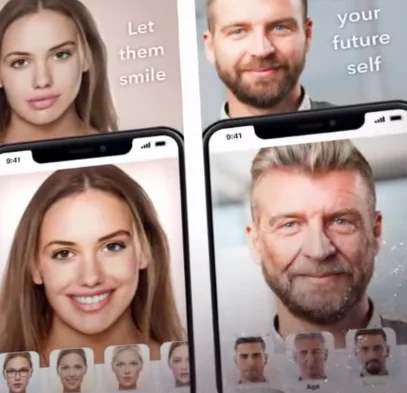
In the modern digital landscape, the line between harmless entertainment and invasive data harvesting has become increasingly blurred. When a viral mobile application promises to transform your likeness—swapping your gender, aging your features, or rendering you as a caricature—millions of users rush to download it, often ignoring the fine print. However, the recent surge in popularity of such AI-driven face-altering apps has reignited a critical debate regarding digital privacy, the commodification of biometric data, and the escalating threat of deepfake technology.
With over 20,000 views on recent educational content highlighting these risks, the discourse surrounding AI ethics has moved from academic circles into the mainstream consciousness. This article examines the mechanics of these viral trends, the structural risks to user privacy, and the broader societal implications of a world where our faces are merely another data point to be processed, stored, and potentially weaponized.
The Main Facts: What Are We Actually Signing Away?
At the core of the controversy lies the “black box” nature of artificial intelligence applications. When a user uploads a selfie to a popular filter app, they are not merely engaging in a digital vanity project; they are providing high-resolution biometric data to a server, often located in jurisdictions with vastly different data protection standards than those in the United States or the European Union.
The primary concern is the End User License Agreement (EULA). Many of these viral applications utilize broad, sweeping language that grants the developer a "perpetual, irrevocable, non-exclusive, royalty-free, worldwide, fully-paid, transferable, sub-licensable license" to use, reproduce, modify, and publish the user’s likeness. In layman’s terms, once a photo is uploaded, the user loses control over how that image is used.
Furthermore, these applications act as training sets. By collecting millions of facial structures, expressions, and aging patterns, developers can refine their machine-learning models. This data is the "gold" of the AI era, and users are essentially paying for the privilege of training the very algorithms that may one day make it impossible to distinguish between a real human and a digital simulation.
Chronology of the Viral Surge
The trajectory of face-altering technology has followed a predictable, yet alarming, path over the last decade.
- 2017: The Early Adoption Phase. The initial wave of “Aging” apps gained prominence as novelty tools, primarily used for social media engagement. At this stage, the public was largely naive to the concept of biometric data harvesting.
- 2019: The Global Privacy Backlash. A specific viral application faced intense scrutiny when lawmakers and cybersecurity experts questioned its data retention policies. Reports surfaced that images were being uploaded to remote servers, sparking investigations into whether user data was being shared with foreign entities.
- 2020–2022: The Deepfake Evolution. As Generative Adversarial Networks (GANs) became more sophisticated, the focus shifted from simple "aging" filters to hyper-realistic "swap" technologies. The barrier to entry for creating a convincing fake became nonexistent.
- 2023–Present: The Integration of Generative AI. Today, the concern has escalated. It is no longer just about a static photo; it is about the potential for real-time video manipulation. The recent explosion of "AI-headshot" generators and social media filters has normalized the constant processing of biometric data, making the public more susceptible to exploitation.
Supporting Data: The Scale of the Digital Footprint
The sheer volume of user participation in these trends is staggering. Industry analysts suggest that top-tier AI photography apps have been downloaded over 500 million times globally.
According to data science professionals who vet AI resource practices, the risk profile of these applications is categorized by several key metrics:
- Data Retention Cycles: Many apps claim to delete photos after 24 hours, but auditing these claims is nearly impossible for the average user.
- Geopolitical Routing: Analysis of network traffic from several high-profile AI apps indicates that data is frequently routed through servers across multiple international borders, complicating the enforcement of local privacy laws like GDPR or CCPA.
- Authentication Vulnerabilities: Many of these apps provide little to no transparency regarding how they secure the biometric templates generated from the images, leaving them vulnerable to data breaches that could compromise a user’s digital identity permanently.
Official Responses and Regulatory Challenges
The response from the regulatory community has been one of "reactive scrambling." In the United States, the Federal Trade Commission (FTC) has signaled an interest in the deceptive practices of AI developers, particularly regarding how they solicit user consent. However, the legal framework governing biometric privacy remains fragmented.
"We are currently operating in a vacuum," notes one expert in digital ethics. "Existing legislation is designed for text and basic user information, not for the granular, immutable data contained in a human face."
International bodies, such as the European Data Protection Board (EDPB), have begun to issue stricter guidelines on the processing of biometric data for AI training. Yet, these guidelines often struggle to keep pace with the release cycle of mobile applications, which can update their terms and functionality in a matter of weeks. The consensus among professionals is that until there is a global standard for AI accountability, the burden of safety remains squarely on the shoulders of the user.
Implications: The Looming Shadow of Deepfakes
The most chilling implication of the widespread adoption of face-altering apps is the advancement of deepfake technology. By voluntarily feeding these apps our facial data, we are effectively providing the raw materials for bad actors to create highly realistic digital puppets.
The Erosion of Truth
Deepfakes represent an existential threat to the concept of "evidence." In a political or legal context, if an image or video can be fabricated with 99% accuracy using a free app, the standard of proof is irrevocably compromised. We are entering an era where "seeing is believing" is no longer a viable heuristic for truth.
Identity Theft and Security
While many users worry about their photos appearing in advertisements, the more pressing concern is the use of biometric data in security. Many banking apps and high-security systems utilize facial recognition for identity verification. If your facial map is compromised by a third-party app that stores data insecurely, you may find your biometric credentials leaked on the dark web. Unlike a password, you cannot change your face.
The Normalization of Surveillance
Perhaps the most insidious impact is the cultural shift toward surveillance. By participating in these viral trends, we are normalizing the idea that our faces should be constantly scanned, analyzed, and transformed. This creates a society that is increasingly comfortable with the presence of biometric data harvesting, lowering the threshold for the adoption of more intrusive government or corporate surveillance technologies.
Conclusion: Navigating the AI Frontier
As we move deeper into the age of generative AI, the distinction between a "fun filter" and a "data security risk" is fading. The allure of seeing ourselves in a new light is powerful, but the cost—our privacy, our autonomy, and the integrity of our digital identity—is far too high.
To navigate this landscape, users must adopt a "zero-trust" mentality. Before downloading an app, one should:
- Read the Privacy Policy: Look specifically for clauses regarding the sale of data to third parties.
- Evaluate Permissions: Does a photo-editing app need access to your contacts, location, or microphone? If so, delete it immediately.
- Consider the Source: Is the developer a reputable entity, or an anonymous studio that appeared overnight?
The experts who curate AI best practices emphasize that transparency is the bedrock of technology. Until developers provide clear, verifiable, and ethical data handling policies, the best way to interact with AI is with extreme caution. We are not just users of these apps; we are the products. It is time we started acting like it.
Disclaimer: This article is intended for educational purposes and does not constitute legal or cybersecurity advice. The inclusion of information regarding specific AI technologies does not imply an endorsement by the authors or the hosting organization. For further inquiries into digital literacy and privacy, consult reputable non-profit resources dedicated to internet safety.