
The Evolution of Assessment: How Computer Adaptive Testing is Redefining Student Success
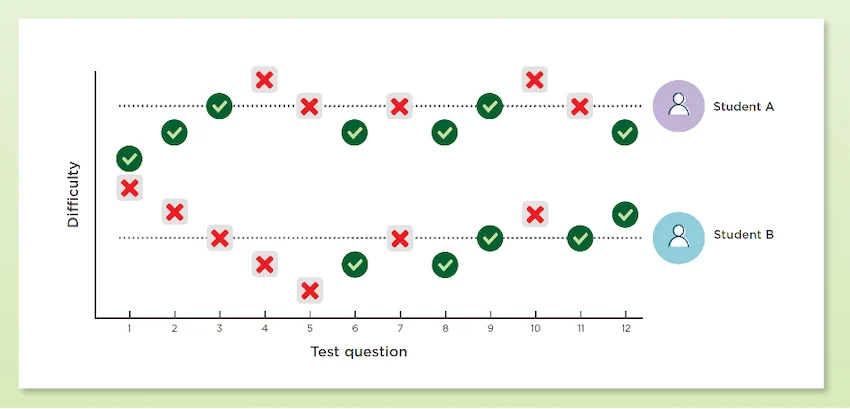
In the modern classroom, the "one-size-fits-all" approach to testing is rapidly becoming a relic of the past. Imagine a scenario where a student breezes through a summative exam, having mastered the material weeks ago, or conversely, a student who struggles through a test far beyond their current reach. In both instances, the resulting data is fundamentally flawed—it fails to capture the true, nuanced academic profile of the learner.
This persistent challenge in educational assessment—the lack of precision—is where Computer Adaptive Testing (CAT) has emerged as a transformative solution. By tailoring the difficulty of questions to the individual in real time, CAT provides a sharper, more actionable lens through which educators can view student achievement.
Defining Computer Adaptive Testing (CAT)
At its core, Computer Adaptive Testing is an assessment methodology that uses sophisticated algorithms to select test questions based on a student’s previous responses. Unlike traditional, fixed-form tests where every student answers the same set of questions, a CAT is a dynamic, personalized dialogue between the student and the digital interface.
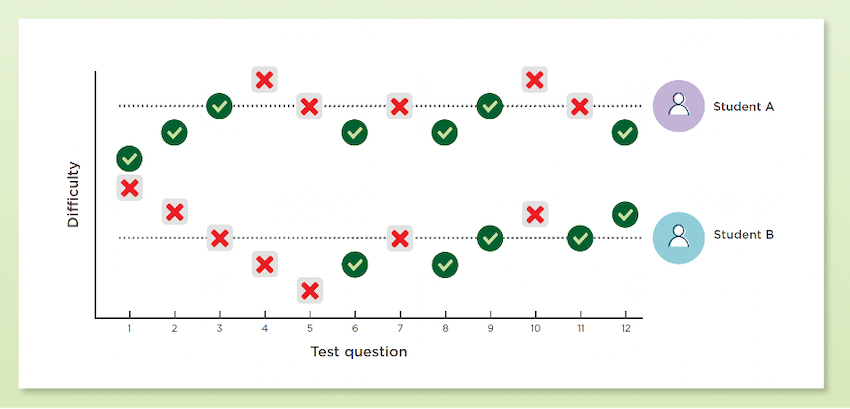
When a student answers a question correctly, the system serves a more challenging one; if they answer incorrectly, the system presents an easier item. This iterative process allows the assessment to "home in" on the student’s true ability level—often referred to in educational psychology as their Zone of Proximal Development (ZPD). By continuously recalibrating, the test avoids the pitfalls of being too easy or too difficult, ensuring the measurement is both efficient and highly accurate.
A Chronology of Adaptive Assessment
While the modern implementation of CAT relies on high-speed internet and advanced cloud computing, the theoretical roots of the practice reach back over a century.

The Early Foundations (1905–1950s)
The intellectual history of adaptive testing predates digital technology. In 1905, the Stanford-Binet Intelligence Scales introduced an oral approach where examiners adjusted the difficulty of questions based on the verbal responses of young French children. This was designed not to label students, but to identify those who required specialized support, a profound shift in how educators viewed individual learning needs.
The Rise of Psychometrics (1960s–1980s)
The mathematical backbone of modern CAT is Item Response Theory (IRT). Developed over decades of psychometric research, IRT provides the statistical framework that allows educators to calculate a student’s ability regardless of which specific questions they encounter. This created the reliability necessary for high-stakes assessment.
The Digital Era (1990s–Present)
Computerized adaptive testing gained real-world traction in the 1970s and 80s, primarily through the U.S. military’s use of the CAT-ASVAB for personnel screening. As personal computing became ubiquitous in the 1990s, the technology migrated to higher education and K-12. The Graduate Record Examination (GRE) transitioned to an adaptive format in 1993, and by the year 2000, tools like NWEA’s MAP Growth brought this level of precision to the K-12 classroom.
Supporting Data: Why Precision Matters
The primary advantage of CAT is its ability to generate high-fidelity data. In traditional testing, measurement error is often higher because the test items do not align perfectly with the student’s ability. CAT mitigates this by focusing on the "sweet spot" of the learner’s knowledge.
Key Performance Indicators:
- Measurement Precision: By targeting questions to the student’s ability level, CAT reduces the standard error of measurement, providing a more stable score.
- Efficiency: Because the test only needs to ask enough questions to determine a student’s ability level with statistical confidence, CATs can often be shorter than traditional tests without sacrificing validity.
- Longitudinal Consistency: Utilizing scales like the RIT (Rasch UnIT) scale, educators can track growth across multiple years, moving beyond the "snapshot" mentality of standardized testing to a "video" of long-term progress.
Official Perspectives: The Value for Stakeholders
For district administrators and school boards, the shift toward CAT is often driven by the need for actionable data. When school leaders are tasked with allocating limited resources—such as intervention programs or curriculum adoption—they require data that can be trusted at both the individual and cohort levels.

Educational experts argue that the most critical value of CAT is its ability to support instructional decision-making. Teachers are no longer left wondering if a student’s poor performance was due to a lack of knowledge or simply a "bad test." Instead, the adaptive data provides a precise roadmap of what a student is ready to learn next, facilitating personalized instruction.
Implementation: How the "Back-and-Forth" Works
The mechanics of a typical item-level CAT follow a disciplined, algorithmic loop:
- Initial Calibration: The test starts with a question of moderate difficulty to establish a baseline.
- Real-time Adaptation: The student’s response is analyzed instantly.
- Dynamic Selection: The next question is drawn from a large, pre-calibrated item bank, selected specifically to maximize the information gained about the student’s ability.
- Scoring: Rather than counting "number correct," the system uses the difficulty of the items answered to calculate an ability score.
This process is fundamentally different from "multistage" designs, such as the digital SAT, where students complete modules of questions before the test adjusts. Both designs aim to provide a more tailored experience than fixed-form tests, though they operate at different granularities.
Implications for the Future of Education
The implications of widespread CAT adoption are significant. As we look toward the future, the integration of artificial intelligence and machine learning is expected to push the boundaries of adaptive assessment even further.
Emerging Trends
- Enhanced Diagnostics: Future CATs will likely integrate seamlessly with instructional software, meaning a single assessment could trigger personalized learning paths in real-time.
- Broadened Constructs: While currently focused on core subjects like math and reading, adaptive methodology is being explored for creative problem-solving, collaboration, and critical thinking.
- Accessibility: Advancements in technology allow for better support for students with diverse needs, as adaptive interfaces can be adjusted to provide a more equitable testing environment.
Addressing the Challenges
Despite its advantages, CAT is not a panacea. Critics and practitioners alike note that no assessment is without trade-offs. The inability of students to return to previous questions—a necessity of the adaptive algorithm—can cause test anxiety. Furthermore, the reliance on high-quality item banks requires significant investment in psychometric validation. Educators must ensure that test-takers are prepared for the "adaptive experience," emphasizing that the test is designed to challenge them, not to trick them.
Conclusion: A Paradigm Shift
Computer adaptive testing represents more than just a technological upgrade to the traditional "bubble sheet" exam. It represents a fundamental shift in how we value and measure the educational journey. By respecting the individuality of each student’s academic profile, CAT provides the precision necessary for a modern, responsive education system.
For administrators, teachers, and policymakers, the message is clear: when we stop asking every student the same questions and start asking the questions that matter for each individual, we move closer to the goal of true educational equity. As we continue to refine these tools, the potential to not only measure learning but to actively improve the classroom experience becomes not just a possibility, but an essential component of school success.
In the coming years, the data generated by these systems will likely become the bedrock upon which the most effective, student-centered schools are built. Understanding the mechanics, history, and implications of CAT is the first step toward leveraging this power to unlock the potential in every classroom.