Beyond the Alphabet: How Brain-Based Literacy Practices Are Revolutionizing Writing Instruction

By Educational Insights Staff
Published March 2026
Main Facts: The Missing Piece in the Literacy Equation
For the better part of the last decade, public and professional discourse surrounding education has been dominated by a singular, urgent crusade: literacy. Stakeholders from school boards to federal agencies have endlessly debated the nuances of phonics instruction, reading fluency, and reading comprehension. Yet, within these high-stakes conversations, a glaring omission persists. Writing instruction—the inseparable counterpart to reading—is routinely sidelined.

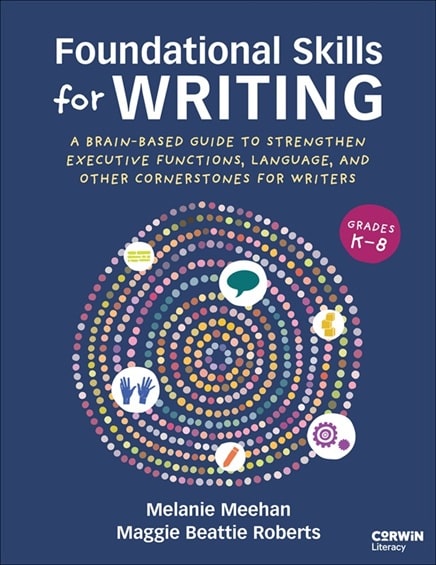
While reading focuses on decoding symbols and extracting meaning, writing demands a complex orchestration of physical output, linguistic competence, and cognitive control. Recognizing this critical disconnect, literacy experts Melanie Meehan and Maggie Roberts have released a timely new pedagogical resource titled Foundational Skills for Writing: A Brain-Based Guide to Strengthen Executive Functions, Language, and Other Cornerstones for Writers.
The book directly challenges traditional assumptions about how writing should be taught. Rather than throwing students into extended composition and hoping they figure out the mechanics, Meehan and Roberts argue that writing must be broken down into constituent cognitive and physical parts. By examining what happens inside a student’s brain during the writing process, the authors offer educators actionable, low-barrier strategies designed to automate foundational skills, freeing up vital cognitive energy for higher-level creative and analytical thinking.
Chronology: The Evolution of Writing Instruction and the Birth of "Minute Moves"
The Historical Oversight of Writing
For generations, writing instruction in K-12 classrooms has defaulted to an intuitive, "sink-or-swim" model. Teachers assigned narrative or persuasive essays, provided minimal scaffolding regarding the mechanics of sentence construction or transcription, and offered red-inked corrections after the fact. While reading instruction evolved through rigorous scientific research—emphasizing structured literacy and explicit phonics—writing pedagogy lagged behind, treated more as an art form to be naturally absorbed than a technical skill to be systematically built.
The Shift Toward Cognitive Neuroscience
In recent years, educational researchers began applying cognitive neuroscience to literacy, revealing that writing is perhaps one of the most cognitively demanding tasks a human brain can perform. It requires simultaneous activation of motor skills (handwriting or typing), linguistic retrieval (spelling and vocabulary), and executive functioning (working memory, planning, and inhibitory control).

The Publication of Foundational Skills for Writing
Entering this landscape earlier this month, Meehan and Roberts synthesized decades of classroom experience into their new guide. Meehan, a former curriculum coordinator and current writing center operator, alongside Roberts, a literacy consultant and veteran middle school teacher, sought to bridge the gap between brain science and daily classroom practice. Their solution? A collection of micro-interventions they call "Minute Moves"—short, highly flexible pedagogical strategies designed to be seamlessly integrated into transitions, warm-ups, or brief classroom interludes.
Supporting Data: Understanding the Cognitive Architecture of a Writer
To understand why traditional writing instruction frequently fails struggling students, educators must look closely at the cognitive architecture required for composition. Meehan and Roberts categorize these foundational demands into three core pillars:

- Transcription Skills: Encompassing handwriting, keyboarding, spelling, and fine/gross motor development. When these skills are not fully automatized, they consume an exorbitant amount of working memory. A student struggling to form letters or spell basic words has few cognitive resources left to dedicate to sentence structure or argument development.
- Oral Language: Serving as the structural runway for written text. This includes sentence construction, speaking, and listening skills. Oral language provides the syntax template that students eventually translate onto the page.
- Executive Functioning: The central control panel of the brain, involving working memory, cognitive flexibility, and inhibitory control. Writers must hold multiple ideas in their head, decide which to discard, pivot when a sentence structure fails, and maintain focus over long stretches of time.
When any of these foundational cornerstones are underdeveloped, the entire writing process stalls, resulting in student frustration, avoidance, and underdeveloped final products.
Official Responses and Expert Insights: Redefining the Classroom Experience
In recent interviews and podcast appearances promoting their book, Meehan and Roberts outlined how teachers can dismantle these cognitive bottlenecks using targeted "Minute Moves." They emphasize that building neurological pathways does not require hours of dedicated drill work; rather, it thrives on brief, engaging, and curious interactions with language.
Spelling and Etymology: Moving Beyond Memorization
Traditional spelling instruction often relies on rote memorization and weekly tests, methods that yield poor long-term retention. Meehan champions an etymological, curiosity-driven approach inspired by spelling researcher Rebecca Treiman.
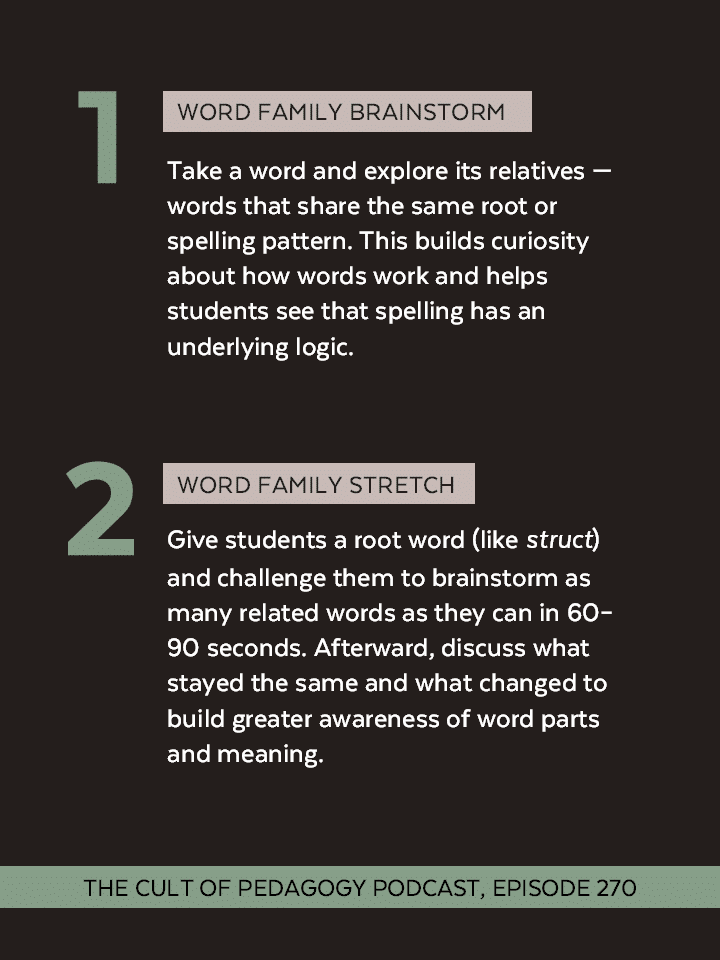
- Word Family Brainstorm: Instead of grouping homophones like two, to, and too in isolation, educators link two to morphological relatives such as twin, twine, and twenty, revealing a consistent conceptual thread of "twoness." Similarly, tracing complex words like decision, incision, and scissors back to a shared Latin root meaning "to cut" transforms spelling from an arbitrary chore into an investigative science.
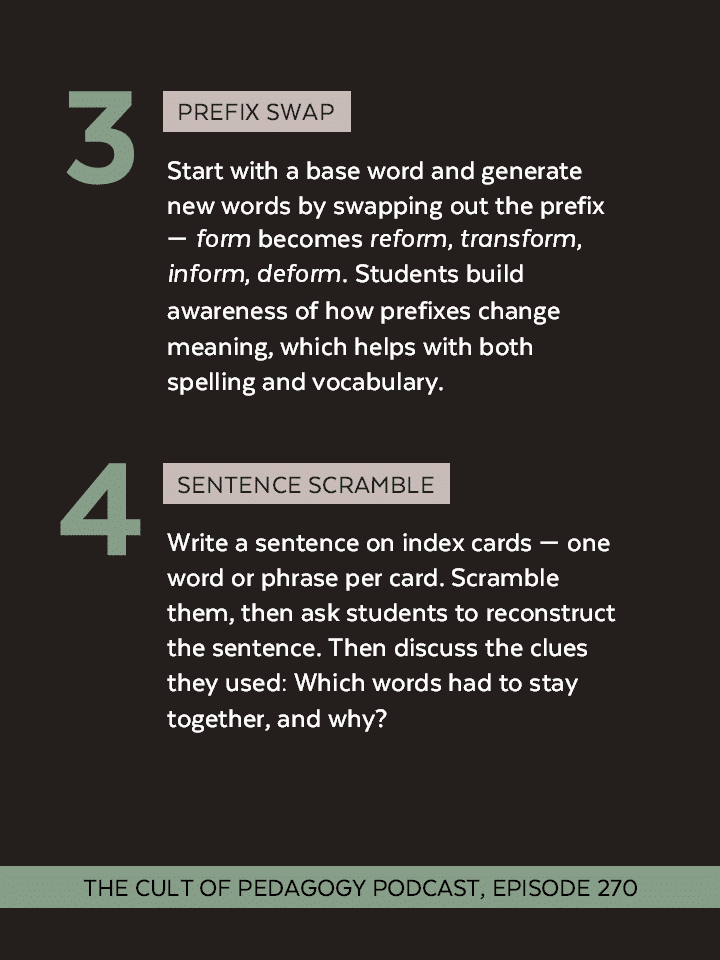
- Word Family Stretch and Prefix Swap: Using bound roots (like struct) and free roots (like form), students race against a 60-to-second timer to generate related vocabulary. By systematically swapping prefixes (e.g., reform, transform, inform, deform), students witness how morphemes actively alter meaning. Meehan notes that this approach is exceptionally powerful for multilingual learners, who often recognize Latinate roots from their native languages.
Sentence Construction: Building Syntactic Intuition
Grammar instruction is frequently taught through abstract, lifeless definitions of subjects and predicates. Roberts and Meehan advocate for tactile, high-impact sentence manipulation.
- Sentence Scramble: Students receive index cards containing scrambled components of a single sentence. By physically manipulating the cards, they discover why certain words must remain bound together. Removing punctuation or introducing distractor words adds sophisticated challenge layers.
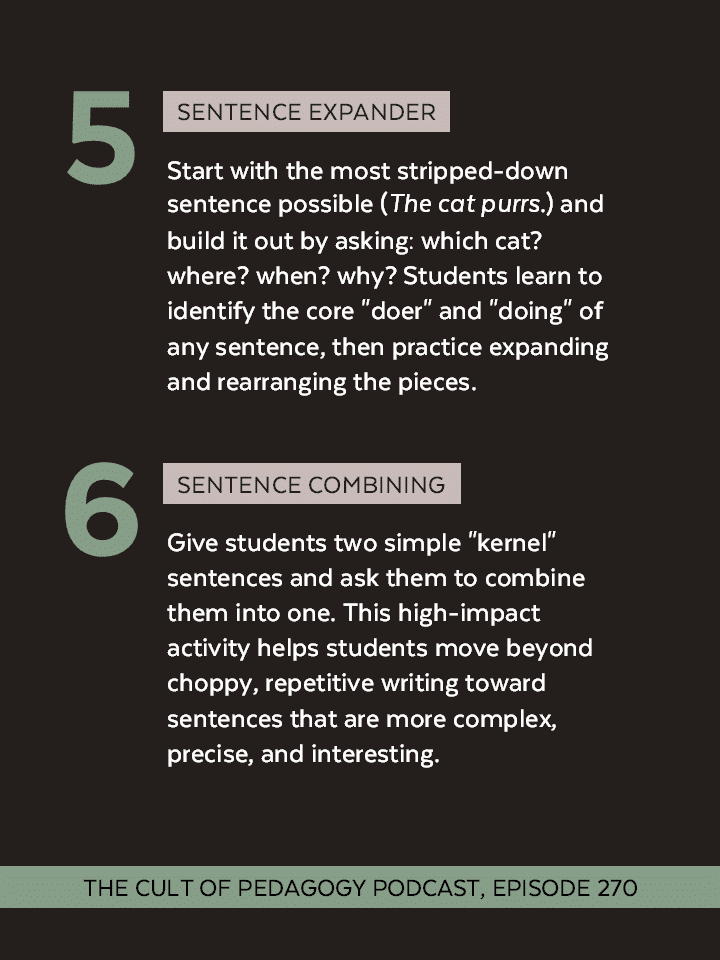
- Sentence Expander: Moving away from formal grammatical jargon, Meehan encourages teachers to use terms like "doer" and "doing." Starting with a kernel sentence like The cat purrs, students answer guiding questions (Which cat? What color? Where? When? Why?) to organically construct rich, complex syntax.
- Sentence Combining: Described by Roberts as a high-impact, rapid intervention, students take two or three bare-bones sentences and merge them into a single, precise statement using conjunctions. This naturally transitions into their independent writing, effectively eliminating choppy sentence structures.
Executive Functioning: Fostering Cognitive Flexibility and Empathy
Cognitive flexibility—the ability to pivot, adapt, and view a problem from multiple angles—is essential for mature writing.
- "What’s Another Way?": Students take an existing sentence and intentionally manipulate it. They learn that the art of writing lies not merely in length, but in deliberate variation. As Meehan points out, explicitly naming this process as "cognitive flexibility" empowers students, giving them a sophisticated vocabulary to describe their own mental agility.
- New Angle: Zooming out to the narrative level, students retell familiar scenes or stories from alternative character perspectives. Utilizing multimedia tools like short animated films (e.g., Pixar’s Snack Attack), students practice holding multiple viewpoints simultaneously—a skill with profound implications extending far beyond the language arts classroom.
Implications for the Future of Education
The widespread integration of brain-based, foundational writing strategies carries profound implications for the future of literacy education.
First, it forces a structural realignment in teacher preparation programs and curriculum design. For too long, reading and writing have been treated as distinct curricular silos. By recognizing that strong writing instruction reinforces reading comprehension—and vice versa—schools can create unified literacy blocks that address transcription, oral language, and executive functioning concurrently.
Second, these methodologies democratize writing success. Students who experience learning differences, executive dysfunction, or language barriers often internalize the belief that they are simply "bad writers." By breaking complex writing tasks down into manageable, neurologically sound micro-interventions, educators can demystify the writing process. When students understand how their brains process words, sentence structures, and alternative perspectives, writing transforms from an intimidating punitive chore into an accessible, empowering craft.
Ultimately, Meehan and Roberts’ work signals a much-needed evolution in literacy reform. By bringing writing back into the center of the educational conversation—and grounding it in the realities of cognitive science—schools can equip the next generation not just to decode the world, but to articulate it on their own terms.