Beyond the Buzz: How Artificial Intelligence is Empowering Educators and Transforming the Modern Classroom
By eSchool Media Contributors
With reporting and insights from Ben Talsma, Van Andel Institute for Education
Main Facts
Artificial intelligence (AI) has rapidly transitioned from a futuristic sci-fi concept to an omnipresent force in contemporary society. Today, generative AI tools, machine learning algorithms, and automated assistants influence nearly every facet of daily life—from the enterprise workspace and digital entertainment to e-commerce, personal finance, and logistical management. However, perhaps nowhere is the debate surrounding AI more nuanced, contentious, and high-stakes than within the education sector.
As school districts nationwide grapple with the sudden ubiquity of large language models and generative software, many educators and administrators have initially responded with caution, skepticism, and frustration. Fears surrounding academic dishonesty, the erosion of foundational writing skills, and the loss of authentic student voice have dominated faculty room discussions.
Yet, a growing cohort of forward-thinking educators argues that treating AI as an adversary is a losing battle. Instead, they advocate for a proactive, bold approach: mastering these technologies to fundamentally improve teaching and learning. According to experts like Ben Talsma, a Learning Specialist at the Michigan-based Van Andel Institute for Education, AI does not spell the end of effective pedagogy; rather, it serves as a powerful catalyst for educational equity, efficiency, and creativity.
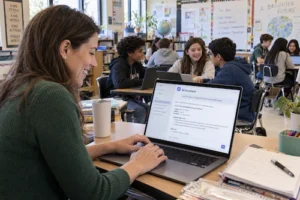
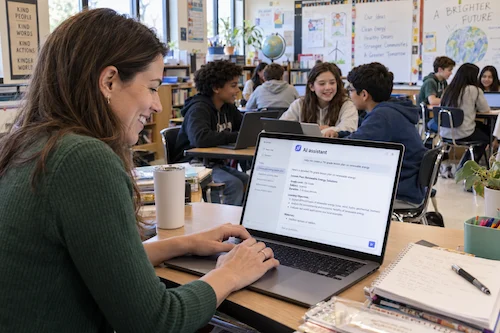
At its core, the integration of AI into the classroom acts as an equalizer and an accelerator. It automates tedious administrative burdens—such as grading alignment, attendance tracking, and lesson planning mechanics—while simultaneously equipping teachers with advanced capabilities to generate multimedia instructional resources, design differentiated assignments, and democratize software development. By streamlining the routine, AI allows educators to refocus their energy on what matters most: human connection, mentorship, and inspiring deep, critical thinking in their students.
Chronology
To understand how artificial intelligence arrived at the forefront of educational discourse, it is helpful to examine the rapid timeline of its adoption and the shifting attitudes of academic institutions:
- Late 2022: The public release of advanced generative AI models, such as OpenAI’s ChatGPT, sends shockwaves through the global educational community. Early reactions are dominated by panic over potential cheating, leading numerous school districts and higher education institutions to enact immediate, blanket bans on AI tools within campus networks.
- Early to Mid-2023: As the initial shock subsides, educators begin to realize that outright bans are technologically ineffective and pedagogically short-sighted. Students easily bypass network filters using personal devices, prompting a pivot toward institutional guidelines, academic integrity policies, and cautious experimentation.
- Late 2023: Educational technology developers begin embedding AI natively into established Learning Management Systems (LMS), administrative software, and digital textbooks. Teachers discover the utility of AI in generating basic lesson plans, summarizing complex research, and drafting rubrics, signaling a shift from fear to utility.
- 2024 to Present: The conversation matures from simple administrative efficiency to advanced pedagogical transformation. Educators begin exploring generative AI not merely as a text-writing assistant, but as a dynamic co-creator of instructional design, interactive media, and custom-built educational software applications. Organizations like the Van Andel Institute for Education champion a human-centered approach, urging teachers to embrace AI to foster curiosity, creativity, and critical thinking in students.
Supporting Data
The integration of artificial intelligence into education is supported by a growing body of research, survey data, and institutional metrics that highlight both the challenges and the immense potential of the technology:
- Time Savings on Administrative Tasks: According to various educational technology surveys, teachers spend an average of 10 to 14 hours per week on non-instructional tasks, including grading, lesson planning, compliance reporting, and material sourcing. Early pilots of generative AI tools show that educators can reduce this administrative workload by up to 30%, reclaiming critical hours for direct student engagement.
- Surge in AI Literacy Initiatives: A recent nationwide study on educational technology adoption revealed that over 65% of K-12 school districts have initiated formal professional development programs focused on AI literacy for teachers, compared to fewer than 15% in 2022.
- Student Engagement Metrics: Classrooms that integrate interactive AI tools and multimodal learning assets report a noticeable uptick in student participation and enthusiasm. When lessons are tailored to individual learning paces using AI-driven differentiation engines, student comprehension rates increase by an estimated 15% to 20% over traditional, one-size-fits-all instructional models.
- The Rise of No-Code/Low-Code Educational Tools: Historically, building customized educational software required advanced programming skills and hundreds of hours of coding. Today, advancements in natural language processing allow educators with zero technical background to generate fully functional software scripts, interactive quizzes, and specialized learning modules in under five minutes.
Official Responses and Perspectives
The rapid evolution of artificial intelligence in education has elicited diverse responses from school administrators, educational nonprofits, policymakers, and classroom practitioners.
The Van Andel Institute for Education: Championing Curiosity
Ben Talsma, speaking on behalf of the Van Andel Institute for Education—a renowned nonprofit dedicated to cultivating classrooms where curiosity, creativity, and critical thinking thrive—offers a uniquely optimistic perspective. Talsma characterizes AI not as a threat to human intellect, but as an unprecedented amplifier of human capability.
"No matter where you turn today, it feels as though people just can’t stop talking about artificial intelligence," Talsma notes. "Suddenly it’s become a part of our workspace, our entertainment, the tools we use for shopping and paying bills, but perhaps most notably, it’s quickly found its way into our classrooms. This has naturally caused concern among educators, who up till now have mostly approached AI with a mixture of suspicion and frustration. Not me, though. I believe these new tools have the potential to radically change education for the better — if we’re bold enough to master them."
Talsma emphasizes that the true value of AI lies in its ability to act as a force multiplier for teachers. By handing off time-consuming logistical burdens to algorithms, educators are empowered to focus on relational teaching.
"What I like most about AI is that it gives teachers superpowers," Talsma explains. "From generating imagery for lessons to reducing the time spent on busywork, AI is already reshaping the way educators prepare for class, spark engagement, and connect with students."
Furthermore, Talsma highlights a groundbreaking shift in technical accessibility: the ability for non-technical educators to build custom digital tools.
"However, AI’s greatest superpower might be that it allows teachers to create computer programs," says Talsma. "Where once coding a useful activity required hours of time and effort, teachers can now generate their ideas in a matter of minutes."
Institutional Policy Shifts
Across the educational landscape, administrative bodies are moving away from reactionary bans and toward frameworks of guided integration. Major educational associations are drafting ethical guidelines that emphasize transparency, data privacy, and digital citizenship. Rather than asking how to prevent students from using AI, school leaders are asking how to teach students to use AI responsibly, critically evaluating algorithmic outputs for bias, accuracy, and depth.
Implications for the Future of Learning
As artificial intelligence continues to mature and integrate deeper into the educational ecosystem, its long-term implications will reshape classrooms, career readiness, and the very definition of teaching.
1. The Redefinition of Pedagogy and Assessment
Traditional educational models have long relied on standardized testing, essays, and recall-based homework assignments to measure student understanding. The rise of generative AI makes these traditional metrics increasingly vulnerable to circumvention. Consequently, the future of assessment must evolve. Educators are shifting toward process-oriented evaluations, oral defenses, collaborative project-based learning, and critical analyses of AI-generated content. Instead of asking students to simply write an essay on a historical event, teachers may ask students to critique an AI-generated essay on the same topic, identifying historical inaccuracies, biased framing, and missing perspectives.
2. Democratizing Software Creation in the Classroom
As Talsma notes, the barrier to entry for software development has collapsed. Teachers no longer need to rely on expensive, rigid educational software packages purchased from third-party vendors. With natural language prompting, an educator can design a bespoke flashcard application, a localized historical simulation game, or an interactive math quiz tailored precisely to the unique learning needs of their specific students in real-time. This level of customization ensures that teaching materials reflect local contexts, diverse cultural backgrounds, and individual student learning profiles.
3. Equity and Differentiated Instruction
One of the most profound promises of educational AI is its potential to bridge equity gaps. In overcrowded classrooms, individual attention is a scarce commodity. AI-driven tutoring systems and adaptive learning platforms can provide personalized support to struggling learners while offering advanced enrichment to gifted students, all simultaneously. By handling the logistical weight of differentiation, AI equips under-resourced schools with sophisticated tools that were previously accessible only through expensive private tutoring.
4. Preserving the Human Core of Education
Despite the boundless potential of artificial intelligence, experts agree on one fundamental truth: technology can never replace the human element of teaching. Algorithms can process data, generate text, and write code, but they cannot offer empathy, mentorship, emotional safety, or moral guidance.
As Talsma aptly concludes:
"The future of AI is filled with possibilities, and educators have an exciting opportunity to help shape it. By approaching AI with curiosity and creativity, we can use these tools to bring new ideas to our classrooms, make our work more efficient, and create richer experiences for our students. AI may give teachers new superpowers, but it is our passion, imagination, and commitment to students that will turn those powers into meaningful change."
Ultimately, the successful integration of AI into education relies on striking a delicate balance. By embracing technological innovation with open-minded curiosity while steadfastly guarding the human relationships at the heart of learning, the educational community can step confidently into a transformed future.