Mastering the Clock: 10 Pedagogical Strategies to Transform Classroom Time Management
WASHINGTON — While educational debates frequently center on systemic challenges—such as chronic underfunding, a deficit of support staff, shifting parental demands, student behavioral hurdles, and relentless testing pressures—educators face an equally formidable, yet less discussed, adversary in their daily routines: the elusive art of classroom timing.
Even the most meticulously designed instructional units can collapse when professors and teachers struggle to align their planned material with rigid bell schedules. According to seasoned educators, instructional plans rarely unfold precisely as written. Teachers frequently oscillate between two extremes: panicking over unexpected surplus minutes with little to no emergency material prepared, or watching an activity overrun its boundary, forcing them to frantically rush through crucial conceptual frameworks and truncate vital student processing time.
To address this persistent educational dilemma, instructional experts and veteran educators are turning to structural pacing techniques that bring predictability, lower anxiety, and optimize student engagement without enforcing an unrealistic, toxic "bell-to-bell" academic grind.
The Chronology of an Instructional Challenge: From Panic to Proactive Pacing
The struggle with instructional timing is cyclical and universally recognized across elementary, secondary, and post-secondary levels.
- The Surplus Time Panic: An activity wraps up unexpectedly early, leaving the instructor stranded with ten unfilled minutes. Without a backup plan, the classroom devolves into unfocused noise, forcing the educator to improvise poorly.
- The Overrun Spiral: An activity drags on due to deep student engagement or unexpected hurdles. The teacher panics, accelerates through the remaining lesson plan, and sacrifices comprehension checks and student reflection.
- The Transition Vacuum: Transitions between distinct segments of a lesson become chaotic, draining cumulative minutes of instructional time over the course of an academic year.
Drawing from recent classroom experiences teaching adult English language learners, educational practitioners emphasize that time management is not merely about packing more content into a period; it is about intentional, flexible choreography that respects both cognitive limits and human needs.
Supporting Data and Realities of Modern Classrooms
Research into instructional time use underscores the necessity of structural buffers. Studies on educational pacing consistently reveal that teachers routinely underestimate transition times and the velocity of student task completion.
Furthermore, educational experts emphasize the concept of "ragged time"—a term popularized by differentiation authority Carol Ann Tomlinson. Ragged time occurs naturally when students complete autonomous tasks at vastly different speeds. Without structured contingency plans, this temporal disparity creates classroom friction, leaving early finishers under-stimulated while slower workers feel unfairly pressured.
To counteract these systemic pacing obstacles, educators are adopting a series of concrete, field-tested habits designed to transform unpredictable class periods into cohesive, manageable learning environments.
10 Core Strategies for Classroom Time Mastery
1. Always Plan to End Five Minutes Early
Attempting to fill every single second of a class period with dense instruction is a prescription for burnout and schedule slippage. Running over time forces students to arrive late to subsequent classes, creating logistical ripples across the school.
- The Buffer Rule: Aim to conclude primary instruction precisely five minutes before the official bell rings.
- Sponge Activities: Utilize flexible, zero-prep tasks that can expand or contract to fill residual minutes. For instance, low-stakes game structures—such as vocabulary-reinforcing rounds of Simon Says, charades, or Pictionary—allow students to remain engaged in their seats until dismissal without precipitating a chaotic rush for the door.
2. Set Hard Stops Mid-Lesson
Instead of viewing an hour-long class as one continuous block of instruction, divide the period into distinct thematic chunks governed by strict, inflexible start and stop times.
- Prioritize New Material: Move complex or novel concepts to the middle or latter half of a class session, once late arrivals have settled into the room.
- Enforce the Clock: If a warm-up game is slated to run for 15 minutes, cut it off precisely when the timer sounds, regardless of whether every student has completed the round, safeguarding adequate time for the core lesson.
3. Build in Expansion and Contraction Points
Certain instructional components possess fluid parameters that allow them to be seamlessly stretched or compressed. While videos and fixed reading selections demand static blocks of time, group discussions, vocabulary drills, and brainstorming sessions can easily adapt to temporal constraints. Review daily lesson outlines in advance to identify which components can be abbreviated or expanded depending on real-time pacing.
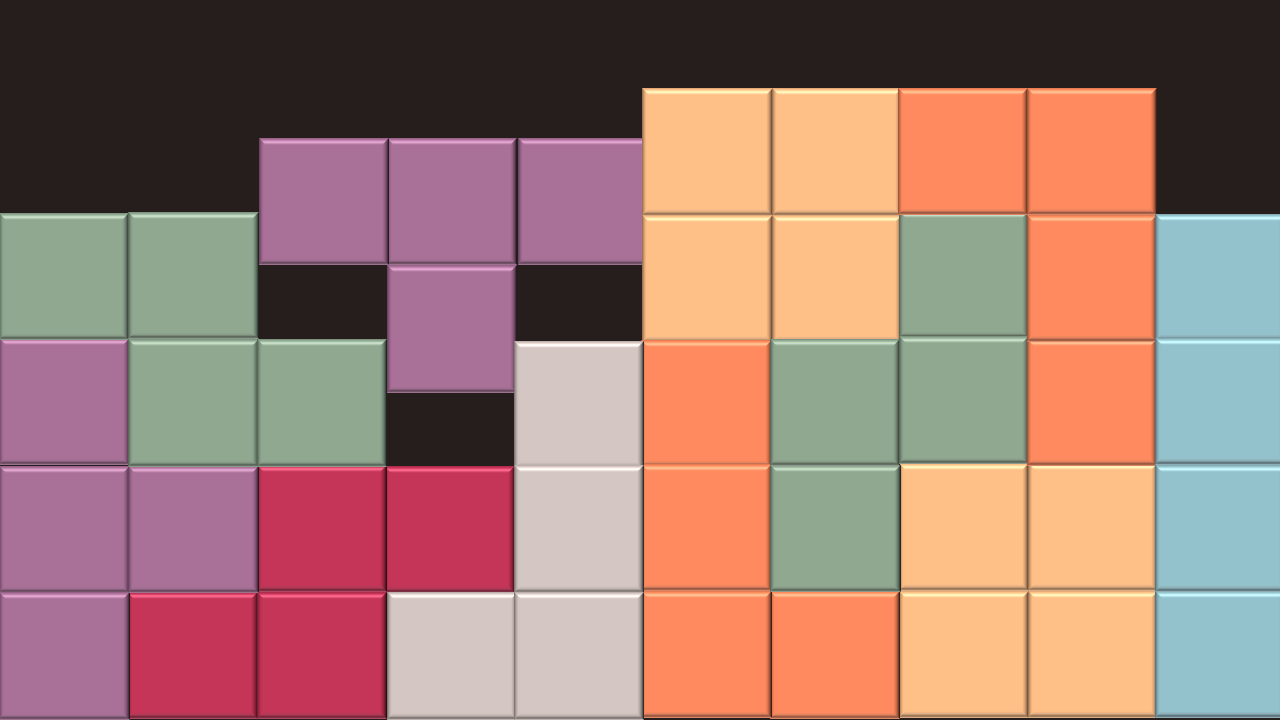
4. Establish Visual "Cut Lines" in Advance
Anticipate potential delays by physically marking exact exit points within your instructional materials. For slide presentations, educators can insert distinct icon reminders or speaker-note prompts indicating which slides can be omitted if time grows short. Advanced digital navigation—such as using hyperlink jump-points in Google Slides or Microsoft PowerPoint—allows teachers to bypass entire segments instantaneously without breaking instructional momentum.
5. Normalize Stopping Mid-Task
Perfectionism often drives educators to insist that every activity must reach a definitive conclusion within a single class period. Educators can dismantle this psychological barrier by explicitly discussing it with students. Framing certain learning activities as flowing exercises that span multiple days—rather than isolated tasks that must be finished in one sitting—relieves pressure on both the teacher and the class.
6. Implement Anchor Activities for "Ragged Time"
To resolve the productivity gap caused by early finishers, establish a permanent rotation of anchor activities. As defined by Carol Ann Tomlinson, these are independent, high-standard tasks that students automatically transition to once primary assignments are successfully completed.
- Examples: Independent reading, reflective journal writing, portfolio curation, skill-building exercises in computation, spelling, or artistic techniques.
- Implementation: Introduce these tasks explicitly to the whole class first, transition to a split model, and eventually establish them as a self-directed safety net for asynchronous learners.
7. Pre-Stage Materials to Eliminate Dead Air
Fumbling with handouts, locating misplaced markers, or waiting for laptops to boot can forfeit critical instructional minutes. Minimize logistical friction by pre-sorting physical materials into distribution trays, establishing automated student-monitor distribution routines, and staging digital links before students enter the room.
8. Cultivate Intentional Opening and Closing Routines
While educational culture has historically penalized any form of downtime, strict bell-to-bell academic rigor can be counterproductive for cognitive retention and mental health. Humans—both students and educators—require structured breathing room. Establishing predictable, intentional opening and closing routines provides psychological safety and structure without demanding relentless academic high-intensity output.
9. Clean as You Go
Avoid the accumulation of classroom clutter by tidying workspace materials between instructional transitions rather than leaving everything for the end of the period. Taking a single minute to file leftover handouts, gather whiteboards, or organize manipulatives prevents administrative logjams at the end of the day.
10. Leave Diagnostic Notes for Future Lessons
Memory is fallible, even for master educators. Immediately following a lesson, spend 60 seconds affixing a sticky note to physical lesson plans or typing a bold, colored remark into digital files. Recording insights—such as "Part 3 required an extra five minutes" or "Students struggled with this transition"—ensures future iterations of the curriculum run significantly smoother.
Official Responses and Pedagogical Implications
Educational leadership bodies and instructional coaches have increasingly endorsed flexible pacing models as a vital component of teacher retention and mental well-being. By shifting away from rigid, unrealistic pacing guides and embracing modular lesson design, schools are seeing a marked decrease in educator burnout and classroom anxiety.
Implications for Practice:
- Reduced Stress: Teachers report significantly lower stress levels when they adopt built-in time buffers and explicit cut lines.
- Enhanced Metacognition: Students benefit from predictable classroom rhythms, learning how to manage their own transitions and independent pacing through anchor activities.
- Systemic Efficiency: Better temporal management reduces hallway congestion, minimizes behavioral disruptions stemming from dead time, and protects the overall instructional integrity of the school day.
As educational systems continue to navigate mounting external pressures, mastering the internal micro-chronology of the classroom remains one of the most powerful, autonomous tools available to modern educators.