The AI Paradox: Why Classroom Tech Can Be Both a Breakthrough and a Barrier
As artificial intelligence rapidly infiltrates the educational landscape, a critical debate has emerged: Is this technology a digital panacea or a pedagogical trap? New research led by Jing Liu, director of the Center for Educational Data Science and Innovation at the University of Maryland, suggests the answer is far more nuanced than advocates or critics would have us believe.
By releasing two contrasting studies in October—one highlighting the success of an AI math tutor in middle schools and the other documenting the detrimental effects of an AI assistant on college performance—Liu has provided a vital reality check. The findings underscore that the impact of AI in education is not intrinsic to the software itself, but is deeply dependent on the design of the tool, the pedagogical strategy of the teacher, and the behavioral responses of the students.
The Dual-Study Snapshot: A Tale of Two Implementations
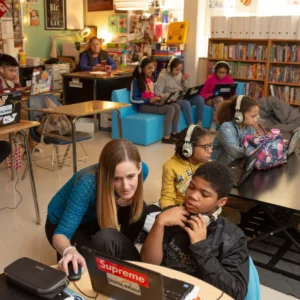
The two studies represent a "stress test" for AI in vastly different academic settings. The first experiment, conducted during the 2025-26 school year in Deer Valley, Arizona, centered on "Goblins," an AI-powered math platform deployed to 6,000 middle schoolers. The platform offered step-by-step guidance through text, virtual whiteboards, and, crucially, spoken conversation.
In stark contrast, the second study examined the implementation of an AI course assistant at the University of Maryland. Introduced to 1,100 students across various disciplines, the tool was designed to provide syllabus support and conceptual help. While the middle school experiment hinted at academic gains, the university trial resulted in a measurable decline in student performance, suggesting that the "dosage" and the nature of the AI’s presence are far more significant than the mere existence of the technology.
Chronology of the Research
The path to these findings began with a deliberate commitment to transparency. Recognizing that education technology is often overhyped, Jing Liu sought to examine how AI integrates into existing classroom workflows.
- 2025-26 Academic Year (Middle School Phase): The "Goblins" program was introduced in Deer Valley. Teachers were given autonomy to integrate the tool into their curricula, either as a targeted intervention for struggling students or as a broad classroom resource.
- Fall Semester 2025 (University Phase): At the University of Maryland, Provost Jennifer King Rice mandated a controlled study before considering a campus-wide rollout of an AI assistant. Liu orchestrated a randomized experiment, splitting 30 professors into two groups: those using the AI assistant and those relying on traditional pedagogical methods.
- October 2026 (Dissemination): The results of both studies were released simultaneously, providing a balanced view of AI’s efficacy. By choosing to present these findings in tandem, Liu aimed to steer the public conversation away from the binary of "AI as a hero" or "AI as a villain."
Supporting Data: The Power of Engagement vs. The Trap of Convenience
The data collected from both experiments provides a roadmap for understanding why technology succeeds in one environment and fails in another.
The "Goblins" Success Factors
In the middle school study, students who engaged with the AI tutor at least twice a week—completing over 50 problems throughout the year—showed statistically significant improvement in math scores. Accelerate, the nonprofit research organization behind the study, equated this growth to approximately three months of additional learning.
The success of Goblins, according to Liu, lies in its accessibility. The AI could communicate through a cartoon avatar that mimicked a teacher’s voice, and it was capable of conversing in seven languages, including Spanish. This proved particularly effective for English language learners and students with disabilities—demographics that are traditionally underserved by standardized software.
However, the study also grappled with the infamous "five-percent problem." While 50% of the students met the two-problem-per-week threshold, only 6% achieved the half-hour-per-week usage target commonly cited as the benchmark for "dosage" efficacy. Even in a successful deployment, the hurdle of consistent student usage remains a significant barrier to widespread success.
The University Decline
The university study, conversely, yielded alarming results. Students in courses with the AI assistant saw their grades drop by an average of 0.11 points on a four-point scale. More concerning was the behavioral data: these students engaged less with course materials, participated less in class discussion boards, and were less likely to attend office hours.
Perhaps most unsettling was that the negative impact was disproportionately felt by first-generation students. Liu and Provost Rice hypothesize that the constant presence of an AI assistant in the university’s Learning Management System (Canvas) sent an implicit signal that AI was the "correct" way to learn. This may have inadvertently encouraged students to bypass the university’s official AI tool in favor of external, unregulated chatbots like ChatGPT or Claude, which often provide immediate answers rather than guiding students through the struggle of learning.
Official Responses and Theoretical Implications
The academic community has reacted to these findings with a mixture of caution and appreciation. Provost Jennifer King Rice emphasized the necessity of these tests, noting, "AI tools could exacerbate inequities in learning outcomes. That is particularly troubling to me." The University of Maryland’s decision to publish the negative results of their own internal pilot serves as a gold standard for institutional integrity in the age of AI.
The "Five-Percent Problem"
The overarching lesson from these studies is that technological tools cannot be viewed as a "set-it-and-forget-it" solution. The "five-percent problem"—the phenomenon where only a tiny fraction of users consistently utilize educational software as intended—continues to plague the sector. Whether it is Khan Academy, IXL, or newer AI-driven platforms, the challenge remains getting students to log in and remain engaged over the long term.
The Teacher as the Essential Variable
A recurring theme in both studies is the role of human oversight. In the middle school study, Goblins succeeded largely because teachers retained control. They decided which problems to assign and to whom, maintaining their role as the pedagogical authority. At the university level, the AI assistant functioned more as a standalone entity, which may have contributed to a "de-skilling" effect where students viewed the AI as a shortcut rather than a tutor.
Implications for the Future of EdTech
As schools and universities look toward the future, the implications of Liu’s research are clear:
- Pilot Before Scaling: The Maryland experience demonstrates that even well-intentioned, institutional-grade AI tools can have unforeseen, negative consequences. Randomized controlled trials should be a mandatory prerequisite for any campus-wide technology rollout.
- Pedagogy Over Platform: The technology is only as effective as the instructional design. AI tools that supplement teacher-led instruction appear more beneficial than those that aim to provide a "self-serve" learning environment.
- Equity Monitoring: Institutions must be vigilant about how AI affects different student populations. The finding that first-generation college students were more negatively impacted by the AI assistant suggests that these tools may require more, not less, human intervention to ensure they bridge the equity gap rather than widening it.
- Redefining "Engagement": Researchers must look beyond simple login metrics. The fact that the university students used the AI to get "answers" rather than "tutoring" highlights a critical flaw in current user-interface design. Future AI must be built to resist the temptation of providing direct answers, instead forcing students to engage in the productive struggle of learning.
In conclusion, the dual-study findings from the University of Maryland represent a maturation point for the field of educational technology. We are moving past the initial "gold rush" phase of AI adoption and into a more sobering, empirical era. If we are to successfully integrate artificial intelligence into the classroom, we must stop viewing it as a replacement for the human elements of teaching and start viewing it as a complex tool that requires careful, deliberate, and evidence-based implementation. As Liu suggests, the goal isn’t to avoid AI, but to understand its reach—and its limits—before it becomes a permanent fixture of the student experience.