
Beyond the Pencil Case: Why Ergonomic Scissors Are the Secret to Academic Success
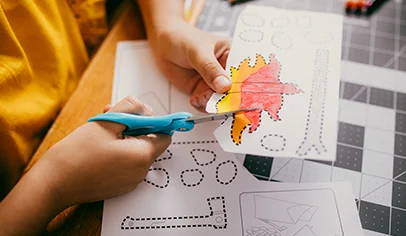
As the late summer sun begins to dip and the retail landscape shifts toward the familiar hue of "Back-to-School" displays, parents everywhere are meticulously ticking items off supply lists. Notebooks, high-quality pencils, glue sticks, and boxes of crayons usually dominate the shopping cart. Yet, tucked away in the stationery aisle, there is one essential tool that is often overlooked, treated as a generic commodity rather than a critical developmental instrument: the pair of scissors.
While most parents view scissors as a simple utility, child development experts and educators view them as a gateway to fine motor proficiency. Choosing the wrong pair is not merely a matter of comfort; it is a hurdle in a child’s physical and academic growth. In this guide, we explore the science behind proper scissor ergonomics, the importance of "age-appropriate" tools, and why industry leader Fiskars has turned a basic classroom staple into a precision-engineered necessity.
The Science of the Snip: Fine Motor Skills and Academic Performance
The connection between scissor use and classroom success is deeply rooted in human biology. The muscles required to operate a pair of scissors—the intrinsic muscles of the hand, the thumb opposition, and the refined control of the index and middle fingers—are identical to those required for handwriting.
When a child learns to navigate the opening and closing motion of scissors, they are essentially conducting a "pre-writing" workout. This repetitive, controlled movement strengthens the hand arches, improves dexterity, and enhances eye-hand coordination. If a child is forced to use a pair of scissors that is either too large or too small for their developing hand, they are forced to compensate with awkward grips. These compensatory habits can lead to muscle fatigue, frustration, and poor pencil control later in the academic year.
For a child, the frustration of "the paper bend"—where thin paper folds between the blades rather than cutting—is a significant barrier to creativity. By providing the correct tool, parents are not just facilitating a craft project; they are providing the structural support necessary for a child to build the confidence required for more complex academic tasks.
A Global Standard: The Evolution of Fiskars’ Ergonomic Research
The industry standard for classroom scissors has been significantly shaped by extensive global research. Fiskars, a household name in the stationery sector, recognized early on that a "one-size-fits-all" approach to children’s scissors was failing students.
Through a multi-year research initiative, the company conducted hand-size measurements of children across diverse demographics globally. The goal was to map the anatomical progression of the human hand from the preschool years through young adulthood. The resulting product line is a testament to data-driven design, ensuring that the leverage, handle geometry, and blade tension of their scissors evolve alongside the child.
Chronology of Development: A Stage-by-Stage Breakdown
To understand how these tools adapt to the student, we must look at the specific design requirements for each developmental milestone.
1. The Early Years (Ages 4+): Mastering the Basics
At age four, a child is still refining their grasp. The 5-inch scissor is designed with a smaller finger loop to ensure that the child’s small fingers remain stable. The focus here is on "safety-first" ergonomics, providing a tension level that allows for the cutting of basic lines and curves without excessive force.
2. The Transitional Years (Ages 8+): Precision and Detail
By age eight, children move from basic cutting to detailed classroom projects. The 6-inch "Big Kids" scissors are engineered for a more mature hand. At this stage, the child has greater muscular endurance, allowing for scissors that offer a sharper edge for intricate paper crafts and more complex school assignments.
3. The Middle School Shift (Ages 12+): Durability and Versatility
The transition to middle school introduces thicker materials—cardboard, heavy cardstock, and fabric. The 7-inch student scissors are designed to handle these diverse materials while maintaining a grip that fits an adolescent hand. The focus shifts from simply "cutting" to "execution," helping students handle the increased rigor of science and art projects.
4. The Young Adult Phase (Ages 15+): Performance-Level Cutting
For high school students, the requirements mirror adult needs. The 8-inch teen scissors are professional-grade tools. At this stage, the student is often working on complex architectural models, art portfolios, or high-level design projects. The ergonomic design ensures that even during hours of sustained work, the user remains comfortable and precise.
Supporting Data: Why Teachers Choose the Market Leader
The importance of this gear is not just anecdotal; it is reflected in the professional consensus among educators. Recent surveys indicate that 99% of teachers recommend Fiskars brand scissors for classroom use.
This overwhelming endorsement is rooted in two primary factors: performance and longevity. Teachers witness firsthand the difference between a student struggling with dull, ill-fitting blades and one who is empowered by tools that function seamlessly. When a student’s tool works, they are more likely to stay engaged, follow instructions, and complete tasks with pride. Conversely, poor tools often lead to a "disengaged learner" who views projects as a source of frustration rather than an opportunity for creative expression.
Expert Perspectives: Official Responses and Insights
We reached out to pedagogical specialists to discuss the implications of tool selection. Dr. Elena Vance, a pediatric occupational therapist, notes: "Parents often overlook the grip. If a child’s hand is forced to span a distance that is too wide because the scissors are too large, they lose the ability to control the tip of the blade. This is exactly why we see so much ‘shredding’ of paper instead of clean cutting. By using age-appropriate tools, we normalize the grip, which has a direct carry-over to how that child holds a pencil during cursive or long-form writing."
Fiskars’ own design team has emphasized that their commitment to ergonomic research is an ongoing process. As children’s activities change—moving from construction paper to digital-age crafting—the requirements for physical tools remain vital. "Our mission is to ensure that the physical interaction between the student and their materials is never the limiting factor in their education," a company spokesperson stated.
Implications for the Modern Classroom
The implications of choosing the right scissors extend beyond the art room. We are currently in an era where fine motor skills are being challenged by the ubiquity of touchscreens. Digital devices do not require the same muscular development as analog tools. Consequently, teachers are reporting a decline in hand strength among incoming cohorts of students.
By intentionally choosing high-quality, ergonomic scissors, parents are participating in a necessary corrective measure. This is a form of "physical literacy." It prepares the hand for the endurance required in standardized testing, note-taking, and long-term project management.
Back-to-School Shopping Tips for Parents
As you head into the final weeks of back-to-school preparations, keep these criteria in mind to ensure you are selecting the best possible tools for your child:
- Prioritize Ergonomics Over Aesthetics: While color and design are fun, ensure the handle geometry is appropriate for your child’s age group.
- Test the Tension: A good pair of scissors should feel smooth. If it feels "gritty" or requires significant pressure to close, it will cause hand fatigue.
- Check for Material Compatibility: Does your child need to cut thin paper, or will they be working with heavier cardstock? Match the size and blade strength to their grade-level requirements.
- Consistency Matters: If your child is left-handed, ensure you are buying "true" left-handed scissors—those with the blades reversed so the child can actually see the cutting line.
- Look for the Teacher’s Seal of Approval: Given the 99% recommendation rate, sticking with trusted, established brands like Fiskars is a reliable way to ensure you are getting the classroom-ready performance teachers expect.
Conclusion: Investing in the Future
The humble pair of scissors is a quintessential component of the student experience. It represents the intersection of fine motor development, academic preparation, and creative confidence. By viewing the selection of scissors not as a mundane chore, but as a proactive investment in your child’s physical and intellectual development, you are setting them up for a year of greater comfort and fewer frustrations.
As you finalize your shopping list this season, remember that the most successful classroom experiences are often built on the smallest, most essential tools. With the right fit, the right size, and the right brand, you are providing your child with the foundation they need to cut, craft, and write their way to a successful school year.