
Reimagining Professional Development: How Teacher Autonomy and Personalized Innovation Can Cure Educator Burnout
If you were asked to list as many uses for a paperclip as possible in two minutes, what would you write? Most people immediately picture a standard, bendable piece of silver wire or colored plastic designed to hold a few sheets of paper together.
But what if that paperclip were constructed from gold, timber, microprocessors, or raw currency? What if it were the size of an automobile, or as massive as the Earth itself? Once you strip away the self-imposed limits of what a "paperclip" must be, the potential applications become infinite.
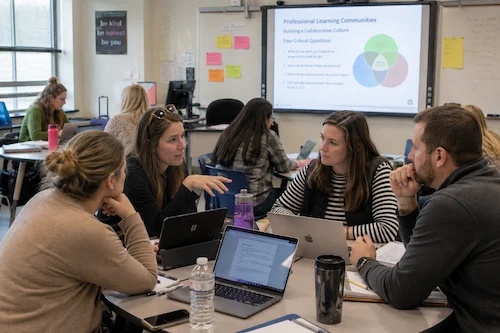
According to educational innovators, this exercise in divergent thinking highlights a critical flaw in modern school administration: the self-imposed boundaries placed on teacher growth. For decades, professional development (PD) in public education has been defined through a remarkably narrow lens—typically consisting of standardized, top-down lectures delivered to passive audiences in school auditoriums.
A growing movement of educators is asking a fundamental question: What if professional development were built entirely around the precise needs, passions, and curiosities of individual classroom teachers? By granting educators the autonomy to design their own professional learning, school systems might unlock a wave of classroom innovation, improve student outcomes, and significantly reduce the teacher burnout crisis currently plaguing public schools.
1. Main Facts: The Crisis of Traditional PD and the Rise of Personalized Innovation
The current paradigm of professional development in American public schools is facing an efficacy crisis. School districts spend billions of dollars annually on standardized training programs that many teachers find irrelevant, repetitive, or entirely detached from the daily realities of their classrooms.
To address this systemic disconnect, Adam Piccoli, a veteran high school special education teacher with over 20 years of classroom experience, designed and implemented an alternative model called Personalized PD for Innovation.
The Core Concept
The initiative replaces mandatory, one-size-fits-all training with a structured framework that gives teachers dedicated time, resources, and guidance to pursue self-directed, innovation-focused projects. Rather than receiving top-down instructions on pedagogy, teachers are treated as researchers, designers, and problem-solvers.
The Pilot Program Results
Piccoli recently piloted this model in his district with a cohort of 48 teachers. Following a series of workshops, participants evaluated the program using a rigorous 10-point scale. The quantitative feedback was overwhelmingly positive:
- Relevance: The workshop received an average rating of 9.4 out of 10.
- Usefulness: Participants rated the utility of the sessions at 9.5 out of 10.
- Practical Application: The program scored 9.4 out of 10 for successfully helping teachers develop actionable new lessons, classroom tools, or educational products.
- Retention and Engagement: 100% of the participating educators stated they would choose to attend the personalized sessions again over traditional PD offerings.
2. Chronology: Implementing the "Personalized PD for Innovation" Framework
The transition from standard lecture-based training to an innovation-focused model requires careful structural scaffolding. Piccoli’s program is not an unstructured free-for-all; rather, it is a highly intentional, three-step pedagogical framework designed to guide teachers from raw curiosity to actionable classroom tools.
[Phase 1: Introduction] ──> [Phase 2: Topic Selection] ──> [Phase 3: Create, Reflect & Share]
  • Divergent thinking         • Problem identification       • Independent design
  • Cognitive warm-ups         • Brainstorming toolkits       • Peer-to-peer feedback
  • Goal-setting               • AI-prompt integration        • Digital repository archiving
Phase 1: The Cognitive Warm-Up and Introduction
The workshop begins by challenging the traditional constraints of the school environment. Piccoli opens each session by explaining the philosophy of personalized professional learning, immediately followed by interactive divergent thinking exercises, such as the paperclip challenge.
The goal of this phase is to disrupt the passive "recipient" mindset that traditional PD often fosters. Teachers are explicitly reminded that throughout human history, no other educator has possessed their exact combination of classroom experiences, personal strengths, and pedagogical perspectives. They are encouraged to channel this unique identity into solving real-world classroom challenges.
Phase 2: Strategic Topic Selection and Ideation
During the second phase, teachers transition from abstract creative thinking to targeted problem identification. To guide this process, educators are asked to reflect on three core prompts:
- What specific professional challenges are you currently facing in your classroom?
- What systemic elements of the school or district would you most like to see improved?
- What elements of teaching currently bring you the most excitement and energy?
To prevent ideation paralysis, the framework equips teachers with a toolkit of proven cognitive strategies:
- The SCAMPER Method: A technique prompting educators to Substitute, Combine, Adapt, Modify, Put to another use, Eliminate, or Reverse existing educational practices.
- First Principles Thinking: Breaking down complex educational challenges to their most basic, undeniable truths and building novel solutions from the ground up.
- The "100 Bad Ideas" Strategy: A rapid-fire brainstorming technique designed to lower the barrier to entry and silence the inner critic.
- Collaborative Walking Brainstorms: Partnering with colleagues for active, movement-based discussions to stimulate cognitive flow.
To streamline this process, teachers are provided with specialized AI prompts to help them refine their ideas, alongside curated lists of student-generated feedback from local high schools to ensure the projects address genuine student needs.
Phase 3: Creation, Reflection, and Collaborative Synthesis
The final phase dedicated to execution provides teachers with uninterrupted, quiet blocks of time to build, write, and design. During this period, the workshop facilitator acts as an active consultant, offering targeted assistance, resources, and feedback only when requested.
At the conclusion of the session, teachers participate in brief, structured reflection periods or small-group discussions to consolidate their findings. Rather than letting the work vanish at the end of the day, educators upload a concise summary of their newly designed lessons, tools, or projects to a shared Google Classroom directory. This creates a living, district-wide repository of grassroots pedagogical innovation.
3. Supporting Data: The High Cost of Standardized PD vs. The Power of Autonomy
The push for personalized professional development is supported by a growing body of macroeconomic and educational research. For decades, school districts have operated under the assumption that massive financial investments in centralized training programs automatically yield better classroom instruction. The data, however, suggests otherwise.
Traditional PD Efficacy vs. Teacher Autonomy Metrics

Traditional PD Spending (Per Teacher/Year):   $18,000
Traditional PD Success Rate (TNTP Study):      ████░░░░░░ (30% report improvement)

Personalized PD Workshop Ratings (Out of 10):
  • Relevance:                                 █████████░ (9.4)
  • Usefulness:                                █████████░ (9.5)
  • Practical Application:                     █████████░ (9.4)
The Financial Inefficiency of "The Mirage"
In 2015, TNTP (formerly The New Teachers Project) released a landmark study titled The Mirage: Confronting the Hard Truth About Our Misconceptions About Teacher Development. The report analyzed data from three large school districts and one charter school network, revealing startling inefficiencies:
- School districts spend an average of $18,000 per teacher, per year on professional development.
- Despite this massive financial commitment, only about 3 in 10 teachers (30%) exhibited consistent, measurable improvement in classroom performance over a two-to-three-year period.
- The study concluded that school systems often fail to help teachers improve because traditional PD models are built on generalized assumptions rather than individual, targeted needs.
The Connection to Student Achievement
Conversely, research indicates that when professional learning is personalized, student outcomes improve. In a comprehensive 2014 review of educational literature compiled by researcher Jane Kassner for the Metropolitan Educational Research Consortium (MERC), multiple studies demonstrated that custom-tailored, teacher-driven professional development programs correlate with increased student academic performance. When teachers have the freedom to study methods that address their specific classroom demographics, their instructional efficacy rises.
Teacher Retention and the Autonomy Factor
The benefits of personalized PD extend beyond academic metrics to address the ongoing teacher retention crisis. A large-scale investigation conducted by the National Foundation for Educational Research (NFER) analyzed the relationship between teacher autonomy, job satisfaction, and career longevity.
The NFER study revealed a clear trend: giving teachers meaningful autonomy over their professional learning goals is one of the single most effective drivers of job satisfaction. Educators who feel trusted to guide their own professional growth are far more likely to remain in the classroom, saving districts thousands of dollars in recruitment and onboarding costs.
4. Theoretical Frameworks: Balancing Exploration and Exploitation
The success of personalized professional development models aligns closely with organizational behavior models observed in both nature and the private sector.
Google’s 20% Rule
In the corporate world, tech giant Google famously pioneered the "20% Rule," which encouraged software engineers to spend one-fifth of their workweek exploring passion projects that fell outside their core responsibilities. This policy led directly to some of the company’s most successful and profitable innovations, including Gmail, Google News, and AdSense.
The Exploration vs. Exploitation Model
This strategy is rooted in a fundamental biological and organizational framework known as the Exploration vs. Exploitation Model.
- Exploitation involves using existing, proven knowledge and established routines to execute daily tasks efficiently. In a school setting, this represents executing standard curriculum maps, grading policies, and administrative mandates.
- Exploration involves seeking out novel ideas, experimenting with unfamiliar techniques, taking calculated risks, and discovering new pathways.
       ┌────────────────────────────────────────────────────────┐
       │             EXPLORATION vs. EXPLOITATION               │
       ├───────────────────────────┬────────────────────────────┤
       │        EXPLORATION        │        EXPLOITATION        │
       │  • Searching for new ideas│  • Utilizing proven methods│
       │  • Risk-taking & discovery│  • Daily execution & routine│
       │  • Creative autonomy      │  • Operational efficiency   │
       └───────────────────────────┴────────────────────────────┘
In nature, animal species that only exploit known food patches eventually face starvation when resources dry up, while those that only explore waste precious energy on fruitless searches. Successful survival requires a dynamic balance between the two.
Public education systems are heavily skewed toward exploitation—forcing teachers to repeat standardized routines with little room for creative variation. By implementing structured, personalized PD, districts introduce a necessary element of exploration, allowing schools to discover fresh solutions to persistent educational challenges.
5. Implications: Redefining the Teacher’s Role in Public Education
Transitioning to a personalized professional development model is not merely a change in scheduling; it represents a fundamental paradigm shift in how school systems view their workforce.
Currently, teachers are often treated as mere implementers of curriculum packages designed by distant administrative offices. This top-down structure ignores the immense reservoir of localized expertise living within the school building. Teachers are on the front lines of student engagement struggles, mental health challenges, and learning gaps. They are uniquely positioned to design solutions to these problems, provided they are given the structured time and creative autonomy to do so.
A Scalable Model for Systemic Change
The Personalized PD for Innovation framework offers a practical blueprint for school boards and superintendents looking to modernize their districts. Rather than abandoning professional standards, this approach channels teacher energy toward district priorities by encouraging self-directed solutions. It transforms professional development from a passive compliance exercise into an active engine of local innovation.
As public education continues to navigate the complexities of the 21st century, the path forward may lie in dismantling the rigid, top-down structures of the past. By trusting educators to direct their own learning, school districts can foster a culture of continuous improvement, retain their most passionate teachers, and ultimately build more dynamic, responsive classrooms for their students.