
The Modern Back-to-School Revolution: How Platforms Like TeacherLists Are Transforming Family Prep
By the Education & Lifestyle Desk
Published: 2025
Main Facts
The annual back-to-school season is universally recognized as one of the most hectic times of the year for American families. Between coordinating complex family schedules, managing household budgets, and navigating crowded retail aisles, parents often find themselves overwhelmed long before the first school bell rings. At the center of this seasonal chaos is the traditional school supply shopping list—a notoriously frustrating document that has historically required physical paper, multiple store visits, and a hefty dose of guesswork.
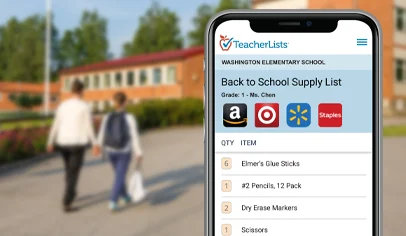
In recent years, however, digital innovation has begun to reshape this ritual. Platforms such as TeacherLists have emerged as prominent solutions, streamlining the entire process by moving school supply lists online. Recently featured on the nationally syndicated television show Daytime, TeacherLists was spotlighted as a smart, stress-free tool designed to connect parents directly with official, teacher-approved supply lists in a matter of clicks.
The core mechanics of the platform are straightforward: parents visit TeacherLists.com, search for their child’s school using a state or zip code, select the appropriate grade and classroom, and instantly access the exact items required. From there, users can check off their items and purchase them directly through major retail partners like Target, Walmart, and Amazon. By removing the need to print physical lists, wander through out-of-stock aisles, or bounce between multiple retailers, the platform has positioned itself as an essential ally for modern parents.
Beyond individual convenience, the platform is currently incentivizing early preparation through community-focused initiatives. To celebrate the season of fresh notebooks and sharpened pencils, TeacherLists has launched a sweepstakes offering five lucky families a $75 gift card to major retailers, encouraging parents to share their organized hauls and spread the word within their school communities.
Chronology of Back-to-School Shopping: From Paper Lists to Digital Integration
To understand the significance of modern digital platforms, it is helpful to look at how school supply shopping has evolved over the past several decades.
The Era of the Paper Flyer (Late 20th Century)
For generations, the back-to-school routine followed a rigid, analog schedule. In the final weeks of spring or during the first week of class, students were handed a physical, mimeographed or photocopied piece of paper detailing the required supplies for the upcoming academic year. Parents relied heavily on these paper slips, tucking them into purses, wallets, or the refrigerator door. Trips to local stationery stores, five-and-dimes, and early big-box retailers involved scouring narrow aisles with physical carts, crossing items off with pens, and hoping that specific brands or colors—often mandated by individual teachers—were still in stock.
The Rise of the Big-Box Monopoly and Early Internet (Early 2000s)
As retail shifted toward massive superstores, the back-to-school shopping experience consolidated. Retailers began partnering directly with local school districts to secure paper lists, printing them out and placing giant bins or display boards near store entrances. While this centralized some shopping trips, it also created massive bottlenecks. Families frequently encountered empty shelves for specific items—such as wide-ruled composition notebooks or specific brands of washable markers—forcing frantic trips to secondary or tertiary store locations.
Concurrently, early school websites began uploading PDF versions of supply lists. While this allowed parents to print lists at home, it did little to solve the inventory guessing game or the physical labor of tracking down specialized items across different store departments.
The Smartphone and E-Commerce Boom (2010s)
The widespread adoption of smartphones radically altered consumer behavior. Parents began taking photos of paper supply lists to carry in their pockets or searching for retail items on mobile apps while standing in store aisles. E-commerce giants like Amazon introduced school supply storefronts, but finding the exact, localized list mandated by a specific teacher remained a decentralized, manual chore. Parents still had to cross-reference multiple web links and retailer carts manually.
The Modern Integrated Era (Present Day)
Today, platforms like TeacherLists represent the culmination of this digital evolution. By bridging the gap between school districts, individual educators, and major e-commerce networks, these platforms eliminate the friction of data collection. Teachers or school administrators upload lists directly into a centralized database, where they are mapped to specific geographic locations and grade levels. Parents can open the platform on any device, view their precise classroom requirements, and convert that digital list into a unified shopping cart across national retailers in minutes.
Supporting Data: The Economics and Stress of Back-to-School Shopping
The necessity for streamlined shopping solutions is underscored by robust economic and sociological data regarding the back-to-school season.
Financial Impact
According to data compiled by the National Retail Federation (NRF) and consumer research firms, the back-to-school and back-to-college shopping seasons represent one of the largest retail periods of the year, second only to the winter holidays.
- Average Spending: American families with school-aged children (K-12) spend an average of several hundred dollars per child on apparel, shoes, electronics, and traditional school supplies.
- Supply-Specific Costs: Traditional supplies—including notebooks, pencils, backpacks, folders, and art materials—account for a significant portion of this budget, with costs rising steadily alongside broader economic inflation.
- Time Investment: Studies on consumer time-use indicate that the average parent spends upwards of five to ten hours dedicated solely to shopping preparation, travel, in-store navigation, and checkout lines during July and August.
Consumer Stress Metrics
Mental health and wellness surveys conducted ahead of the academic year consistently highlight back-to-school preparation as a primary source of seasonal anxiety for parents.
- Logistical Overload: Over 60% of surveyed parents report feeling overwhelmed by the sheer volume of tasks required to transition from summer break to the school year.
- Inventory Frustration: More than 70% of shoppers express major frustration over out-of-stock items at brick-and-mortar stores during peak August shopping weekends.
- Digital Preference: An overwhelming majority of millennial and Gen Z parents express a strong preference for mobile-friendly, digital-first solutions that reduce physical errands and minimize impulse buying in crowded retail environments.
Official Responses and Expert Insights
The integration of digital tools into educational logistics has drawn commentary from educators, consumer advocates, and media platforms alike.
Media Recognition
The recent feature on the nationally syndicated television program Daytime brought national attention to the operational ease platforms like TeacherLists provide. During the segment, lifestyle and parenting experts emphasized that reducing administrative friction for parents directly correlates with lower household stress levels as children prepare to re-enter the classroom. The broadcast highlighted how automation and direct-to-retail integrations save families valuable time that is better spent focusing on emotional preparation, sleep schedules, and family bonding before the academic rigor begins.
Educator Perspectives
Teachers and school administrators have voiced strong support for centralized digital list management. For years, educators struggled with inconsistencies: parents purchasing the wrong items due to unclear paper descriptions, or classrooms being flooded with unneeded supplies while lacking basic essentials like tissues and disinfecting wipes.
"When parents have direct access to accurate, up-to-date lists through platforms like TeacherLists, the entire classroom benefits," notes a veteran elementary school administrator. "Students arrive on the first day fully equipped with the exact materials requested, ensuring that learning can begin immediately without the awkward gap of missing supplies."
Retail Partnerships
Major retail corporations—including Amazon, Target, and Walmart—have increasingly leaned into these digital integrations. By partnering with platforms that map supply lists directly to their inventory databases, retailers can offer a seamless "one-click" or "add-all-to-cart" shopping experience. This not only drives seasonal sales volume but also optimizes inventory management, allowing supply chains to predict regional demand for specific notebooks, binders, and writing utensils with greater precision.
Implications for Families, Schools, and the Future of Retail
The widespread adoption of digital school supply management carries profound implications for the future of education logistics, family well-being, and retail commerce.
1. Equity and Accessibility in Education
One of the subtle yet powerful implications of centralized digital lists is enhanced equity among student populations. Traditional shopping lists often relied on word-of-mouth or physical papers that could easily get lost in transit, disproportionately impacting working parents with rigid schedules or limited access to transportation. Digital platforms ensure that every parent—regardless of their work hours or proximity to a major retail center—has equal, 24/7 access to the exact classroom requirements. Furthermore, many platforms allow for streamlined donation features, enabling community members or charitable organizations to purchase and ship supplies directly to under-resourced classrooms.
2. Shifting Retail Dynamics
The traditional "back-to-school shopping weekend" centered around physical brick-and-mortar superstores is undergoing a structural shift. While physical retail remains a major component of the season, the baseline expectation of the consumer is now omnichannel convenience. Retailers that fail to integrate their inventory with digital list platforms risk losing market share to competitors who offer frictionless, app-based list fulfillment. As artificial intelligence and predictive analytics continue to evolve, future iterations of these platforms may automatically suggest budget-friendly alternatives or highlight eco-friendly product lines, further empowering consumer choice.
3. Community Building and Parental Support
Paradoxically, moving a logistical task online has fostered stronger community ties among parents. As highlighted by TeacherLists’ community initiatives—such as the current sweepstakes encouraging parents to share their organized hauls—digital platforms facilitate peer-to-peer communication. When one parent successfully navigates their school list and shares the digital link within a PTO group chat or class text thread, they lift the administrative burden off dozens of other families. This collaborative spirit transforms a historically isolating and stressful chore into a shared community victory.
Looking Ahead
As families prepare for the upcoming academic year, the normalization of smart digital tools marks a permanent departure from the paper-and-pencil logistics of the past. By combining the efficiency of e-commerce with the specific, localized needs of classrooms nationwide, platforms like TeacherLists have turned a seasonal headache into a streamlined, stress-free experience.
For parents looking to reclaim their weekends and enter the school year with peace of mind, visiting platforms like TeacherLists represents a logical first step. And once those backpacks are packed, sharing the success not only helps fellow school families but also opens the door to rewards like the current $75 retail gift card sweepstakes—proving that modern organization can indeed pay off.