Healing the Classroom: A Holistic Approach to Education in Conflict-Affected Cameroon
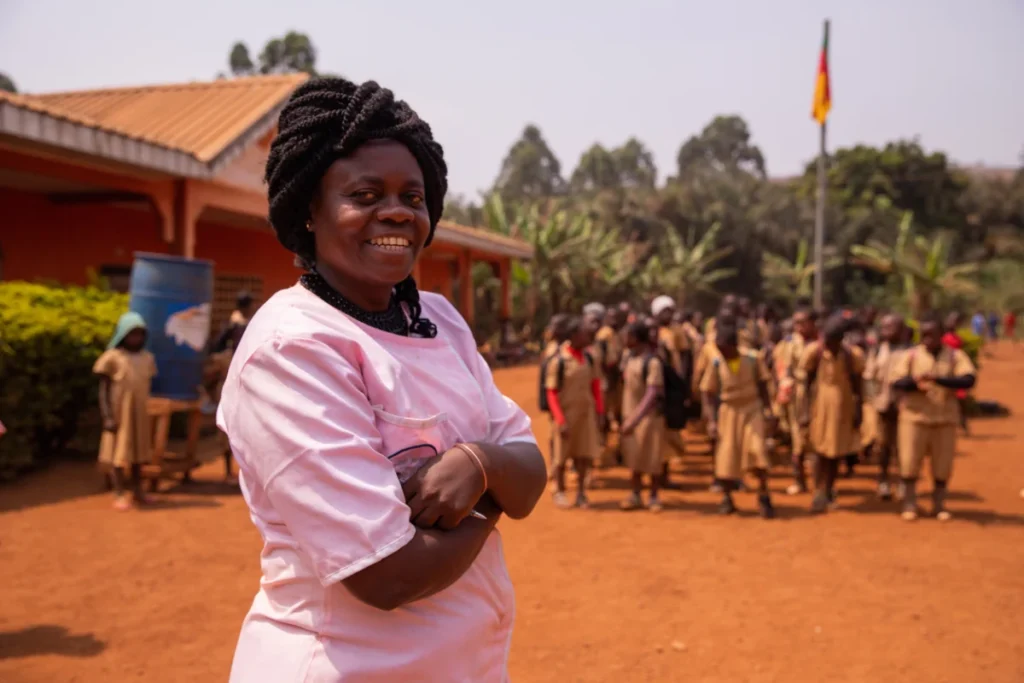
In the shadow of a six-year-long conflict, the classrooms of Cameroon’s Northwest and Southwest regions have become more than just centers of academic instruction—they are the front lines of a humanitarian effort to stabilize the future of a generation. A new initiative, spearheaded by World Education, a JSI initiative, is currently working to address the profound psychological toll that ongoing instability has exacted on students and educators alike.
This program, which marks a critical component of a broader, five-year strategic development activity (2024–2029), is led by Nascent Solutions, Inc. (Nascent) and backed by the United States Department of Agriculture (USDA) through its Foreign Agricultural Services (FAS) under the prestigious McGovern-Dole International Food for Education and Child Nutrition Program. By prioritizing psychosocial well-being alongside traditional scholastic achievement, the initiative seeks to bridge the gap between surviving a conflict and thriving in an educational environment.
The Context: A Crisis of Displacement and Trauma
The conflict in Cameroon’s English-speaking regions has disrupted the lives of thousands of families, leading to significant school closures, displacement, and exposure to violence. For the children living in these areas, the schoolhouse is often the only remaining symbol of normalcy. However, years of psychological trauma have created "hidden barriers" to learning. When a child is struggling with anxiety, depression, or the lingering effects of displacement, the standard curriculum is insufficient.
World Education’s specialized intervention is designed to address these invisible wounds. By integrating psychosocial care with deep-rooted community ownership, the project aims to cultivate a secure environment where children are not only present in the classroom but are emotionally and socially prepared to engage with their studies.
Chronology: From Strategy to Implementation (2024–2029)
The initiative is structured as a five-year developmental trajectory, ensuring that the intervention is not merely a temporary fix, but a sustainable model for the future of education in the region.
- 2024: Foundational Phase: The initial year is dedicated to the assessment of school environments, the recruitment of master teachers, and the establishment of partnerships with local public health professionals. This phase focuses on mapping the specific needs of the Northwest and Southwest regions.
- 2025–2026: Institutionalization of Support: During these two years, the focus shifts to the training of 96 master teachers and 96 local health workers. These cohorts will form the backbone of the Psychosocial Support Teams (PSTs). Simultaneously, community mobilization will commence to establish the Psychosocial Support Groups (PSGs).
- 2027–2028: Scaling and Monitoring: As the PSTs and PSGs become operational, the project will enter a period of rigorous monitoring. Success metrics will transition from participation rates to tangible improvements in student behavior, attendance, and emotional stability.
- 2029: Consolidation and Sustainability: The final year is geared toward transitioning the leadership of these support networks entirely into the hands of local school management committees, ensuring the model persists beyond the lifecycle of the USDA funding.
The Holistic Framework: PSTs and PSGs
The effectiveness of this initiative lies in its two-pronged, interconnected approach. World Education is not replacing local structures; it is fortifying them.
Psychosocial Support Teams (PSTs)
The PSTs represent the clinical and educational "first response" within schools. Comprised of 192 individuals—split equally between master teachers and health professionals—these teams are the direct interface for students in distress. Their training covers standardized screening methods to identify symptoms of anxiety, depression, and antisocial behaviors.
Beyond identification, these teams are equipped to provide immediate, low-level psychosocial interventions. In cases where a child’s needs exceed the scope of school-based care, the PSTs serve as the bridge to clinical referral pathways, ensuring that no child is left to navigate severe trauma in isolation.
Psychosocial Support Groups (PSGs)
While the PSTs handle the clinical and pedagogical needs, the PSGs serve as the community’s safety net. These groups incorporate parents, school management committees, and influential local leaders. Their mandate is to normalize conversations around mental health and integrate wellness activities into the standard school day. By embedding "child-friendly spaces" into the school routine, the PSGs ensure that the school environment itself acts as a therapeutic tool.
Official Perspectives: Addressing the Hidden Barriers
The philosophy behind this project is rooted in the belief that education is impossible without emotional security. Adam Turney, JSI/World Education Director, underscores this point:
"Our approach goes beyond traditional educational support to address the hidden emotional barriers that prevent children from thriving. By mobilizing communities and training local professionals, we are building sustainable support networks directly inside Cameroon’s schools."
This sentiment is shared by international partners who recognize that food security—the primary focus of the McGovern-Dole program—is intrinsically linked to the cognitive health of students. A malnourished or traumatized child cannot absorb nutrition or information. Therefore, the USDA’s support for this psychosocial initiative is a strategic investment in the efficacy of its broader food-for-education mandate.
Data-Driven Impact and Supporting Evidence
While the project is in its early stages, the methodology is built upon decades of World Education’s global expertise. Previous iterations of Food for Education initiatives have consistently demonstrated that when community engagement is high, academic performance improves.
Data from similar conflict-affected zones suggests that:
- Teacher Retention: Schools that provide psychosocial support for teachers report a lower turnover rate, as educators feel empowered rather than overwhelmed by the challenges of the classroom.
- Attendance Correlation: A safe school environment directly correlates with higher daily attendance, as students who feel emotionally secure are less likely to experience "school avoidance" due to anxiety.
- Community Resilience: By involving parents in the school management committees, the project builds a protective layer of social cohesion that extends into the home environment, further supporting the child’s recovery.
Implications for the Future of Cameroonian Education
The significance of this project extends far beyond the Northwest and Southwest regions. If successful, this model offers a blueprint for how international development agencies can operate in "fragile" or "conflict-affected" contexts.
Decentralization of Care
By training local teachers and health workers rather than relying on external, fly-in, fly-out consultants, World Education is ensuring that expertise remains in the country. This creates a lasting human capital legacy that will benefit the Cameroonian education system for years to come.
Integrating Wellness into Policy
The initiative effectively advocates for the integration of mental health into national educational policy. By demonstrating that psychosocial support leads to better academic outcomes, the project provides policymakers with the evidence required to make mental health services a permanent fixture in the school budget.
Long-Term Social Cohesion
In regions torn by conflict, the school often serves as the most neutral ground. By bringing parents, teachers, and community leaders together to focus on the well-being of the next generation, the program is doing more than teaching math and literacy—it is rebuilding the social fabric of the community.
Conclusion: A Collective Effort
The collaboration between Nascent Solutions, the USDA, and World Education is a testament to the power of holistic humanitarian intervention. By recognizing that the classroom is a sanctuary for the mind as much as it is a place for the development of the intellect, this initiative is setting a new standard for development work in Cameroon.
As the program moves through its five-year timeline, the ultimate measure of success will not be found in the statistics alone, but in the resilience of the students who walk through these school doors. By restoring the well-being of teachers and children, this project is ensuring that despite the chaos of conflict, the promise of education remains within reach. Through community ownership and expert-led support, the classrooms of Cameroon are being transformed from sites of struggle into engines of recovery, proving that when a community unites to protect its children, it effectively secures its own future.