American Bar Association Repeals Landmark Diversity Standard Following Intense Pressure From Second Trump Administration
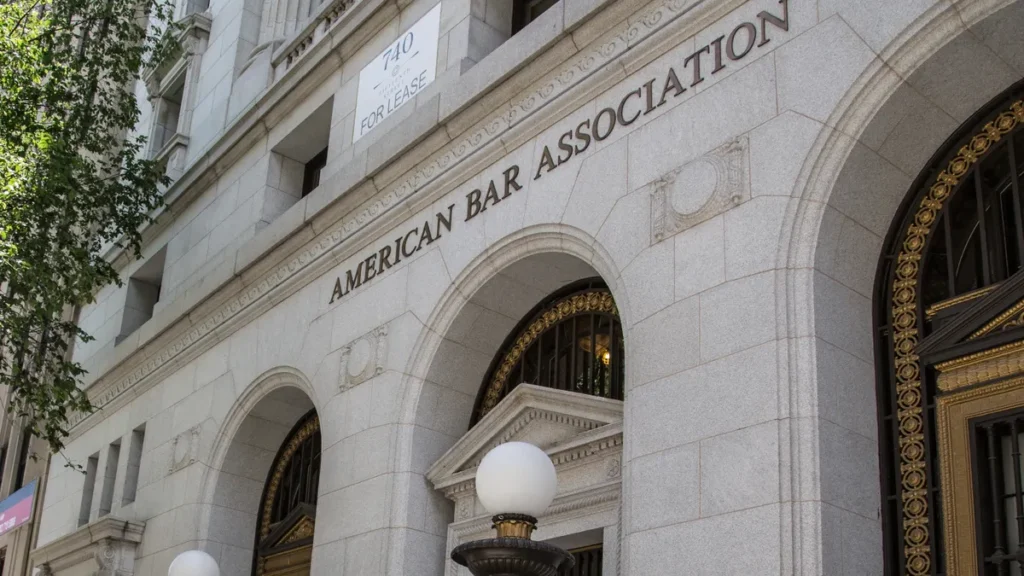
WASHINGTON — In a historic and contentious vote that has sent shockwaves through the legal education establishment, the American Bar Association (ABA) officially voted on Tuesday to repeal Standard 206, the long-standing accreditation rule that mandated law schools to demonstrate a concrete commitment to diversity, equity, and inclusion.
The decision follows more than a year of relentless pressure, legal threats, and direct political attacks from the second Trump administration, which targeted the organization’s diversity mandates as unconstitutional. As the sole national accreditation agency for United States law schools—whose stamp of approval is a mandatory prerequisite for bar exam eligibility in nearly every state—the ABA found itself caught in a high-stakes regulatory crossfire.
While leadership at the association defended the repeal as an existential necessity to protect its federal recognition and legal standing, the move has drawn severe criticism from educators, legal scholars, and advocates who view the decision as a capitulation to political coercion and a devastating blow to racial and ethnic equity in the legal profession.
Main Facts
The repeal of Standard 206 marks a watershed moment for American legal education. Under the now-defunct rule, law schools seeking and maintaining ABA accreditation were legally and structurally required to "demonstrate by concrete action a commitment to diversity and inclusion by providing full opportunities for the study of law and entry into the profession by members of underrepresented groups, particularly racial and ethnic minorities."
Furthermore, the standard compelled law institutions to maintain diverse student bodies and employee rosters. However, faced with mounting hostility from federal regulators, the ABA chose to scrap the rule entirely.
The primary driver behind the repeal was the existential threat posed to the ABA’s status as a recognized accreditor. Melissa Hart, chair of the ABA accreditation council, acknowledged the grim political and legal reality following Tuesday’s vote, stating that the elimination of Standard 206 was imperative to preserve the organization’s "continued recognition by state supreme courts and the Department of Education."
Had the ABA refused to yield, the federal government possessed the administrative leverage to strip the organization of its accreditation authority—a catastrophe that would have paralyzed the American legal pipeline, as graduates from non-accredited institutions are fundamentally barred from sitting for the bar exam in the vast majority of jurisdictions.
Chronology of the Conflict
The path to the dismantling of Standard 206 was paved over a turbulent 18-month period defined by escalating friction between the federal government and the legal profession’s premier oversight body.
- Early 2025: Following the inauguration of the second Trump administration, federal officials initiated a broad campaign targeting diversity, equity, and inclusion (DEI) frameworks across higher education. The ABA, due to its gatekeeping role over the nation’s law schools, quickly became a primary target.
- March 2025: Then-Attorney General Pam Bondi escalated the administration’s offensive by publicly declaring Standard 206 unconstitutional. Bondi explicitly threatened the ABA’s federally recognized accreditation powers, signaling that the Department of Justice would actively dismantle the rule if the association failed to act.
- Late 2025: In an attempt to appease critics and thread the needle between legal compliance and its core institutional values, the ABA proposed a compromise. The organization floated changing the rule’s title from "Diversity and Inclusion" to "Access to Legal Education and the Profession." Additionally, the proposed revisions explicitly spelled out that no law school should "take race or any other identity characteristic into account" during individual admissions or hiring decisions.
- Early 2026: Despite these substantive concessions, the Trump administration remained unsatisfied, ramping up its pressure campaign and demanding a total eradication of the standard.
- May 2026: An internal standards committee memo revealed the depth of internal dissent and public opposition, noting that critics accused the organization of cowardice. Nevertheless, the committee formally recommended repeal, citing the "current legal landscape."
- September 9, 2026: The ABA officially holds its vote, enacting the repeal of Standard 206 and ending decades of formal diversity requirements in American law schools.
Supporting Data and Public Feedback
The decision to discard Standard 206 was met with overwhelming resistance from the broader academic and legal community, a reality documented transparently in the ABA’s own administrative records.
According to an ABA analysis of the public comment period, 50 public submissions were registered regarding the proposed repeal. Out of those fifty responses, all but two vehemently opposed the elimination of the rule.
The public comments coalesced around several central arguments:
- Educational Quality: Respondents asserted that diversity and inclusion are not ideological preferences, but rather foundational prerequisites for a quality legal education and professional competence in an increasingly diverse society.
- Democratic Integrity: Many submissions argued that Standard 206 played a vital role in protecting the rule of law and safeguarding a multiracial democracy.
- Historical Rectification: Commenters emphasized that the diversity rule was historically necessary to actively combat and remedy the legal profession’s deeply documented legacy of racial and ethnic exclusion.
- Legal Viability: Multiple legal scholars argued that existing federal law did not actually require the complete repeal of the standard, suggesting that the ABA was interpreting the legal landscape far more conservatively than necessary.
Despite this near-unanimous public pushback, the ABA’s governing bodies prioritized institutional self-preservation. In a candid May memo, the ABA’s standards committee acknowledged the severe reputational cost of the decision, noting: "A number of comments assert that the repeal demonstrates capitulation to the current federal administration and demonstrates a lack of integrity and courage."

However, the committee ultimately concluded that the organization’s "unique, essential role as an accreditor in a national system of accreditation" left them with no viable alternative given the hostile legal and political paradigm.
Official Responses
The culmination of the accreditation battle has drawn sharp lines between political actors, institutional administrators, and legal advocates.
Representatives of the second Trump administration have framed the repeal as a massive victory for constitutional principles, equality before the law, and the eradication of what they characterize as discriminatory race-conscious policies in education. The Justice Department’s initial posture—asserting that mandates prioritizing specific racial and ethnic groups violate equal protection principles—ultimately served as the blueprint that forced the ABA’s hand.
Conversely, civil rights organizations, student groups, and legal associations have expressed profound disappointment. While leadership figures like Melissa Hart have attempted to frame the move as a pragmatic retreat designed to keep the accreditation system functioning, grassroots legal advocates argue that the removal of Standard 206 strips accountability from institutions that may now backslide on decades of progress toward building a representative legal workforce.
Implications for the Future of Legal Education
The elimination of Standard 206 creates profound uncertainty for the future landscape of American jurisprudence. For nearly half a century, the standard served as a structural anchor, compelling law school deans, admissions offices, and hiring committees to actively recruit and support underrepresented students and faculty.
Without this mandate, legal education experts warn of several potential consequences:

1. The Fragmentation of Admissions Policies
While many law schools in progressive states or those committed to institutional equity may voluntarily maintain diverse recruitment pipelines, others operating in politically conservative states may feel emboldened—or legally compelled by local legislation—to completely dismantle race-conscious outreach and support programs. This could lead to a severe geographical divergence in how legal education is accessed across the United States.
2. A Step Backward in Professional Diversity
The legal profession has historically struggled with stark demographic disparities. According to historical data, minority lawyers remain significantly underrepresented relative to the broader population. Critics of the repeal worry that removing concrete benchmarks will accelerate a decline in minority enrollment, ultimately leading to a bench and bar that less accurately reflects the demographic reality of the nation.
3. The Precedent of Political Interference
Perhaps the most troubling implication for higher education leaders is the precedent set by the administration’s successful pressure campaign against an independent accrediting body. By leveraging the threat of federal derecognition to force changes to academic standards, the executive branch has demonstrated a powerful mechanism for shaping curriculum, governance, and institutional values across professional schools.
As law schools begin the 2026–2027 academic year in the shadow of this historic vote, the true fallout of Standard 206’s demise remains to be seen. What is certain, however, is that the American legal academy has entered a turbulent new era defined by shifting federal power, intense ideological scrutiny, and an uncertain framework for equity and access.