The Stalled Crusade: Why Momentum for Banning Legacy College Admissions Has Tapered
WASHINGTON — Nearly three years after the U.S. Supreme Court upended higher education by striking down race-conscious admissions, a parallel movement to dismantle systemic preferences for the children of alumni and major donors has hit a formidable wall.
What began as a wave of bipartisan outrage and legislative action following the 2023 landmark ruling has largely lost its steam. Across statehouses, Capitol Hill, and the executive branch, momentum for banning legacy admissions has noticeably tapered. Legislative bills have stalled, bipartisan consensus has fractured under the weight of congressional gridlock, and the Trump administration has shown little to no appetite for addressing the issue.
Yet, beneath the surface of political paralysis, the debate over who gets into America’s most elite universities remains a high-stakes flashpoint, highlighting deep societal anxieties regarding merit, privilege, and access.
Main Facts: The Battlegrounds of Advantage
At its core, the legacy admissions debate centers on a practice as old as American higher education itself: giving preferential treatment to applicants who are related to alumni or who hail from families with a history of significant financial contributions. Critics argue these preferences manufacture an unfair advantage for an already privileged demographic—one that is overwhelmingly white and wealthy—at the expense of qualified, hardworking students from diverse socioeconomic backgrounds.
Following the Supreme Court’s 2023 decision, a unique political alignment emerged. Pro-equity Democrats and populist Republicans suddenly found themselves reading from the same script. Governors, state lawmakers, and even Edward Blum—the conservative activist who orchestrated the successful challenge against affirmative action—began calling for the outright prohibition of legacy preferences.
Despite this ideological alignment, concrete policy changes have proven difficult to enforce. While dozens of colleges and universities have voluntarily dropped legacy preferences over the last few years, the nation’s most elite, heavily endowed institutions have largely held the line, insulated by powerful lobbying networks and deep-pocketed alumni bases.
Chronology of a Movement: From Post-Ruling Surge to Legislative Stalemate
To understand the current state of the legacy admissions fight, it is necessary to trace its trajectory over the past decade:
- The Civil Rights Era to 2023: Legacy preferences operated largely under the radar, surviving initial scrutiny during the Civil Rights movements of the 1950s and 60s. They remained a quiet, entrenched tradition among selective institutions.
- June 2023: The Supreme Court strikes down race-conscious admissions. The ruling immediately shines a glaring spotlight on legacy practices, prompting a sudden wave of national introspection and legislative proposals.
- 2021–2024 (State Action): Colorado becomes the pioneer in 2021 by banning legacy admissions. Following the 2023 SCOTUS ruling, momentum shifts to the state level. California, Maryland, Virginia, and Illinois pass legislation restricting or outright banning legacy and donor preferences at public and/or private institutions between 2023 and 2024.
- Late 2023 – 2024: Federal lawmakers introduce various iterations of bipartisan bills, including the MERIT Act and companion bills in the House and Senate aimed at tying federal financial aid and accreditation to the elimination of legacy preferences.
- 2025: California’s sweeping ban takes effect in the fall, prompting institutions like Stanford University to accept the penalty of losing state student aid rather than surrender its legacy tracking and preferences, relying instead on its own endowment. Meanwhile, federal data collection proposals by the Department of Education omit legacy reporting metrics.
- Present Day: Federal legislation remains completely stalled in congressional committees, and key state-level bills—particularly in progressive Northeastern states housing powerful Ivy League institutions—remain frozen amid aggressive institutional lobbying.
Supporting Data: The Numbers Behind the Preferences
Statistics compiled by higher education advocacy groups paint a nuanced picture of an institution in transition, characterized by voluntary compliance among mid-tier schools and stubborn resistance among the elite.
- 92+: According to a report by the nonprofit Education Reform Now, at least 92 colleges and universities scrapped legacy admissions preferences between the 2023 Supreme Court ruling and early 2025.
- 415: By 2025, data showed that 62 public colleges and 358 private institutions still maintained legacy preference policies, demonstrating that the practice remains widespread outside of the vanguard of institutions that have voluntarily reformed.
- 5: The number of states—Colorado, California, Maryland, Virginia, and Illinois—that have successfully enacted statutory restrictions or bans on legacy admissions since 2023.
- 17 States: The geographic scope of a federal court injunction issued in 2025 blocking the U.S. Department of Education from compelling public institutions to hand over extensive admissions data, complicating federal oversight efforts.
Official Responses and Expert Insights
The friction between populist legislative intent and institutional self-preservation has drawn sharp commentary from policy analysts, academic experts, and lawmakers alike.
James Murphy, a senior fellow at the education reform group Class Action, argues that the primary obstacle at the federal level is not a lack of bipartisan will, but structural dysfunction.
"I don’t think there’s a question of political will, so much as just the utter paralysis of the U.S. Congress," Murphy noted. "I sit and hope that something will happen that will spark another wave of interest."
Murphy also expressed frustration over the Trump administration’s disinterest in the topic, noting that recent Department of Education data-gathering initiatives failed to mandate reporting on legacy applicants. Because legacy applicants are disproportionately white, Murphy argues that omitting this metric skews public understanding of modern admissions dynamics.
Frederick Hess, senior fellow and director of education policy studies at the American Enterprise Institute, sees a lingering possibility for federal intervention, driven by public resentment over elite institutions collecting federal financial aid while granting access to the well-connected.
"There is a real chance that you could see legislation," Hess said, pointing to the unlikely common ground between the "pro-equity left and the populist right." However, Hess cautioned that the administration’s crowded policy agenda regarding civil rights enforcement, student loans, and research leaves little bandwidth to prioritize legacy preferences.
Robert Kelchen, a professor and head of the educational leadership and policy studies department at the University of Tennessee, Knoxville, believes a legacy ban would easily pass if brought to the floor as a standalone bill. Yet, finding a legislative vehicle—such as a massive budget reconciliation package—remains nearly impossible given that legacy bans lack a direct fiscal impact.
"In an era where we have populists on both the left and the right, restricting legacy admissions creates some interesting coalitions," Kelchen observed. "But barring some big action at the federal level, I don’t think we’re going to see major changes."
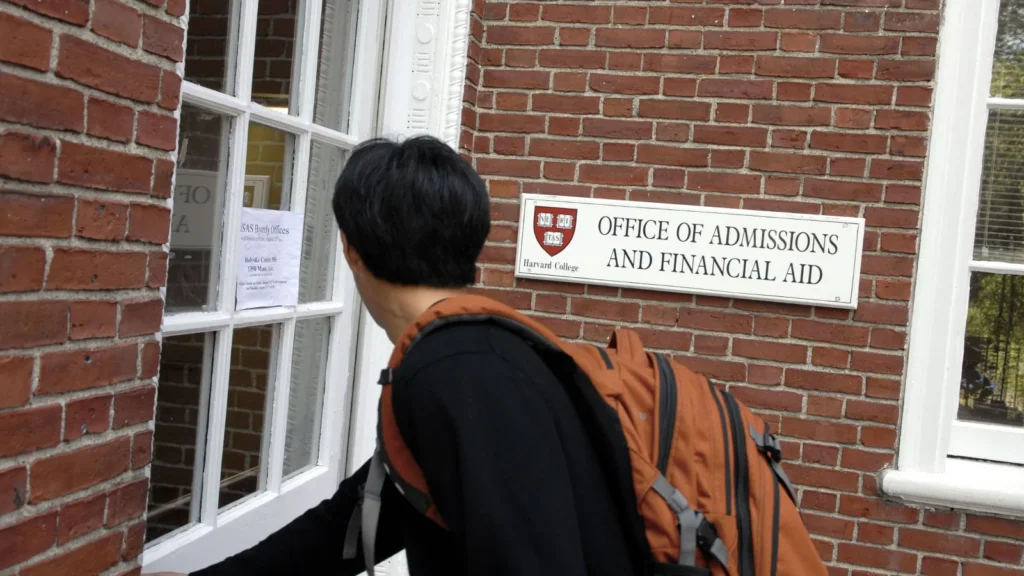
Institutional resistance, particularly in the Northeast, remains a massive hurdle. In Massachusetts, a state boasting several elite universities, a legacy restriction bill has stalled indefinitely in the Senate’s Ways and Means and Rules committees. Observers heavily attribute this logjam to intense behind-the-scenes lobbying by institutional heavyweights like Harvard University.
When contacted, universities like Harvard and political leaders such as Massachusetts Senate President Karen Spilka have declined to comment on whether institutional lobbying has actively blocked the legislation. Meanwhile, institutions like Stanford University have chosen to actively bypass state-level penalties—opting to forfeit state-administered financial aid rather than dismantle the alumni-preference networks that they argue support vital philanthropic pipelines.
Implications: A Trust Deficit in American Higher Education
The stalling of the legacy admissions reform movement carries profound implications for the future of American higher education, civic trust, and social mobility.
1. Deepening Public Cynicism
As internal reports—such as one released by Yale University—have candidly admitted, modern selective admissions processes often appear opaque, arbitrary, and structurally tilted toward the already affluent. When the public perceives that elite institutions are operating as country clubs for the connected rather than engines of meritocratic mobility, public trust in higher education plummets. This distrust risks translating into further legislative pushback, diminished public funding, and heightened legal scrutiny.
2. The Limits of State-Level Patchwork Solutions
Because federal action remains paralyzed and state bans are geographically isolated, a fragmented landscape has emerged. Students applying to colleges in California or Virginia face a radically different regulatory environment than those applying in Massachusetts or New York. Wealthy universities adept at navigating or absorbing financial penalties—such as Stanford turning its back on state aid—demonstrate that determined institutions can effectively bypass state-level sovereignty.
3. The Future of Meritocracy Post-Affirmative Action
Perhaps the most potent critique of the current stalemate is ideological consistency. Activists and legal scholars across the political spectrum have pointed out the hypocrisy of dismantling race-conscious admissions in the name of pure meritocracy while stubbornly preserving legacy and donor preferences—mechanisms designed explicitly to benefit individuals based on lineage rather than personal achievement.
Unless a major political catalyst re-ignites public outrage or forces congressional action, legacy preferences will likely survive as a quiet, resilient bastion of privilege. For thousands of aspiring college students, the gates of elite higher education will remain guarded not just by academic excellence, but by the weight of family trees and institutional balance sheets.