Temple University Recalls College Naming and Scraps Record $55 Million Gift Amid Federal Probe Into Donor’s Company
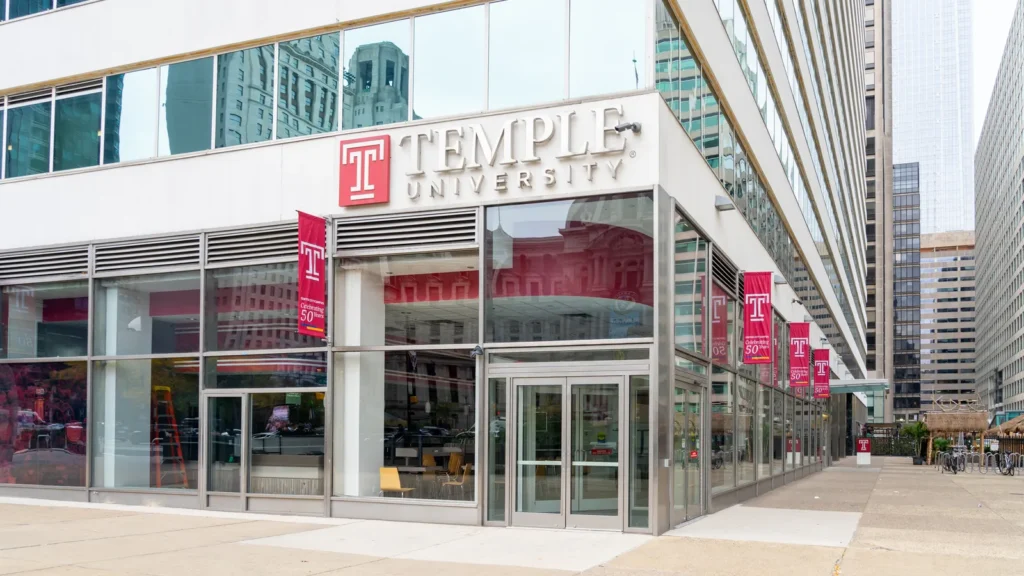
PHILADELPHIA — In a sudden and high-profile reversal of fortune, Temple University has officially terminated a record-shattering $55 million donation from alumnus and governing board member Christopher Barnett. The unprecedented step comes in the wake of escalating federal investigations into fraudulent billing practices at ABA Centers of America, the autism services provider founded and led by Barnett.
University leadership announced Tuesday that the arrangement was canceled "mutually," sparing the institution from absorbing tainted funds, though the decision strips Temple’s college of public health of both its namesake and a massive financial windfall intended to reshape its research and programmatic capabilities.
While no installment payments had yet come due on the pledge—which was unveiled with great fanfare last October—the abrupt unraveling of the agreement marks a significant reputational and financial setback for the Philadelphia-based institution. Temple has already rescinded the temporary rebranding of its academic unit, which had briefly been designated the "Barnett College of Public Health," and is left navigating the fallout of a scandal that stretches from federal courtrooms to the university’s highest governing tiers.
Main Facts
The collapsed philanthropy centers on a landmark $55 million commitment made by Christopher Barnett, a prominent entrepreneur and Temple alumnus. The gift, announced in the fall of 2025, was designed to permanently endow the university’s college of public health and inject a substantial $20 million into a dedicated autism research facility on campus.
The transaction ground to a halt following revelations that ABA Centers of America, a major provider of applied behavior analysis founded by Barnett in 2020, is the target of a federal criminal investigation focused on fraudulent billing practices.
Key elements of the situation include:
- The Financial Impact: Although the headline figure of the gift was $55 million, no actual payments had been collected by the university prior to the cancellation. However, the institution previously received $1 million in seed funding from Barnett last year, which was used to launch and initially brand the autism lab.
- The Rebranding Reversal: Temple swiftly removed Barnett’s name from its public health college, reverting to its prior designation. University officials emphasized that academic continuity remains secure.
- The Scope of Scrutiny: The federal probe into ABA Centers of America builds upon a growing wave of civil litigation and commercial disputes, including contentious legal battles between Barnett’s company and major corporate entities and insurers over disputed billing procedures.
- Governance Fallout: Beyond his financial contributions, Barnett held deep institutional ties, serving on Temple’s governing board as well as a past tenure on the public health college’s advisory board.
Chronology of Events
The trajectory of Christopher Barnett’s relationship with Temple University reads like a classic institutional success story—until its sudden derailment.
- The Early Years: Barnett’s history with Temple began with resistance. The university initially rejected his undergraduate application. Undeterred, Barnett reportedly made a direct appeal to an admissions counselor, promising that if given a chance, he would one day return the favor through philanthropic support. He was subsequently admitted.
- 2020: Barnett establishes ABA Centers of America, steering the enterprise into the rapidly expanding sector of autism services utilizing applied behavior analysis.
- May 2024: Deepening his administrative integration with the university, Barnett is appointed to Temple University’s governing board, having previously lent his expertise to the board of the public health college.
- October 2025: Temple proudly announces a record-shattering $55 million gift from Barnett. The institution celebrates the commitment, announcing that the College of Public Health will be renamed in his honor, with a significant portion earmarked for an advanced autism laboratory. Prior to this, Barnett had already contributed $1 million in seed money for the lab.
- August 2025 – Early September 2026: Commercial cracks begin to show. Legal disputes mount, highlighted by a high-stakes court battle between ABA Centers of America and major grocery chain and employer Publix.
- Early September 2026: Investigative reporting by behavior analyst Samantha Parnham, published via her Reinforcement & Ruin newsletter, brings public attention to federal search warrants and an active criminal investigation into ABA Centers of America’s billing operations.
- September 9, 2026: Facing mounting public scrutiny and impending reputational damage, Temple University and Barnett mutually agree to scrap the $55 million donation entirely. University leadership announces the termination, the removal of the naming rights, and Barnett’s cooperation amidst a personal medical recovery.
Supporting Data and Background Context
The unravelling of Temple’s largest-ever proposed gift did not occur in a vacuum. It represents the collision of aggressive higher-education fundraising with intensifying corporate and legal oversight in the healthcare sector.
ABA Centers of America, launched in 2020 amid surging demand for autism spectrum disorder interventions, quickly scaled operations across multiple states. However, rapid expansion in the healthcare and behavioral therapy spaces has increasingly drawn the scrutiny of federal regulators, private insurers, and corporate partners.
The federal criminal investigation into the firm’s billing practices gained public traction following detailed reporting by Samantha Parnham, which shed light on federal warrants executed against the company. This regulatory pressure compounds a series of civil friction points. Most notably, ABA Centers of America has found itself entangled in complex litigation, including a mutual lawsuit involving retail giant Publix following disputes over insurance claims and network cut-offs by healthcare administrators like Optum.

For Temple, the sudden loss of the $55 million endowment forces a sharp pivot. The funds were explicitly meant to cement the public health college’s position as a premier academic and research hub. Specifically, $20 million was slated to supercharge the campus autism lab, transforming it into a flagship facility. While the $1 million previously donated as seed funding remains, the loss of the broader multi-million-dollar infusion leaves a noticeable vacuum in the college’s long-term strategic budgeting.
Official Responses and University Stance
In a joint statement released Tuesday, Temple leadership addressed the controversy head-on, seeking to reassure students, faculty, and alumni while managing the public relations fallout.
University officials praised Barnett for stepping away gracefully to protect the institution’s image. "We are grateful that Mr. Barnett has expressed a desire to avoid any negative impact on Temple," university leaders stated, adding that Barnett had "cooperated with the university through this difficult process" even as he contends with recovery from a separate, severe medical event.
Administrators were quick to insulate the College of Public Health from the turbulence surrounding its aborted benefactor. Emphasizing that the academic unit remains "one of Temple’s strongest academic units," leadership stressed that public health education and research remain foundational priorities for the university, completely independent of external financial sponsorships.
Addressing the broader fiscal health of the institution, Temple officials sought to project stability. They noted that the termination of the record-breaking gift "does not diminish the philanthropic momentum and strength of Temple," pointing to an otherwise robust fundraising cycle that has achieved record totals even when discounting the unfulfilled Barnett pledge.

Implications for Temple University and Higher Education Philanthropy
The collapse of the Barnett endowment serves as a cautionary tale for universities nationwide regarding the perils of donor vetting in an era of heightened corporate accountability.
Financial and Administrative Adjustments
While Temple’s overarching fundraising numbers remain healthy, the public health college faces immediate operational realities. Capital projects, faculty recruitment initiatives, and program expansions that were penciled in under the assumption of a steady influx of $55 million will now need to be recalibrated. University budget planners will likely need to identify alternative revenue streams, tap into internal reserves, or scale back the ambitious timelines initially envisioned for the autism research facilities.
The Evolution of Donor Due Diligence
The incident highlights the growing necessity for rigorous, continuous compliance and background vetting by university advancement offices. As philanthropic gifts increasingly scale into tens or hundreds of millions of dollars, institutions face immense pressure to balance aggressive fundraising goals with exhaustive risk assessments. Naming rights and college renamings, once treated as transactional celebrations immediately following a signed pledge, are increasingly viewed as high-risk ventures subject to rapid public unravelling if a donor’s business practices face regulatory or criminal exposure.
Reputational Management
For Temple, the swiftness with which it severed ties appears to have mitigated long-term brand damage. By immediately acknowledging the federal investigation, mutually dissolving the contract, and scrubbing the name from the college before any capital exchange took place, the administration demonstrated institutional agility. Nevertheless, the episode underscores the vulnerability of public universities relying heavily on corporate-derived private wealth to fund public goods.
As federal authorities continue their probe into ABA Centers of America, the ripple effects will undoubtedly be felt far beyond the corporate boardroom—serving as a defining moment for Temple University’s fundraising strategy and a stark reminder of the complexities inherent in modern academic philanthropy.