Bridging the Post-Pandemic Learning Gap: Inside NWEA’s ‘High Growth for All’ Blueprint for Supplemental Instruction
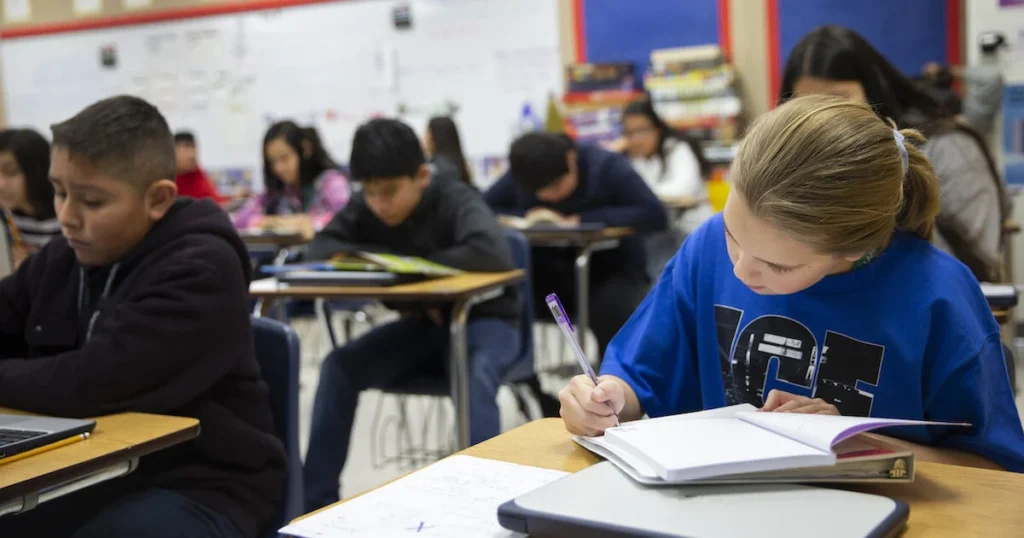
WASHINGTON — Nearly half a decade after the global disruption of the COVID-19 pandemic reshaped the landscape of American education, the systemic shockwaves continue to reverberate through the nation’s classrooms. While emergency remote learning is now a matter of history, its academic legacy remains an ongoing battleground. Recent data from the Northwest Evaluation Association (NWEA) paints a stark picture of the current reality: nearly three-quarters of students currently sit off-track for grade-level proficiency, with the intellectual distance between struggling learners and benchmark expectations widening significantly.
For educators and school administrators who bear the daily weight of these deficits, the statistics are not abstract; they are the lived reality of overcrowded, academically diverse classrooms. In response, educational researchers have renewed a fierce debate over pedagogical strategy: Should teachers prioritize strict adherence to grade-level content, or should they differentiate instruction to meet students at their individual, often below-grade skill levels?
Enter the "High Growth for All" initiative, a comprehensive research-driven project designed to resolve this false dichotomy. By unpacking the daily habits of hyper-effective educators in high-growth school districts, NWEA has formulated the "Transformative Ten"—a suite of 10 pedagogical strategies aimed at maintaining rigorous, on-grade access while simultaneously supporting targeted differentiation. At the foundation of this framework is Strategy 1: The strategic implementation of supplemental instruction time rooted in targeted retrieval practice.
Main Facts: The Anatomy of Modern Classroom Inequity
The post-pandemic educational crisis is characterized not merely by lower test scores, but by deeply fractured learning trajectories. According to recent NWEA findings, the traditional one-size-fits-all model of education is buckling under the weight of unprecedented academic diversity.
- The Proficiency Gap: Nearly 75% of students are failing to meet age-appropriate grade-level benchmarks, and the "distance to proficiency"—the amount of academic ground a student must cover to catch up—has grown wider.
- The Core Dilemma: Educators are perpetually caught between the mandate to teach complex, grade-level core material and the moral imperative to remediate foundational skills that students missed during remote learning.
- The Transformative Ten: Developed through intensive qualitative and quantitative research, this framework provides actionable strategies to bridge the gap between remediation and acceleration, starting with purposeful supplemental instruction.
Chronology: How the ‘High Growth for All’ Framework Evolved
The path to the Transformative Ten was paved through years of rigorous, large-scale educational research tracking student achievement across thousands of public schools.
Phase 1: Longitudinal Data Mining (The Quantitative Foundation)
The genesis of High Growth for All began with NWEA researcher Andrew Hegedus. By analyzing longitudinal achievement and growth data from approximately 700,000 students across 24,500 public schools utilizing the MAP® Growth™ interim assessment, Hegedus sought to identify statistical outliers: schools that consistently achieved high student growth despite socioeconomic and demographic challenges.
Phase 2: Qualitative Classroom Observations (2022–2023 School Year)
Building upon Hegedus’s quantitative findings, former NWEA researcher Chase Nordengren took the research into the field. During the 2022–2023 academic year, Nordengren embedded himself in two high-growth schools within School District 81 in Schiller Park, Illinois. He recorded more than 75 hours of actual classroom instruction and conducted 12 hours of in-depth interviews with four highly effective teachers.
Phase 3: Codifying the Transformative Ten (2023–Present)
Synthesizing his qualitative observations with learning science, Nordengren distilled his findings into the "Transformative Ten"—ten concrete instructional strategies applicable across any grade level or subject matter. NWEA’s ongoing publications in their Teach. Learn. Grow. journal are now dedicated to breaking down these ten strategies one by one, beginning with the restructuring of supplemental learning time.
Supporting Data: The Learning Science of Schiller Park
Schiller Park School District 81 serves as a living laboratory for the High Growth for All methodology. Rather than utilizing traditional, stigmatizing pull-out models—where struggling students are removed for remediation while advanced students receive enrichment—Schiller Park instituted a unified supplemental learning block. During this dedicated time, all students are organized into flexible, small groups focused on targeted activities tied directly to current core instruction.
To replicate this success, NWEA’s framework outlines four foundational pillars for effective supplemental instruction:
1. Practice Good Grouping
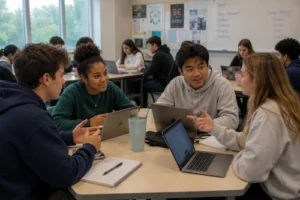
Long-term tracking by perceived ability has historically correlated with depressed student confidence and stunted achievement. Conversely, short-term, highly flexible groups designed for specific academic purposes have a proven track record of supporting mastery.
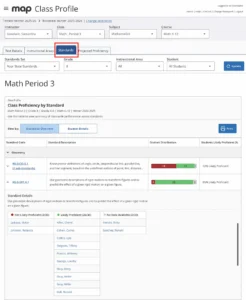
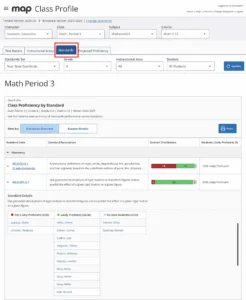
- Educators can leverage MAP Growth Class Profile Reports to gauge initial academic diversity.
- Groups must be informed by continuous formative assessments—such as ungraded quizzes, student work, and classroom dialogue—rather than static, year-long tracking.
- Group compositions must remain fluid, shifting dynamically as students master specific sub-skills within a broader instructional unit.
2. Get in the Zone (ZPD)
Lev Vygotsky’s concept of the Zone of Proximal Development (ZPD)—the sweet spot between what a student can do independently and what they can achieve with guidance—is paramount. Supplemental instruction must not devolve into low-level busywork for struggling students. All learners, regardless of their starting point, must retain access to rich, rigorous, on-grade content supported by strategic scaffolding.
3. Give Kids Some Space: Spaced Retrieval Practice
Cramming for exams may secure a temporary passing grade, but it does little for long-term neural retention. Cognitive science emphasizes the power of spaced retrieval practice—the act of recalling information across expanding intervals of time. By connecting supplemental learning activities directly to core classroom concepts, teachers create a cognitive web that transforms isolated facts into durable, long-term knowledge.
4. Leverage Technology Wisely
Educational technology offers unprecedented tools for real-time formative assessment, adaptive learning, and targeted practice. NWEA’s Instructional Connections program, for instance, links MAP Growth data to over 40 popular supplemental digital platforms. However, researchers issue a vital caveat: technology must serve the learning objective, never dictate it. Educators must remain the ultimate arbiters of content quality, engagement, and focus.
Official Responses and Expert Perspectives
Educational leaders and researchers stress that addressing post-pandemic learning deficits requires a structural shift away from panic-driven remediation toward targeted acceleration.
"Teachers and administrators are well aware of the issues; they see them play out in their classrooms every day," notes the NWEA research team in their baseline literature. "When we think about supplemental resources and differentiation, we tend to think about students at the extremes: those who may need support to access on-grade content and those who are whizzing through… But targeted differentiation and supplemental instruction time are valuable for all students."
Experts emphasize that the historical tendency to isolate struggling learners with watered-down curricula has inadvertently widened achievement gaps. By keeping the anchor tied to on-grade content and using flexible, short-term grouping, schools can honor both equity and academic rigor.
Implications for the Future of American Classrooms
The rollout of the Transformative Ten framework arrives at a critical juncture for American education. As federal pandemic-relief funding (such as ESSER funds) sunsets, school districts nationwide face severe fiscal cliffs just as student need remains at an all-time high.
The implications of adopting models like Schiller Park’s integrated supplemental learning blocks are profound:
- Maximized Resource Efficiency: By avoiding expensive, siloed intervention programs and instead optimizing existing instructional blocks, schools can stretch shrinking budgets without sacrificing student support.
- Cultural Shifts in Classrooms: Eradicating static "ability tracks" helps dismantle the psychological stigma associated with remedial learning, fostering an inclusive classroom culture centered on collective growth.
- Teacher Sustainability: Providing educators with clear, research-backed taxonomies like the Transformative Ten reduces instructional fatigue, offering a roadmap to navigate extreme academic diversity without reinventing the wheel.
Ultimately, the NWEA initiative sends a resolute message to the education sector: while the shadow of the pandemic is long, the mechanisms for academic recovery are already visible in the practices of our most innovative classrooms. By tackling equity one strategic, data-informed step at a time, schools can transition from post-pandemic recovery to sustainable, high-growth futures.