Mastering the Dynamic Classroom: The Evolution, Research, and Execution of Real-Time Flexible Grouping
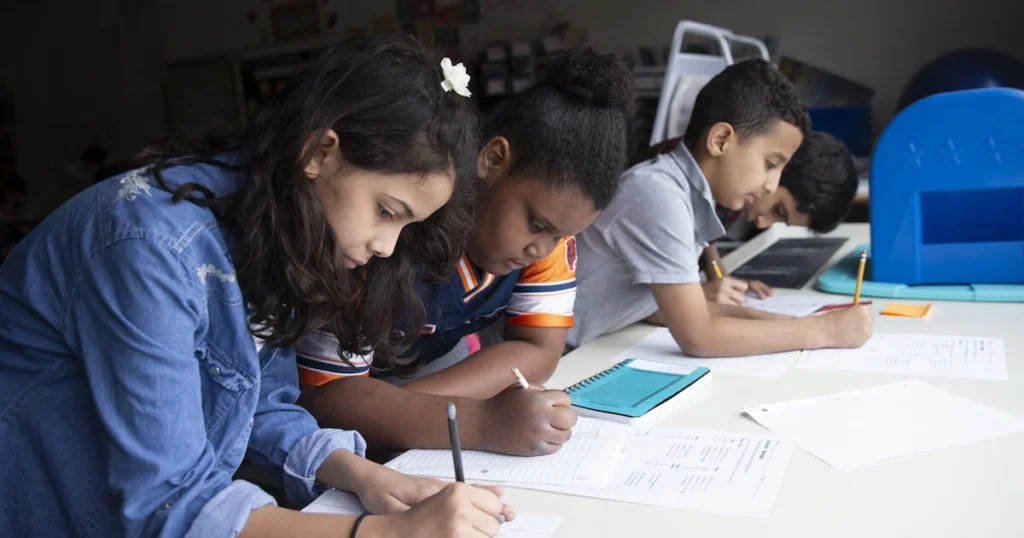
EDUCATION REFORM — In the modern educational landscape, the most effective classrooms often resemble a masterclass in orchestration. A teacher notices a student outpacing peers on an entry-level task and seamlessly shifts them to a more rigorous group. Moments later, a collaborative pair struggling to grasp a foundational concept is temporarily brought back into a whole-class review. To an outside observer, these shifts look effortless—akin to a comedian nailing a punchline or an athlete moving with instinct and ease.
However, behind every fluid classroom adjustment lies years of professional practice, trial, error, and deep pedagogical expertise. According to recent educational frameworks, mastering the art of real-time flexible grouping represents the pinnacle of differentiation—a transformative instructional strategy proven to drive high student growth.
Main Facts: What Is Real-Time Flexible Grouping?
At its core, flexible grouping is a cornerstone of differentiated instruction. It encourages educators to view the classroom as a dynamic environment where seating arrangements and collaborative circles are not permanent, but purposeful. Instead of relying on static tracking—where students are permanently categorized as "high," "medium," or "low"—educators frequently assess student skills to ensure learners are placed in groups that offer "just-right challenges."
Real-time flexible grouping takes this concept a step further. It is the advanced practice of altering student configurations mid-lesson based on immediate formative assessments, behavioral observations, and academic hurdles.
Key Principles of the Strategy:
- Fluidity: Groups are never permanent; students transition seamlessly based on their current academic needs.
- Low-Stakes Environment: Changes are made naturally so that students do not feel stigmatized by moving to different tables or stations.
- Purpose Agnostic: Group configurations serve the immediate learning task rather than rigid social or historical labels.
Chronology: From Static Tracking to Dynamic Adaptability
The evolution of classroom grouping has undergone a radical transformation over the past several decades.
- Early-to-Mid 20th Century (The Era of Fixed Tracking): For generations, American classrooms relied heavily on static ability grouping. Students were often sorted into reading or math groups at the beginning of the school year and remained in those exact cohorts for months, if not years. Educational research later revealed that this practice frequently capped the potential of lower-achieving students and reinforced socio-economic divides.
- Late 20th Century (The Rise of Differentiation): As educational psychology evolved, pioneers of differentiated instruction advocated for mixed-ability collaborative learning and cooperative grouping. Teachers began utilizing station rotation and tiered assignments to address diverse learning styles, though these interventions were heavily pre-planned and rarely altered mid-lesson.
- Post-2020 Pandemic Era (The Quest for High Growth): Following severe disruptions to student learning during COVID-19 school closures, researchers began actively auditing classrooms to identify high-yield instructional strategies capable of accelerating academic recovery. This led to a granular focus on real-time classroom adaptations as a vital mechanism for addressing varied learning gaps.
Supporting Data: The Research Behind High Growth
The push toward real-time flexible grouping is not merely a matter of teacher preference; it is backed by empirical research into student achievement.
Following pandemic-era learning disruptions, education researchers—including education strategist Chase Nordengren—embarked on comprehensive studies to determine which instructional approaches yield the highest student growth. This research culminated in the "Transformative Ten," a collection of high-growth instructional strategies designed to maximize teacher impact.
Within these research-backed guidelines, strategy #3 specifically addresses classroom configuration: "For maximum flexibility, keep groups fluid, low-stakes, and purpose agnostic—at least in the eyes of the students."
Data from continuous classroom observation underscores why this matters:
- The Danger of Stagnation: Students left in under-challenged groups for extended periods exhibit lower engagement rates and stagnant academic growth.
- The Power of Scaffolding: Conversely, students thrashing in over-advanced groups experience cognitive overload and anxiety. Real-time adjustments mitigate these risks by continuously realigning students with their Zone of Proximal Development (ZPD).
- The 90/10 Rule of Planning: Expert educators note that successful real-time grouping requires committing roughly 90% of a lesson to a solid initial plan while preserving 10% "wiggle room" for instinctive, data-driven pivots.
Official Responses and Expert Perspectives
Educational experts and veteran teachers emphasize that while real-time grouping yields exceptional outcomes, it demands a high level of pedagogical fluency.
"Making in-the-moment changes to grouping requires years of practice—and even some missed marks," notes curriculum specialists familiar with the Transformative Ten framework. "The fullest expression of flexible grouping is adjusting student groups in real time. It is designed to help teachers avoid emotional bumps and bruised egos along the way."
Pedagogical mentors often compare this instructional mindset to the claymation character Gumby: flexible, able to stretch and adapt, yet firmly anchored in core structure. Teachers who successfully implement this strategy report that it requires a profound shift in mindset. Instead of viewing a lesson plan as an unyielding script, effective educators view it as a living framework that responds directly to student feedback.
"You have to know your content and your students so well that you can make changes with confidence," educators point out. When a teacher sits down with a group of students and notices whispered confusion or rapid mastery, their ability to read between the lines determines the trajectory of the lesson.
Implications for Classrooms and Teacher Professional Development
The widespread adoption of real-time flexible grouping carries significant implications for both K-12 classrooms and teacher training programs moving forward.
1. Shift in Teacher Preparation Programs
Traditional teacher preparation often emphasizes rigid lesson plan execution. To foster real-time adaptability, teacher training colleges and professional development programs must focus heavily on formative assessment literacy and classroom navigation skills. Educators need practical training on how to transition students smoothly without causing classroom disruption or student anxiety.
2. Redefining Classroom Culture
When students routinely see groups changing based on the task at hand, it fundamentally alters classroom culture. It normalizes the idea that everyone struggles with different concepts at different times. Stigma is stripped away; asking for help or moving to a targeted remediation or enrichment station becomes a standard, low-stakes part of the learning journey rather than a punitive measure.
3. Elevated Student Expectations
Ultimately, mastering real-time flexible grouping signals to students that their teacher is deeply invested in their individual progress. While lesson plans and instructional objectives remain unwavering, the pathways to achieving those goals become beautifully adaptable.
As educational frameworks continue to evolve toward high-growth models for all students, the flexible, "Gumby-like" educator will remain the gold standard of modern teaching—proving that true mastery lies not in following a rigid script, but in responding dynamically to the human beings sitting right in front of you.