Bridging the Gap: How Intermediaries Are Shaping the Future of AI in K-12 Education

Tennessee has long stood as a national bellwether for instructional improvement and systemic educational reform. However, like every other state in the American education landscape, Tennessee is currently confronting a profound, high-stakes question: How can schools integrate the rapidly evolving power of artificial intelligence (AI) without compromising student safety, equity, or pedagogical integrity?
As the marketplace for AI-driven educational tools explodes with both promise and uncertainty, the burden of vetting these technologies has largely fallen upon individual school districts. Many districts, often lacking the technical expertise or the administrative bandwidth to distinguish between high-quality tools and “digital snake oil,” are forced to navigate this complex environment in isolation. Simultaneously, state education agencies (SEAs) frequently find themselves under-resourced, struggling to keep pace with the velocity of technological change.
A new profile from the Center on Reinventing Public Education (CRPE) sheds light on a potential solution to this systemic bottleneck: the strategic deployment of intermediary organizations. By focusing on the role of the State Collaborative on Reforming Education (SCORE)—a Tennessee-based nonprofit—the research illustrates how specialized intermediaries can act as a force multiplier for states, bridging the gap between policy intent and classroom reality.
The Core Challenge: Navigating the AI Frontier
The integration of AI into K-12 education is not merely a technical upgrade; it is a fundamental shift in how information is accessed, synthesized, and taught. Yet, this transition is occurring in a policy vacuum. While AI tools have proliferated in classrooms nationwide, formal state guidance remains fragmented.
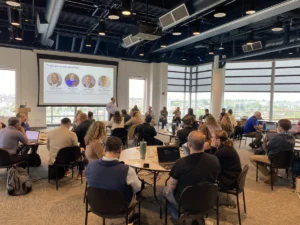
In August 2026, industry leaders and educational experts gathered at the Tennessee SCORE symposium, "AI in K-12 Education: Keeping Students at the Center," to address these tensions. The event featured voices from across the spectrum, including David Mansouri (CEO of SCORE), Bree Dusseault (Principal and Managing Director of CRPE), and innovators from organizations like Learner Studio, Kira, and the New Orleans AI Education Fund.
The consensus was clear: no single entity can manage the AI revolution alone. While SEAs possess the regulatory authority, they often lack the agility to move at the speed of software development. Conversely, districts have the implementation power but lack the systemic scale to demand higher standards from AI developers. This is where intermediaries like SCORE become essential.
Chronology: From Experimental Adoption to Systemic Strategy
To understand the current state of AI in schools, one must examine the timeline of its entry into the public sector:
- 2022–2023: The Unregulated Onset. Generative AI tools became widely accessible to students and teachers. Initial reactions ranged from panic—leading to blanket bans in major urban districts—to quiet, grassroots adoption by tech-forward educators.
- 2024: The Realization of Need. State departments began to acknowledge that "wait and see" was no longer a viable strategy. As reports of data privacy concerns and algorithmic bias surfaced, the need for centralized guidance became undeniable.
- 2025: The Rise of the Intermediary. Recognizing that states could not handle the technical vetting alone, organizations like SCORE began formalizing their role as "translators." These groups started facilitating partnerships between developers, researchers, and policymakers.
- 2026: The Symposium Era. The August 2026 symposium marked a turning point. It represented a move away from debating if AI should be in classrooms toward how it can be managed with "students at the center." This period characterizes a push for shared evidence and cross-sector collaboration.
The Role of the Intermediary: A Three-Pillar Approach
The CRPE analysis highlights that SCORE’s effectiveness stems from playing three distinct roles that SEAs are often ill-equipped to perform:
1. Capacity Building and Technical Assistance
Intermediaries act as a bridge between the technical complexity of AI and the practical requirements of educators. By providing professional development, vetting frameworks, and implementation roadmaps, SCORE helps districts transition from reactive, ad-hoc usage to proactive, strategic adoption.
2. Evidence Generation and Knowledge Sharing
In the current marketplace, there is a lack of rigorous, independent evidence regarding what AI tools actually improve learning outcomes. SCORE and similar organizations leverage their networks to pilot programs, gather data, and disseminate "what works" to other districts, preventing the repetition of costly mistakes across the state.

3. Convening and Policy Alignment
Perhaps most importantly, intermediaries serve as neutral ground where stakeholders—including parents, tech developers, teachers, and legislators—can reach a consensus. By fostering these conversations, they help ensure that policy is not created in a silo but is informed by the realities of classroom life.
Supporting Data: The State of the Field
The broader research conducted by the CRPE team—including analysts such as Dana Harrison and Cara Pangelinan—paints a stark picture of the current national landscape. Their publications, such as Leading Through Uncertainty and States and AI: An Early Look, provide the necessary context for the current dilemma:
- The Guidance Gap: Despite the ubiquity of AI, only a fraction of states have provided robust, actionable guidance for schools.
- The Fragmented Market: Schools are currently shopping in an "unproven marketplace." Without a standardized rubric for evaluating AI, districts are vulnerable to vendors who prioritize profit over pedagogical alignment.
- The Disruption Factor: As of late 2026, AI is already disrupting traditional assessment and homework paradigms. States that fail to provide guidance are essentially leaving their teachers to manage a major pedagogical shift without a map.
Official Perspectives: Keeping Students at the Center
The discourse at the 2026 symposium emphasized that the "AI question" is ultimately an ethical one. Dr. Babak Mostaghimi of Learner Studio argued that AI should be viewed as a tool to unlock personalized learning rather than a replacement for human connection.
"The goal is not to automate the classroom," noted Bree Dusseault of CRPE, "but to use AI to handle the administrative and routine tasks that currently burn out our best teachers, allowing them to focus on the human-to-human interactions that define high-quality education."
The sentiment shared by participants was a cautious optimism. While the risks of bias, data harvesting, and academic integrity issues are significant, the opportunity to scale high-quality instruction to every student—regardless of zip code—is a goal that justifies the complexity of the current transition.
Implications: The Road Ahead
The model presented by Tennessee’s collaborative approach holds significant implications for the rest of the country. For states to successfully integrate AI, they must shift their perspective on the role of intermediaries:
- Philanthropic Support: Philanthropies must shift their funding from one-off tech grants to building the permanent capacity of intermediary organizations. Sustainable infrastructure is more valuable than temporary software licenses.
- SEA-Intermediary Partnerships: State Education Agencies should move toward a "hub and spoke" model. The SEA provides the regulatory framework and high-level vision, while intermediaries handle the "boots on the ground" work of vetting tools and training teachers.
- Scaling System-Wide: The future of AI in education depends on the ability to move beyond isolated pilots. If an AI literacy program works in a rural Tennessee district, there must be a mechanism—facilitated by an intermediary—to scale that success to urban and suburban districts statewide.
Conclusion
As we look toward the remainder of the decade, the integration of AI into public education will remain one of the most significant challenges for state leaders. Tennessee’s experience, as profiled by the CRPE, serves as a masterclass in collaborative governance. By embracing the role of intermediaries, states can mitigate the risks of the "unproven marketplace" and ensure that technology serves the primary mission of education: the growth and empowerment of every student.
The path forward is not found in federal mandates or local guesswork alone, but in the deliberate, coordinated effort to build local capacity. The future of the classroom is being written today—and for the sake of our students, it must be written with the guidance of those who know best how to turn potential into progress.
For more in-depth analysis on this topic, refer to the full suite of CRPE publications, including "Leading Through Uncertainty: State Approaches to AI in K-12 Education" and "AI Is Already Disrupting Education, but Only 13 States Are Offering Guidance for Schools."