Lawsuit Alleges NIH Using Keyword Screening and Political Litmus Tests to Target and Terminate Scientific Grants
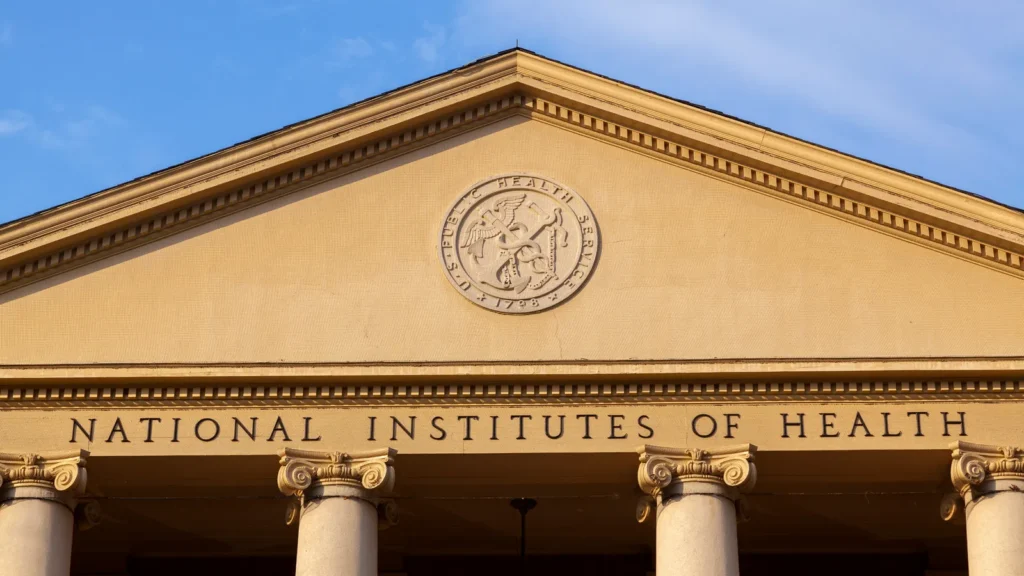
WASHINGTON — A sprawling new legal challenge against the National Institutes of Health (NIH) has brought the mounting tension between federal science funding and political ideology to a head. A coalition of scientific researchers and advocacy organizations has filed a major lawsuit alleging that the nation’s premier biomedical research agency is systematically dismantling peer-reviewed scientific projects that run counter to the ideological priorities of the Trump administration.
According to the complaint, the NIH has weaponized its vast grant-making apparatus, utilizing automated keyword screening, forced project renegotiations, and outright funding terminations to suppress research into marginalized populations, systemic racism, gender-affirming care, and vaccine hesitancy. The litigation shines a light on an increasingly fraught landscape for American academia, where billions of dollars in federal backing hang in the balance, and researchers are allegedly altering—or altogether censoring—their academic proposals simply to survive the political climate.
The legal action argues that these directives not only overstep executive authority but actively violate the First Amendment by imposing a political litmus test on scientific inquiry. Representatives from organizations backing the plaintiffs assert that the policy changes have unraveled decades of meticulous research, disrupted vital public health studies, and chilled free expression across the scientific community.
Chronology of the Funding Crackdown
The origins of the current scientific funding crisis trace back to a series of executive orders signed by President Donald Trump during his return to office, which catalyzed mass terminations of federal grants across multiple agencies.
- Late 2024 – Early 2025: The Trump administration initiates broad reviews of federal grant portfolios, targeting programs tied to Diversity, Equity, and Inclusion (DEI) initiatives, gender studies, climate science, and public health policies deemed contrary to administration goals. Hundreds of ongoing grants face sudden jeopardy or abrupt cancellation.
- Mid-2025 (The Legal Counteroffensive): Federal courts begin pushing back against the sweeping cancellations. In a landmark decision, U.S. District Judge William Young strikes down internal NIH guidance directing staff to terminate grants based on administration priorities, such as those addressing vaccine hesitancy and DEI. Judge Young orders the agency to restore the canceled grants.
- Late 2025 (Supreme Court Intervention): The legal battle reaches the highest court in the land. The U.S. Supreme Court issues a ruling that partially blocks Judge Young’s order, halting the mandatory restoration of previously canceled NIH grants. However, the top court leaves intact the portion of Young’s ruling that officially vacates the NIH’s underlying restrictive guidance.
- August 2025 (New Guidance Issued): Following the court losses, the Trump administration pivots rather than relents. NIH Director Dr. Jay Bhattacharya issues a new wave of agency guidance designed to circumvent judicial roadblocks while achieving similar ideological filtering. The August memorandum asserts that research investigating the "harms" of puberty suppression, hormone therapy, and surgical interventions is more scientifically promising than treating those approaches as valid interventions for gender dysphoria. Furthermore, it targets studies that attribute negative health outcomes to systemic racism.
- July 2026 (Guidance Updates): The NIH softens some of the explicit phrasing within its directives—removing explicit acknowledgments that practices like housing redlining measurably harm minority health—while maintaining the underlying restrictions. The updated policy explicitly instructs researchers to purge references to systemic racism from proposals.
- Present Day: Plaintiffs file the new class-action lawsuit, arguing that despite cosmetic linguistic changes, the NIH’s enforcement mechanisms remain unchanged and continue to purge disfavored scientific viewpoints.
Supporting Data and the Mechanics of Censorship
The mechanics of the NIH’s filtering process rely heavily on digital surveillance and administrative coercion. According to the lawsuit, internal units within the NIH have been directed to screen their active and incoming grant portfolios using automated keyword searches.
The prohibited lexicon spans a wide array of contemporary public health and social science topics. Terms routinely flagged by federal screeners include:
- Gender and related identity terms
- Racist and systemic racism
- Climate change
- Vaccine refusal and vaccine hesitancy
In a separate lawsuit brought forward by University of California researchers, federal agencies—including the NIH—confirmed they have deployed vast keyword lists to execute mass grant reviews and cancellations.
The human and institutional toll of these lists is immediate and severe. When existing projects are flagged during portfolio reviews, principal investigators are routinely presented with a coercive ultimatum: drastically alter the scope and language of their projects, or face total grant termination.
For new grant applicants, the chilling effect is even more pervasive. Researchers are preemptively scrubbing their proposals of politically sensitive words before submission. The lawsuit notes that these self-inflicted edits frequently render academic proposals less clear, methodologically weaker, or scientifically inaccurate, simply to avoid algorithmic detection by federal screeners.
The studies caught in the crosshairs range from wide-scale demographic investigations into high-risk dementia populations to comparative epidemiological studies tracking racial disparities in kidney disease rates.
Official Responses and Legal Arguments
The legal teams representing the aggrieved scientists have pulled no punches in characterizing the administration’s actions as both unconstitutional and anti-scientific.
"The NIH’s new policies, which are essentially a political litmus test, violate the First Amendment, undermine science and education, and have cost universities tens of millions of dollars in cancelled grants," said Grayce Zelphin, senior staff attorney at the American Civil Liberties Union of Northern California, during a joint statement announcing the lawsuit.
Shalini Goel Agarwal, special counsel at Protect Democracy—another prominent organization representing the plaintiffs—echoed those sentiments. "This isn’t just illegal, it hurts every person served by this research and unravels years of work by the scientific community," Agarwal stated.
Conversely, federal officials have maintained a guarded posture. When reached for comment regarding the latest class-action complaint, representatives for the NIH stated Friday that the agency has a strict policy against commenting on ongoing litigation.
However, defense filings in prior related cases have consistently argued that the executive branch holds broad constitutional authority to direct how taxpayer funds are distributed and to ensure that federal expenditures align with the policy goals of the elected administration. Supporters of the administration’s directives argue that past funding mechanisms leaned too heavily into partisan or ideological frameworks of their own, and that the current directives seek to restore institutional neutrality and scientific rigor.
The plaintiffs are currently petitioning the federal court to certify two distinct classes:
- The Termination Class: Comprising all researchers whose active grants have been unlawfully terminated under the contested policies.
- The Denial and Chilling Class: Comprising researchers who have had grant applications rejected, have been forced to renegotiate or rephrase their project parameters under duress, or have completely refrained from applying for federal funding due to the chilling effect of the new directives.
Broader Implications for American Science and Higher Education
The ramifications of the NIH funding battle extend far beyond the courtroom, threatening to fundamentally alter the relationship between the federal government and the nation’s research universities.
For decades, the peer-review system administered largely through agencies like the NIH and the National Science Foundation (NSF) operated on the foundational premise that scientific merit—determined by panels of expert peers based on methodology, data, and potential public health impact—should dictate funding allocations. The introduction of political directives and automated keyword filters challenges that paradigm, replacing peer consensus with executive oversight.
Academic institutions, already grappling with fluctuating endowments and state-level restrictions on higher education, now face profound financial instability. The sudden loss of tens of millions of dollars in research funding forces universities to absorb massive budget shortfalls, lay off laboratory personnel, and abandon longitudinal health studies that take years—or even decades—to build.
Furthermore, the global standing of American biomedical research could face long-term consequences. As international researchers observe the politicization of U.S. grant mechanisms, fears are growing that top-tier scientific talent may look to institutions in Europe, Asia, or elsewhere, where research funding is perceived as more insulated from shifting partisan winds.
As the litigation proceeds through the federal judiciary, the legal community is watching closely to see where the boundaries of executive power over independent scientific inquiry will ultimately be drawn. Whether the courts will permanently enjoin the NIH from using political and ideological criteria in its grant-making process remains one of the most consequential legal questions facing modern American science.