Academic Freedom Under Siege: A Comprehensive Analysis of the Deteriorating Landscape in U.S. Higher Education
Introduction and Main Facts
The state of academic freedom and institutional autonomy within United States higher education is undergoing an unprecedented and rapid decline. According to a comprehensive global analysis recently released by Scholars at Risk (SAR), the U.S. has emerged as a stark example of democratic backsliding, characterized by an influx of illiberal policies, restrictive state legislation, and aggressive extralegal actions targeting colleges and universities.
While SAR’s U.S.-specific findings form part of a broader, worldwide evaluation of threats to higher education, the speed and scale of the deterioration within American borders have alarmed international observers, legal scholars, and educators alike. SAR’s latest assessments underscore a systemic campaign by government actors, political appointees, and governing boards to impose ideological control over campuses. These interventions frequently masquerade behind neutral terminology—such as fiscal discipline, public accountability, or anti-discrimination frameworks—yet their practical application systematically undermines teaching, research, tenure, and shared governance.
The compounding pressures facing institutions have created an atmosphere of widespread apprehension. Faculty members and students are increasingly vulnerable to professional retaliation, targeted funding cuts, and vague administrative policies designed to suppress controversial or disfavored speech. Consequently, self-censorship has become a pervasive survival strategy across campuses nationwide, threatening the foundational mission of higher education as a marketplace of ideas.
Chronology of Legislative and Administrative Pressure
To understand how the U.S. academic landscape reached this precarious juncture, it is essential to trace the historical and recent chronology of government intervention and political encroachment.
The Federal Escalation: Funding Threats and Strategic Pacts
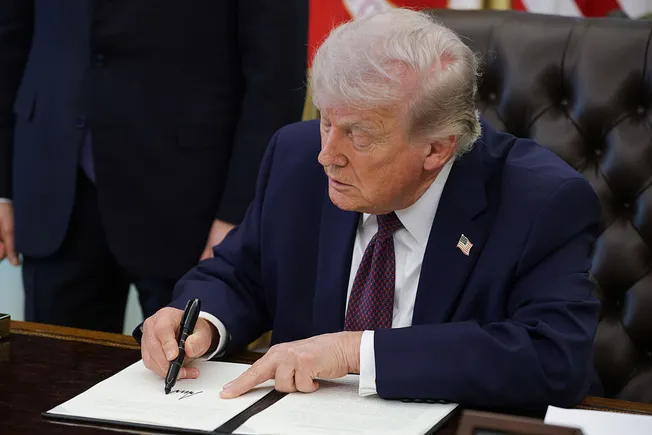
Federal tensions surrounding higher education intensified significantly during the Trump administration, establishing a precedent of using economic leverage to force ideological compliance. During this period, the administration repeatedly threatened to strip federal funding from colleges and universities that refused to yield to its policy demands. A prominent early battleground involved Harvard University, which openly resisted administration directives.
Despite pushback from select elite institutions, the administration successfully leveraged funding vulnerabilities to broker deals with several other high-profile universities. Furthermore, the administration introduced a proposed policy compact designed to reward colleges with priority access to federal research funding only if they formally adopted the administration’s prescribed policy goals. This strategy fundamentally blurred the line between merit-based academic funding and political alignment.
State-Level Interventions and Classroom Restrictions
While federal maneuvers set a formidable tone, the most granular and restrictive attacks on day-to-day campus operations have materialized at the state level. Politically appointed boards of regents and state lawmakers have increasingly targeted specific academic disciplines, most notably courses and research touching on race, gender, and equity.
- The Texas Precedents: Systems such as the Texas A&M University System and the Texas Tech University System enacted sweeping policies restricting what faculty members are permitted to teach in the classroom, specifically targeting race and gender studies. These measures led directly to major legal battles, with the American Association of University Professors (AAUP) filing federal lawsuits against both university systems to halt the enforcement of these instructional limits.
- The Charlie Kirk Fallout: The chilling effect of political pressure extended rapidly into personal and extramural expression. SAR’s report highlighted that at least 60 instructors faced severe professional retaliation—ranging from suspension to termination—following comments made regarding the killing of right-wing activist Charlie Kirk on the campus of Utah Valley University. Several affected colleges subsequently found themselves embroiled in costly litigation, ultimately entering expensive financial settlements to resolve wrongful termination and free speech lawsuits.
Supporting Data and Comparative Metrics
The qualitative accounts of administrative overreach and legislative interference are thoroughly backed by quantitative metrics. The most striking data points emerge from the Academic Freedom Index (AFI) report, which paints a sobering picture of institutional decay over the past decade.
The Accelerating Decline in Numbers
According to the AFI report released in March, the United States experienced a staggering 50% decline in university autonomy between 2015 and 2025. To put this rapid descent into global perspective, the rate at which the U.S. has lost institutional autonomy over the past six years actually outpaces the early declines experienced by Hungary and Turkey during their respective transitions into authoritarian rule.
The downward trajectory of the U.S. rating illustrates a swift erosion of democratic safeguards within higher education:
- 2019: The AFI classified the United States in the top tier as a country enjoying "fully free" academic freedom.
- 2025: The rating plummeted to "moderately restricted."
- Current Trajectory: Researchers warn that the U.S. is now on the immediate verge of dropping into the "severely restricted" category.
For comparison, Hungary currently languishes in the "severely restricted" tier following years of systematic government takeovers of universities (such as the restructuring of the Central European University), while Turkey is rated at the bottom as "completely restricted."
The Mechanics of Self-Censorship
Quantitative surveys accompanying these indexes reveal that the threat environment is not merely theoretical. Faculty members report altering their syllabi, avoiding controversial research topics, and diluting classroom discussions to protect their employment status. The normalization of "vaguely worded and overly broad" university policies has created an environment of legal uncertainty, where neither professors nor students can reliably predict what speech might trigger institutional discipline.
Official Responses and Perspectives
As the divide between academic institutions and political actors widens, stakeholders across the higher education ecosystem have articulated sharply contrasting viewpoints regarding the necessity and legitimacy of these interventions.
The Defense of Government and Board Oversight
Proponents of state-level interventions and funding restrictions argue that public universities are accountable to taxpayers and elected representatives. From this perspective, legislative mandates and administrative oversight are framed as necessary corrections to what critics describe as ideological capture within academia. Lawmakers supporting these measures frequently contend that restrictions on diversity, equity, and inclusion (DEI) initiatives—as well as limits on specific race and gender curricula—restore political neutrality to public institutions and protect students from ideological indoctrination.
Fiscal conservatism and public accountability are routinely cited to justify budget cuts and strategic funding conditionality. Supporters maintain that universities must align with broader public interests and workforce needs rather than acting as insulated enclaves exempt from democratic governance.
The Response from Higher Education Advocacy and Legal Defense
Conversely, educational associations, civil liberties groups, and faculty unions have mounted a robust defense against what they categorize as authoritarian encroachment. Organizations like Scholars at Risk, the AAUP, and the American Civil Liberties Union (ACLU) argue that true academic excellence is impossible without institutional autonomy and unconditional freedom of inquiry.
In their official guidance, SAR and allied advocates have urged university leaders to take proactive stances:
- Defend Free Speech: Institutions must vigorously defend the expressive rights of all community members—including students, staff, and faculty—against external intimidation.
- Demand Accountability: Colleges should push state authorities and governing boards for transparency and accountability, ensuring that those who systematically undermine academic freedom face reputational and professional consequences.
- Strengthen Shared Governance: Universities must reinforce internal shared governance procedures. Robust faculty senates and transparent administrative processes serve as critical buffers against opportunistic political interference and donor pressure.
Broader Implications for the Future of American Democracy
The deterioration of academic freedom in the United States carries profound implications that extend far beyond campus boundaries. Higher education has historically functioned as a primary engine of democratic resilience, innovation, and truth-seeking. When universities are compromised by ideological litmus tests, banned research topics, and politically motivated funding cuts, society loses its capacity for critical self-reflection.
The Erosion of Research and Innovation
When governments or university systems begin censoring research topics on ideological grounds, the long-term impact on national innovation is devastating. Scientific inquiry, medical research, social policy evaluation, and historical analysis all depend on the unfettered pursuit of empirical truth, regardless of whether the findings prove politically convenient. Funding freezes and research bans actively discourage young scholars from entering critical fields, threatening the global preeminence of the American research ecosystem.
The Threat to Democratic Citizenship
Universities are intended to serve as laboratories for democracy, where students learn to engage with complex, uncomfortable, and competing viewpoints. When institutions enact overly broad speech restrictions or capitulate to political demands, they model a culture of compliance and intolerance rather than democratic debate. Students who graduate from an environment dominated by self-censorship and administrative policing are less equipped to participate constructively in a pluralistic democratic society.
A Warning for Democratic Institutions
SAR’s warning that the U.S. is mirroring the early stages of democratic decay seen in Hungary and Turkey serves as an urgent wake-up call. The erosion of academic freedom rarely happens overnight; rather, it advances incrementally through seemingly mundane policy shifts, budget conditions, and board appointments until the foundational pillars of institutional independence collapse.
Ultimately, the path forward requires a unified defense from university administrators, faculty coalitions, legal advocates, and the public. Protecting higher education from ideological capture is not merely an institutional defense of professorial tenure or campus autonomy—it is an essential defense of democratic freedom itself.