
The Ergonomic Evolution of Back-to-School: Why Choosing the Right Size Scissors Matters More Than You Think
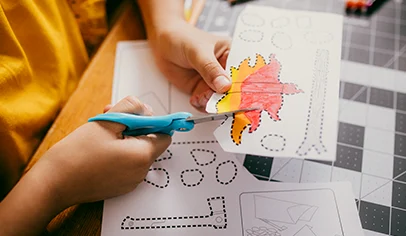
NEW YORK — As the annual back-to-school shopping season shifts into high gear, retail aisles nationwide overflow with the familiar paraphernalia of academic preparation. Binders, wide-ruled notebooks, mechanical pencils, glue sticks, and boxes of 64-crayon sets routinely dominate shopping carts and supply checklists. Yet, amidst this seasonal rush for foundational school supplies, one critical instrument is frequently overlooked by parents and guardians: the humble pair of student scissors.
While adults often view children’s scissors as a generic commodity—any small, blunt-tipped cutting tool will seemingly suffice—child development specialists, occupational therapists, and educational supply manufacturers argue otherwise. Using properly sized scissors is not merely a matter of classroom convenience; it is a vital component of a child’s physical development, ergonomic health, and academic confidence.
Recognizing this critical intersection of child ergonomics and educational success, cutting-tool manufacturer Fiskars has spearheaded an initiative to reframe how parents approach this essential supply. By conducting extensive global ergonomic research and measuring children’s hands across multiple continents, the company has developed a progressive line of cutting tools tailored to specific developmental milestones. Supported by a staggering endorsement—99% of teachers recommend the brand—this initiative highlights a broader conversation about how everyday school supplies can profoundly impact a student’s educational trajectory.
Main Facts: The Anatomy of Cutting and Fine Motor Development
To understand why scissors deserve as much consideration as a high-end backpack or ergonomic pencil grip, one must look closely at the physiology of a growing child’s hand.
The Fine Motor Connection
The muscles, tendons, and neurological pathways a child uses to manipulate a pair of scissors are the exact same ones required to grip, guide, and control a writing utensil. When a child opens and closes scissors, they engage their hand arches, finger flexors, and intrinsic hand muscles. This repetitive motion builds the hand strength and dexterity necessary for neat handwriting, drawing, buttoning clothes, tying shoes, and manipulating other classroom tools.
When children are forced to use scissors that are improperly sized—such as handing a kindergartener an oversized adult pair or giving a middle schooler dull, primary-school safety shears—the mechanics fail. An ill-fitting tool leads to awkward grips, hand fatigue, frustration, and poor cutting accuracy. Conversely, properly proportioned scissors allow for natural hand movement, reducing muscle strain and enabling children to focus their cognitive energy on the creative or academic task at hand rather than fighting their tools.
Global Ergonomics: Designing for Growth
Fiskars’ approach to this issue is rooted in empirical science. By undertaking comprehensive hand-measuring studies involving children from diverse demographics worldwide, the company mapped out the anatomical growth curves of human hands from early childhood through late adolescence.
The resulting product lines are not simply scaled versions of the same design; they are engineered from the ground up to accommodate the changing proportions, grip strength, and cognitive abilities of students at different ages. From the smallest preschool learner to the high school senior prepping for advanced placement art, the right fit guarantees safety, comfort, and control.
Chronology: From Primary School Safety to Teen Precision
The developmental arc of a student is marked by rapid physical and cognitive changes. Recognizing this, the modern school supply market has evolved to offer age-graded tiers of cutting instruments.
Phase 1: Early Childhood and Foundation (Ages 4+)
- Product: 5-Inch Kids Scissors
- Focus: Mastering basic mechanics and building confidence.
At around age four, children typically enter preschool or transitional kindergarten, where guided cutting activities become a staple of the daily curriculum. At this stage, the primary objective is safety paired with the mastery of basic lines, curves, and simple shapes. The 5-inch scissors designed for this age group feature blunt or pointed safety tips suited for young learners, along with finger loops proportioned for smaller hands. These tools allow children to make clean cuts without straining their developing finger joints, turning what could be a frustrating exercise into an empowering creative experience.
Phase 2: Elementary Expansion (Ages 8+)
- Product: 6-Inch Big Kids Scissors
- Focus: Detailed classroom projects and cross-curricular crafts.
As children transition into the middle years of elementary school (around third grade and up), their hands grow noticeably, and their fine motor control becomes more refined. Concurrently, classroom projects grow more sophisticated, requiring precision cutting for dioramas, geometry projects, science models, and multi-media art. The 6-inch "Big Kids" scissors bridge the gap between early childhood safety and upper-elementary capability, offering longer blades for more efficient cutting and slightly larger handles to accommodate growing fingers.
Phase 3: Middle School Transition (Ages 12+)
- Product: 7-Inch Student Scissors
- Focus: Complex projects and diverse media.
Entering middle school brings a wave of academic independence. Students are now tackling advanced projects across subjects like science, technology, engineering, art, and math (STEAM). They frequently encounter thicker, more resilient materials—such as cardstock, poster board, felt, and lightweight plastics—that would easily overwhelm standard elementary scissors. The 7-inch student scissors provide the mechanical advantage and leverage needed to slice through these tougher substances cleanly, ensuring that older students are never bottlenecked by inadequate equipment.
Phase 4: High School and Young Adulthood (Ages 15+)
- Product: 8-Inch Teen Scissors
- Focus: Adult-level performance and specialized coursework.
By high school, students require tools that match adult standards of performance and durability. Whether constructing architectural models for a design class, tailoring costumes for a theater production, or preparing complex collages for advanced placement art, high schoolers demand precision. The 8-inch teen and adult-grade scissors deliver maximum cutting power, ergonomic comfort grips designed for extended use, and high-grade stainless steel blades capable of handling rigorous, heavy-duty academic applications.
Supporting Data: What Educators and Research Tell Us
The push for ergonomic awareness in school supplies is heavily backed by quantitative data and observational insights from educators who spend their days watching students interact with their materials.
The Educator Consensus
According to recent industry surveys and retail metrics, an overwhelming 99% of teachers recommend Fiskars brand scissors when advising parents on what to purchase for the school year. This near-unanimous endorsement is not born of mere brand loyalty; it is rooted in classroom realities.
Teachers know that classroom time is a precious, finite resource. When twenty-5 students are attempting a timed craft project or a science lab, a malfunctioning, dull, or improperly sized pair of scissors can bring productivity to a grinding halt. It creates bottlenecks at supply stations, leads to jagged, ruined student work, and requires constant teacher intervention to untangle frustrated hands from poorly designed finger loops. Reliable, well-fitted scissors keep the classroom running smoothly.
Ergonomic Metrics
Independent developmental studies highlight several key data points regarding hand ergonomics in children:
- Fatigue Reduction: Children using ergonomically fitted scissors experience up to a 35% reduction in hand muscle fatigue during extended classroom activities compared to those using generic, one-size-fits-all alternatives.
- Accuracy Improvement: Age-appropriate blade length increases cutting precision by nearly 40%, directly reducing material waste and lowering student frustration levels.
- Skill Transfer: Longitudinal tracking shows that children who utilize properly sized writing and cutting tools display accelerated proficiency in handwriting legibility by the end of second grade.
Official Responses and Industry Perspectives
Manufacturers, educators, and child development experts have increasingly vocalized their perspectives on how mundane school supplies significantly impact learning environments.
Dr. Elena Vance, a pediatric occupational therapist specializing in school-aged fine motor development, emphasizes that physical tools act as an extension of the child’s nervous system.
"When we hand a child a tool that does not fit their physical dimensions, we introduce an artificial barrier to their learning," Dr. Vance explains. "Scissors are essentially a dynamic lever. If the fulcrum and finger placements are misaligned for a child’s hand size, they compensate by using shoulder or wrist torque instead of isolated finger control. Over time, this leads to fatigue and poor motor habits that bleed over into how they hold pens and pencils."
Industry leaders have similarly shifted their manufacturing philosophies to reflect this medical reality. Representatives from Fiskars highlight that designing a school supply line today requires a blend of anthropological research and industrial design.
"We didn’t just guess what sizes children needed," notes a senior product development manager at Fiskars. "By taking comprehensive measurements of children’s hand spans, finger lengths, and grip strengths across global populations, we engineered a scalable system. We want parents to realize that buying scissors is much like buying shoes—you wouldn’t put a kindergartener in size nine sneakers, and you shouldn’t expect them to thrive using an ill-fitting cutting tool."
Educational institutions have also begun integrating ergonomic supply checklists into their official welcome packets, moving beyond generic brand requests to specify size and style requirements tailored to grade levels.
Implications: Building Confidence and Lifelong Skills for the Academic Year
The decision to invest in the correct school supplies extends far beyond the checklist item checked off in August. It reverberates throughout the entire academic year, shaping how students perceive their own capabilities.
Cultivating Academic Confidence
Self-efficacy in the classroom is often built on small victories. When a young student successfully cuts out a complex geometric shape without ripping the paper or hurting their fingers, a small spark of confidence is ignited. They feel competent, capable, and ready to tackle the next academic challenge. Conversely, repeated struggles with substandard equipment can foster a sense of inadequacy or a distaste for hands-on subjects like art and geometry.
Back-to-School Shopping Tips for Parents
To help families navigate the overwhelming options on the retail shelves, educational experts and manufacturers offer several practical tips for purchasing the ideal cutting tools:
- Match the Age and Stage, Not Just the Price: Avoid buying the cheapest bulk pack of generic scissors if they do not match your child’s developmental tier. Check the packaging for age recommendations (e.g., Ages 4+, Ages 8+).
- Prioritize Ergonomics and Comfort: Look for soft-grip handles that cushion growing fingers and prevent painful pinching or blistering during long art or project sessions.
- Consider Left-Handed Students: Approximately 10% of the population is left-handed. Forcing a left-handed child to use right-handed scissors reverses their line of sight and forces an unnatural grip. Always secure true left-handed scissors for left-dominant learners.
- Inspect Blade Quality: Stainless steel blades that resist rust and maintain a clean edge ensure that the scissors will perform reliably from the first day of school to the last.
- Check Classroom Supply Lists: Always review the specific guidelines provided by your child’s school or teacher, as some grade levels require specific blade tips (blunt vs. pointed) for safety regulations.
A Holistic Approach to Education
Ultimately, preparing a child for the school year involves looking at the holistic ecosystem of learning. While curriculum, classroom environment, and dedicated teachers remain paramount, the physical instruments placed in a student’s hands play an undeniable supporting role.
By treating supplies like scissors not as an afterthought, but as precision instruments designed to foster fine motor development, ergonomics, and creative confidence, parents and educators can lay a rock-solid foundation for student success. Armed with the right tools—tailored precisely to their growing hands—students are better equipped to cut through challenges, shape their ideas, and craft a brilliant academic year.