Beyond the Stereotypes: Redefining Hispanic Identity in Modern America
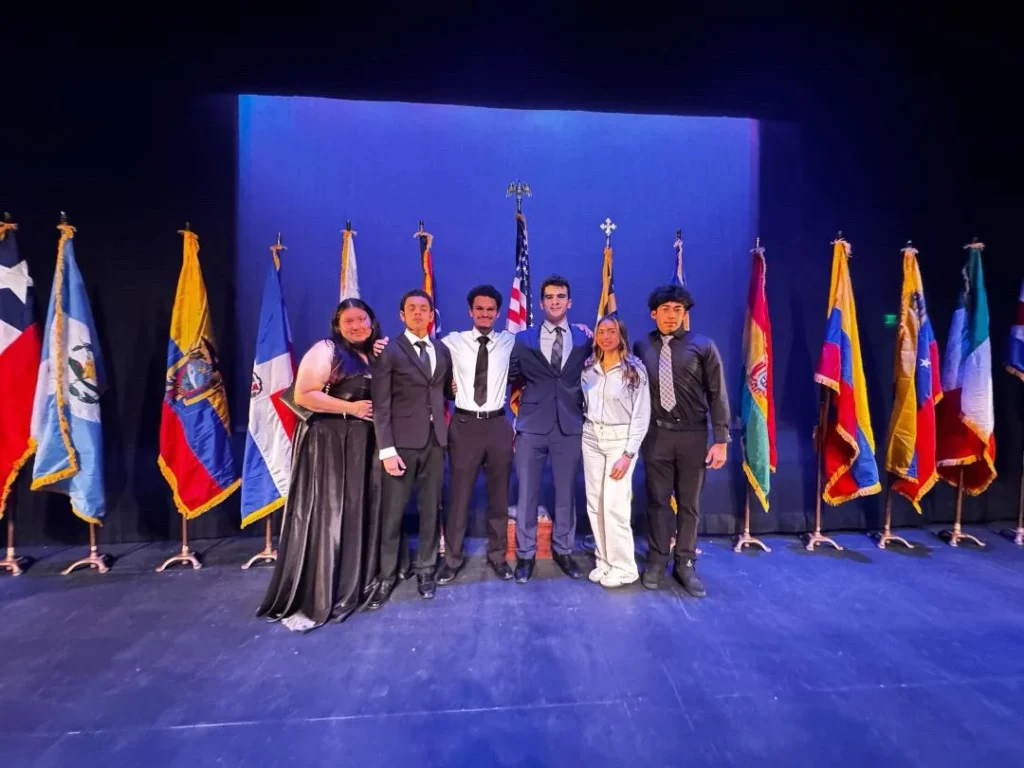
COLUMBIA, Md. — Growing up on the U.S. mainland, Gavin Falcon was immersed in a world defined by a singular, unyielding mantra: “Mi familia es mi vida.” My family is my life.
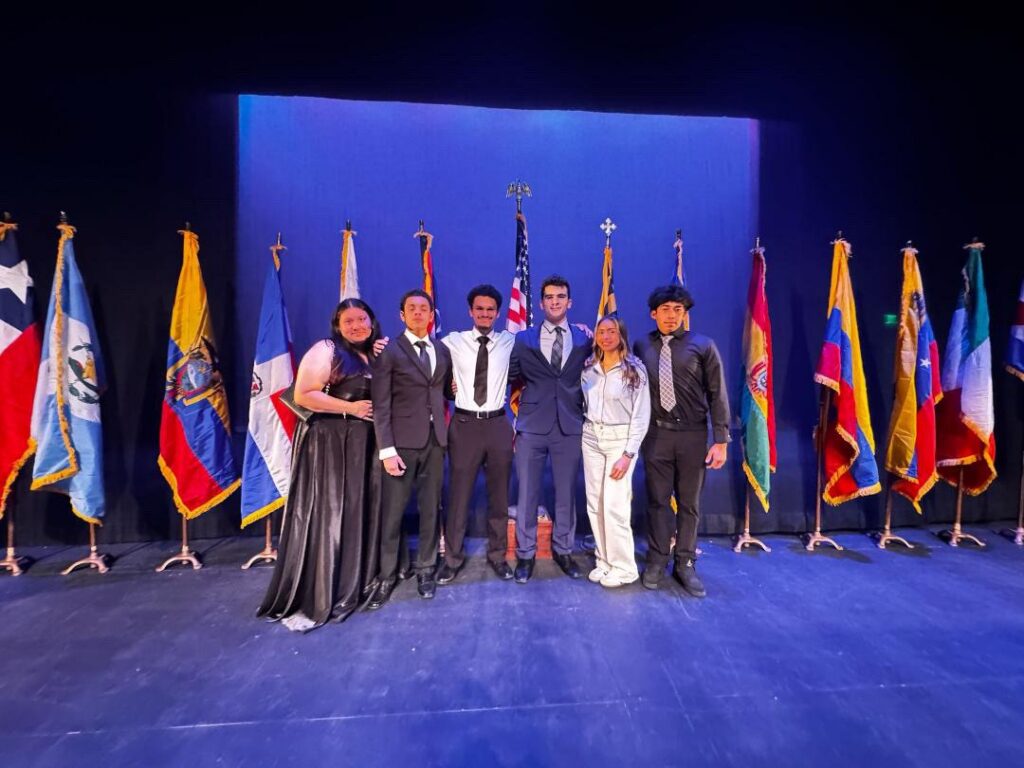
It was a sentiment embroidered on treasured bracelets, echoed in cross-continental phone calls with relatives in Puerto Rico, and permanently stamped onto the lock screen of his father’s cell phone. For Falcon, now a senior at Long Reach High School in Columbia, Maryland, and a National Student Council state representative, this foundational ethos became second nature. He grew up in an expansive, tight-knit Puerto Rican family, surrounded by an uncountable number of tías, tíos, and primos. The Puerto Rican flag was a ubiquitous presence—adorning car bumpers, living room walls, refrigerator magnets, shirts, and baseball caps.
Yet, despite this rich cultural saturation, Falcon’s journey—like that of millions of second- and third-generation Hispanic and Latino Americans—was accompanied by a quiet, persistent internal question: Am I “Hispanic enough”?
As the demographic landscape of the United States continues to shift rapidly, Falcon’s personal reflection opens a much broader, highly nuanced national conversation about identity, assimilation, representation, and the danger of reducing a vast, multiracial diaspora into a monolith of stereotypes.
Main Facts: The Anatomy of Modern Latino Identity
At the core of the contemporary discourse on Hispanic identity in the United States is a growing disconnect between cultural heritage and traditional markers of assimilation, such as native fluency in Spanish.
According to demographic trends and cultural commentary from educators and youth leaders, millions of young Hispanic and Latino Americans navigate a dual reality. They are deeply connected to their roots through values, community structures, and traditions, yet they may not speak fluent Spanish, fit physical stereotypes, or conform to narrow cultural expectations.
Key realities defining the modern Hispanic experience include:
- Linguistic Diversity: While Spanish and Portuguese are foundational to the diaspora, many young Latinos grow up understanding the language without speaking it fluently, speaking Indigenous languages, or communicating primarily in English. High-profile figures, including global superstars like Jennifer Lopez and Selena Gomez, have spoken openly about not being completely fluent in Spanish—a reality that does not diminish their cultural heritage.
- The Myth of the Monolith: The Hispanic and Latino community encompasses people from dozens of countries across Central America, South America, the Caribbean, and Europe. This population spans every racial, economic, and social background.
- The "Three-Box" Trap: Young Latinos frequently report being subjected to three reductive litmus tests to prove their identity: Do you speak Spanish? Do you look Hispanic? Can you dance?
Falcon argues that these narrow yardsticks fail to capture the reality of a community whose defining traits are openness, resilience, and profound diversity rather than checklist conformity.
Chronology: From Island Roots to Mainland Realities
Understanding the modern Hispanic youth experience requires tracing the historical and generational shifts of migration and cultural transmission within the United States.
- Mid-to-Late 20th Century: Waves of migration—particularly from Puerto Rico following Operation Bootstrap and the granting of U.S. citizenship via the Jones-Shafroth Act of 1917, alongside immigration from Mexico, Cuba, and Central and South America—established large, concentrated Latino communities across the U.S. mainland. During this era, cultural preservation was heavily tied to language retention within the household.
- The Turn of the 21st Century: As second- and third-generation children were born and raised in English-dominant environments, a linguistic shift occurred. While homes maintained cultural values, food, and music, English increasingly became the primary language of education, socialization, and professional life for younger generations.
- The 2010s–Present: A cultural awakening among Gen Z Latino youth has challenged traditional assimilation models. Rather than shedding their heritage to fit into an Anglo-centric mainstream, young leaders are demanding space for hyphenated identities. They are utilizing school clubs, Hispanic Heritage Month initiatives, and social media platforms to redefine what it means to be Hispanic on their own terms—embracing both their full integration into American society and their ancestral roots.
Supporting Data: Demographics and Cultural Shifts
The urgency of broadening the definition of Hispanic identity is underscored by hard demographic data regarding the fastest-growing major racial and ethnic group in the United States.
- Population Growth: According to U.S. Census Bureau estimates, the Hispanic population in the United States has surpassed 63 million, accounting for nearly 19% of the total U.S. population.
- Generational Shift: The Pew Research Center notes that the vast majority of population growth among Latinos is now driven by U.S. births rather than international migration. This means the demographic is increasingly native-born, English-dominant, and generations removed from direct immigration experiences.
- Language Dynamics: While Spanish remains vital—with over 41 million native Spanish speakers in the U.S., making it the largest Spanish-speaking nation outside of Latin America—Pew data consistently shows that English proficiency rises sharply among second- and third-generation Latinos. By the third generation, nearly all Latinos speak English proficiently, and a significant portion may not speak conversational Spanish, though they retain a strong self-identification as Hispanic.
- Diversity in Racial Identification: The Hispanic community is inherently multiracial. Census data reveals that millions of Latinos identify as white, Black, Indigenous, Asian, or of mixed racial heritage, making skin-color assumptions entirely obsolete.
Official Responses and Educator Perspectives
Educational institutions and community leaders are increasingly recognizing the psychological and social impacts of identity policing among youth. High schools, colleges, and national organizations are working to reshape how cultural heritage months and student programs are structured.
Administrators and student advocates emphasize that cultural programming must move beyond superficial celebrations—such as food and dance—to address the complex realities of diaspora life.
“When we celebrate Hispanic Heritage Month or host cultural spirit weeks, our goal is not to force students into a rigid box, but to show the incredible vastness of our community,” says a high school faculty advisor involved in student leadership programs in Maryland. “If a student feels alienated because they don’t speak fluent Spanish, we have failed to teach them that culture lives in the heart, the community, and the values passed down by their families.”
National student councils and youth advocacy groups have increasingly prioritized inclusivity training, urging peers to reject gatekeeping based on language or appearance. By fostering environments where students can share their unique family narratives—whether they trace their lineage to San Juan, Bogotá, Mexico City, or San Salvador—schools are helping students dismantle internalized impostor syndrome.
Implications: Redefining Community for Future Generations
The movement to redefine Hispanic identity carries profound implications for American society, education, and politics.
1. Dismantling Internalized Impostor Syndrome
For young people like Gavin Falcon, recognizing that language is only one facet of culture is liberating. The realization that icons like Jennifer Lopez or Selena Gomez face the same linguistic scrutiny highlights a systemic issue: the pressure to perform an idealized version of ethnicity. By speaking out, youth leaders are creating a culture where asking “Am I Hispanic enough?” is replaced by the confident assertion that heritage cannot be revoked by a lack of vocabulary.
2. The Power of Community Over Conformity
Falcon points out that the true hallmark of Hispanic culture has never been linguistic perfection or physical uniformity; it is radical hospitality and community warmth.
“Someone can meet your family one time and suddenly become part of our world,” Falcon reflects. “A titi is checking in on how they are doing, an abuela is making sure they are having a good time, and someone is making sure they have eaten.”
This communal framework prioritizes connection, shared history, and mutual support over rigid conformity. It reframes culture as a living, breathing practice rather than a static test to be passed.
3. Broadening the Political and Social Landscape
As the U.S. Latino population becomes increasingly diverse and English-dominant, political and social institutions must also adapt. Stereotypical assumptions about voter priorities, cultural touchstones, and social values based on outdated models of immigration and language are no longer accurate. Recognizing the heterogeneity of the Latino electorate and youth demographic is essential for accurate representation in media, politics, and education.
Conclusion
For Gavin Falcon and countless other young Americans, the journey of cultural reclamation is ongoing. It is a process of reconciling the expectations of older generations with the realities of growing up in a multicultural society.
Ultimately, the message is clear: being Hispanic or Latino does not require checking every traditional box. It does not require flawless Spanish, a specific skin tone, or mastery of traditional dances. It requires an acknowledgment of history, a connection to community, and a profound pride in one’s roots.
“So yes, I may not fit every box,” Falcon concludes. “Pero sí—I am Latino. I am Hispanic. I am Boricua. And I am proud of it.”