The AI Imperative: Higher Education’s Race to Institutionalize Intelligence
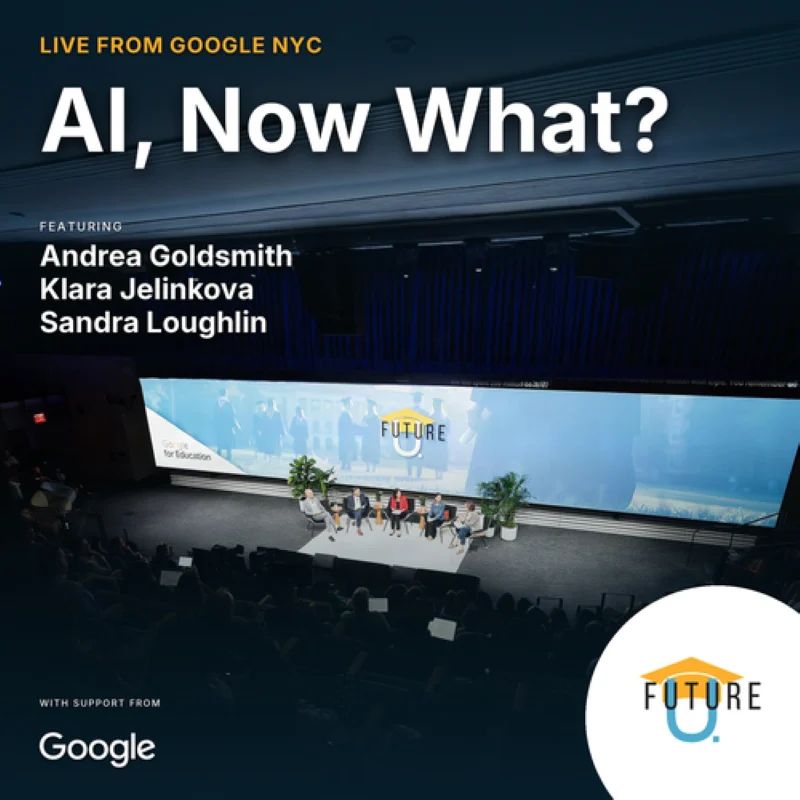
The integration of Artificial Intelligence (AI) into the ivory tower is no longer a speculative future; it is a structural reality. However, as the initial shock of generative AI gives way to the need for long-term sustainability, higher education leaders are finding themselves at a crossroads. During a live episode of the Future U podcast, recorded at Google’s Higher Education Leader Summit in New York, hosts Michael Horn and Jeff Selingo gathered a panel of experts to address the defining challenge of the decade: How do universities evolve from fragmented, "wild west" AI experimentation toward a unified, coherent, and ethically sound campus-wide strategy?
The consensus among the summit’s participants was clear—the era of ad-hoc AI implementation must end. To remain relevant, institutions must balance the demands of technological agility with the preservation of the pedagogical foundations that define a university education.
The Fragmented Frontier: The Case for Coherent Strategy
In the early months following the public release of large language models (LLMs), universities operated in a state of reactive governance. Faculty members experimented individually, departments drafted disparate policy memos, and IT departments scrambled to secure data privacy. Horn and Selingo highlighted that this period of "fragmented implementation" has outlived its utility.
For an institution to successfully integrate AI, it must move toward a centralized, strategic vision. This does not imply a stifling of innovation, but rather the establishment of an institutional "North Star." A coherent strategy involves aligning AI procurement, ethical training, and curricular revision under a unified framework. Without this, universities risk creating a digital divide within their own walls, where students in tech-heavy disciplines gain sophisticated AI literacy while those in the humanities are left to navigate the ethical minefields of automation without formal guidance.
The Tension Between Oversight and Academic Freedom
One of the most contentious debates at the Google summit centered on the friction between institutional oversight and the sacrosanct principle of academic freedom. Centralizing AI policy is often viewed by faculty as a potential encroachment on their pedagogical autonomy.
"There is a delicate balance to strike," noted Selingo during the discussion. "When you centralize, you create efficiency and security, but you risk killing the very experimentation that allows a university to stay at the cutting edge of research."
The panelists argued that the solution lies in a tiered governance model. Institutional oversight should be limited to the "infrastructure" level—ensuring that data security protocols, accessibility standards, and equitable access to compute power are universal. Meanwhile, the "application" level—how AI is actually deployed in the classroom—should remain firmly in the hands of faculty, provided they are supported by robust professional development and clear ethical guidelines.
Chronology: From Novelty to Necessity
The journey of AI in higher education has been rapid, moving through distinct phases that define the current institutional landscape:
- The Surprise Phase (Late 2022 – Early 2023): The launch of ChatGPT catalyzed widespread panic and excitement. The primary institutional response was restrictive, with many universities banning AI tools due to fears regarding academic integrity and plagiarism.
- The Adaptation Phase (Mid-2023 – Early 2024): As bans proved unenforceable, universities shifted to "guidance." Deans and provosts began issuing handbooks on "AI-assisted learning," encouraging faculty to rethink assignments rather than policing them.
- The Strategic Integration Phase (Current): Universities are now transitioning to this third phase, characterized by the creation of AI task forces, the hiring of Chief AI Officers, and the integration of AI tools into the core administrative and academic software stacks. This is where the discussion at the Google summit focused: moving from "how do we block it?" to "how do we architect it?"
Supporting Data and Financial Pressures
The shift to a campus-wide AI strategy is not merely an academic concern; it is a profound financial challenge. The "AI tax"—the cost of licensing enterprise-grade LLMs, upgrading server infrastructure to handle high-compute research, and investing in faculty training—is placing a strain on already thin university budgets.
Economic analysis shared at the summit pointed to three primary financial pressures:
- Infrastructure Costs: The transition from legacy on-premise servers to cloud-based AI environments requires significant capital expenditure.
- The Talent Gap: Universities are competing with the private sector for AI-literate administrators and faculty. Retention in departments like Computer Science and Data Analytics has become a major budgetary line item.
- Equity and Access: Providing every student with access to premium AI models is a growing cost burden. Institutions that fail to subsidize these tools risk widening the socioeconomic gap between students who can afford private AI subscriptions and those who cannot.
The "AI-Proof" Student: The Perspective of Andrea Goldsmith
Perhaps the most compelling argument of the session came from Andrea Goldsmith, president of Stony Brook University. Goldsmith’s philosophy shifts the focus from "policing AI" to "empowering the human."
Goldsmith argues that the danger of AI is not that it will replace students, but that it will "atrophy" their essential human skills—specifically, the ability to think critically, communicate effectively, and synthesize domain knowledge.
"That’s the incentive for our students," Goldsmith remarked during the panel. "If they’re using AI to shortcut finding their voice, finding their ability to communicate, finding their domain knowledge, finding how to work with their human skills, then they will not have a job in the AI era."
For Goldsmith, the solution is not to ban AI, but to redesign assessments. If a student can use an LLM to generate a passing essay or a functioning piece of code, the fault lies with the assignment, not the student. Universities must pivot toward assessments that require a "human in the loop"—tasks that necessitate personal experience, complex synthesis, or original research that cannot be replicated by a generative model.
"If we can convince them of that and then develop the right educational tools and assessments to help them learn what they need to learn to be AI-proof in whatever job they aspire to, that’s the solution," Goldsmith concluded.
The "Productive Friction" Dilemma
A recurring theme in the discussion was the danger of removing "productive friction" from the learning process. Cognitive science tells us that the struggle to draft, revise, and argue a point is exactly how neural pathways are strengthened. When AI acts as a "shortcut," it removes the very labor that leads to intellectual growth.
The summit participants analyzed this through the lens of institutional policy. Should a university limit the use of AI in introductory courses to ensure students learn the "basics" before moving on to AI-assisted synthesis? The consensus favored a "scaffolded approach": introductory levels focus on foundational human skills, while advanced levels integrate AI as a professional tool, essentially treating the software as an apprentice rather than a replacement.
Implications for the Future of the Degree
The broader implications of these discussions are transformative. If universities succeed in their move toward a coherent, strategy-led AI integration, the value proposition of a college degree will shift.
1. Re-evaluating the Human-Centric Curriculum
Universities will likely double down on the "human-only" elements of education: interdisciplinary projects, emotional intelligence training, leadership development, and experiential learning. The degree will become a certification of one’s ability to thrive alongside machines, rather than a record of information retention.
2. The Institutional Brand as an "AI Partner"
Institutions that effectively manage the AI transition will market themselves as "AI-Ready" environments. This includes providing students with access to ethically curated AI tools and teaching them to navigate AI-driven workplaces. This becomes a competitive advantage in a crowded recruitment market.
3. The End of the Standardized Assessment
As AI becomes ubiquitous, the traditional take-home essay and standard coding project will likely be replaced by oral defenses, real-time problem solving, and portfolio-based reviews. These methods are inherently more resource-intensive, placing further pressure on faculty time and institutional staffing models.
Conclusion: A Call to Coherence
The Future U podcast episode from Google’s New York summit serves as a clarion call to higher education leaders. The "wild west" era of AI implementation is over. The path forward requires a level of institutional discipline that many universities have struggled to maintain in the face of rapid technological change.
By balancing the centralization of infrastructure with the protection of academic freedom, and by pivoting the curriculum toward "AI-proof" skills, universities can ensure that they remain the primary arbiters of knowledge in the 21st century. As Andrea Goldsmith and her fellow panelists suggest, the ultimate goal of the university in the AI era is not to teach students how to use the machine, but to ensure that the machine never diminishes the student’s uniquely human capacity to create, think, and lead.
The challenge is significant, the financial stakes are high, and the timeline is compressed. However, the mission remains what it has always been: to prepare the next generation for a world that is yet to be built. In this new era, that preparation begins with a clear, coherent, and human-centric strategy.