The Human Element: Why Trust, Not Just Tech, Is the Future of AI in Higher Education
In the rapidly evolving landscape of modern academia, the conversation surrounding Artificial Intelligence (AI) has shifted from speculative wonder to urgent implementation. However, as universities race to upgrade their digital infrastructure and purchase enterprise-grade AI licenses, a critical misalignment is emerging: a widening chasm between institutional investment and actual classroom adoption.
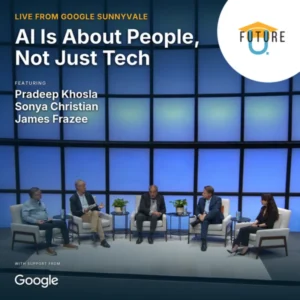
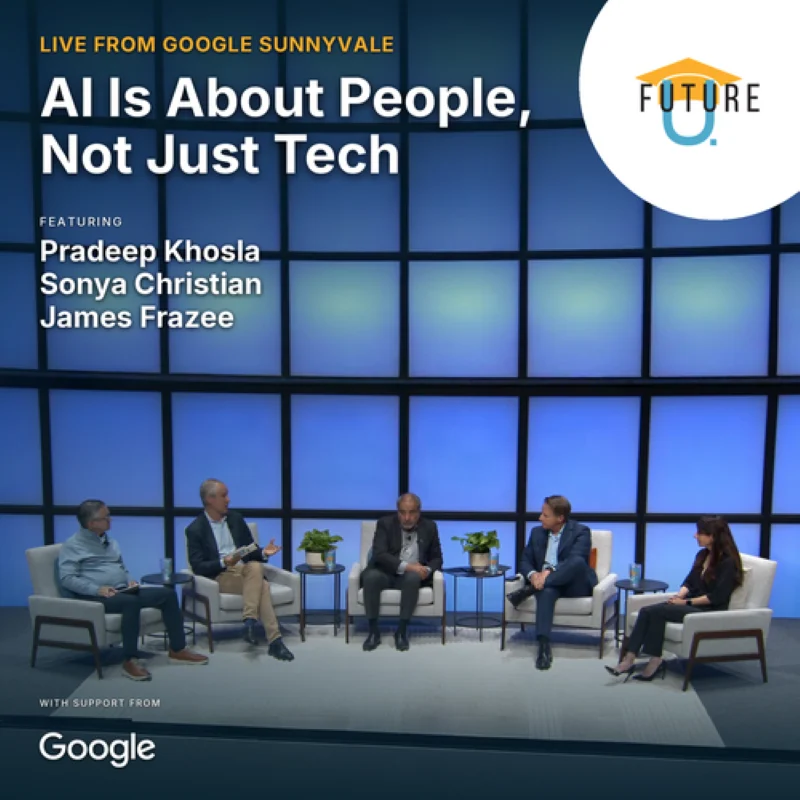
In a recent live recording of the Future U podcast, hosted by Michael Horn and Jeff Selingo at Google’s Sunnyvale campus, industry experts gathered to diagnose this friction. The consensus was striking: the most significant hurdle to AI integration in higher education is not a lack of processing power or software compatibility, but a profound crisis of human trust.
Main Facts: The Great Disconnect
The primary thesis emerging from the discussion is that higher education institutions are currently treating AI as a technological problem, when it is, in reality, a pedagogical and relational one. While universities pour millions into cloud infrastructure and AI-driven courseware, the human stakeholders—students and faculty—remain caught in a web of uncertainty.
The core of the issue is a lack of institutional coherence. When a university rolls out an AI policy without first fostering a culture of transparency, the resulting ambiguity creates an environment where students feel vulnerable. The experts argue that until universities bridge the gap between their top-down technology acquisitions and the day-to-day realities of the classroom, these investments will likely fail to deliver on their promise of improved learning outcomes.
Chronology of the AI Integration Crisis
To understand how higher education arrived at this impasse, one must look at the timeline of the past two years:
- Late 2022 (The Disruption): The public release of generative AI tools like ChatGPT sent shockwaves through the academy. Institutions reacted with a patchwork of bans and moratoriums, driven largely by fear of academic dishonesty.
- Early to Mid-2023 (The Reckoning): As students adopted the tools regardless of institutional stance, faculty members found themselves policing a technology they did not fully understand. The "policing" model proved unsustainable, leading to the first wave of faculty burnout.
- Late 2023 to Early 2024 (The Investment Phase): Universities began pivoting toward "AI literacy" initiatives, investing heavily in software partnerships and enterprise tools. They shifted from prohibition to integration, but without a unified framework.
- Current Status (The Trust Gap): As noted by Horn, Selingo, and their panelists, we are now in the "Trust Gap" phase. The tools are present, the policies are written, but the pedagogical culture is fractured. Students report rising levels of anxiety as they navigate conflicting expectations between departments, and professors are struggling to balance innovation with academic integrity.
Supporting Data and Evidence: The "9-to-10 O’Clock" Dilemma
Perhaps the most visceral evidence of this crisis was provided by James Frazee, the vice president and chief innovation officer of San Diego State University (SDSU). Frazee, a veteran in the digital transformation space, provided a harrowing example of the student experience that underscores the failure of current policy structures.
"They can go into their 9 o’clock class and be encouraged to use AI, and they could be expelled for doing the exact same thing in their 10 o’clock class," Frazee explained during the panel.
This anecdote highlights the absurdity of current academic expectations. When the definition of "academic integrity" changes based on the syllabus of the specific professor, the student is forced to play a high-stakes game of cognitive dissonance. Data points from student surveys at various research universities corroborate this; students report that their primary stressor regarding AI is not the difficulty of the technology, but the fear of unintentional academic misconduct due to vague or contradictory policies.
Furthermore, academic research into institutional change suggests that technology adoption follows a "diffusion of innovation" curve. However, that curve is stalled in higher education because the "relative advantage" of AI is being negated by the "complexity" and "incompatibility" of the policies governing it.
Official Perspectives: Navigating the Policy Minefield
The panel discussion featured a sophisticated look at how institutional leadership must pivot. For leaders like Frazee, the goal is not to enforce a singular, monolithic policy but to build an ecosystem of "clear, consistent guidance."
The Call for Institutional Coherence
Frazee and his colleagues argued that universities must move away from the "siloed" approach to AI. Currently, departments—and even individual instructors—are often given total autonomy over their AI policies. While academic freedom is a cornerstone of the university, when it comes to fundamental tools of communication and analysis, this autonomy has become a liability.
The panel suggested that institutions adopt a "tiered" approach to AI policies, similar to how they handle citation styles or accessibility requirements. By setting a base level of expectation—or at least a mandatory disclosure policy—universities can alleviate the existential dread that currently plagues students.
The Role of Faculty Development
Another crucial official perspective shared was that the "human trust" deficit is largely a byproduct of inadequate faculty support. Many professors feel that AI is being imposed upon them by administrators who are more interested in branding than in the realities of grading and classroom management. To fix this, institutions must invest as much in human professional development as they do in software licenses. Training must go beyond "how to use the tool" to "how to teach alongside the tool."
Implications: The Long-Term Impact on Higher Education
If the current trajectory of inconsistent policy and technological over-investment continues, the implications for the future of higher education are significant.
1. The Erosion of the Student-Faculty Relationship
The most concerning implication is the degradation of the pedagogical bond. When a student views a professor as a potential "policeman" of AI use rather than a mentor, the relationship becomes adversarial. This diminishes the psychological safety required for deep, inquiry-based learning.
2. The Credibility Gap
If universities cannot standardize their expectations, the degree itself risks a decline in perceived value. If an institution cannot define what constitutes "original work" in the age of AI, the marketplace may eventually question the rigor of the degrees issued by those institutions.
3. The Socio-Economic Divide
There is also a risk of inequality. Students who are "AI-savvy" and can navigate the conflicting rules of different departments will likely succeed, while those who are less familiar with these tools—or who are more risk-averse—will be disproportionately penalized. Universities have a moral imperative to ensure that the AI transition is equitable, not just efficient.
Conclusion: Trust as the Foundation
The live recording at Google Sunnyvale served as a wake-up call for the higher education sector. The message was clear: AI is not a magic bullet that will fix the systemic issues within the classroom. Instead, it is a mirror that reflects the existing tensions within the institution.
To move forward, universities must stop looking for the next "great technical infrastructure" and start looking at their own culture. Building trust requires transparency, empathy, and a willingness to engage in the difficult work of policy alignment. As James Frazee noted, the technology is moving at a breakneck speed, but the people—the students and faculty—need a stable ground on which to stand.
In the final analysis, the institutions that will lead the way into the AI era are not necessarily those with the most powerful GPUs or the most advanced software, but those that succeed in fostering a culture where students feel safe, informed, and supported in their use of these transformative tools. The future of higher education is, as it has always been, fundamentally human.