New JED Research Shows Link Between Teens’ AI Use, Suicidal Thoughts and Behaviors
NEW YORK CITY — In an era defined by rapid technological advancement and an ongoing youth mental health crisis, a startling new study reveals that more than half of middle and high school students routinely turn to artificial intelligence chatbots when feeling sad, stressed, lonely, or overwhelmed. However, a paradox lies at the heart of this phenomenon: while millions of adolescents rely on algorithms for comfort, very few actually view this behavior as seeking genuine mental health help.
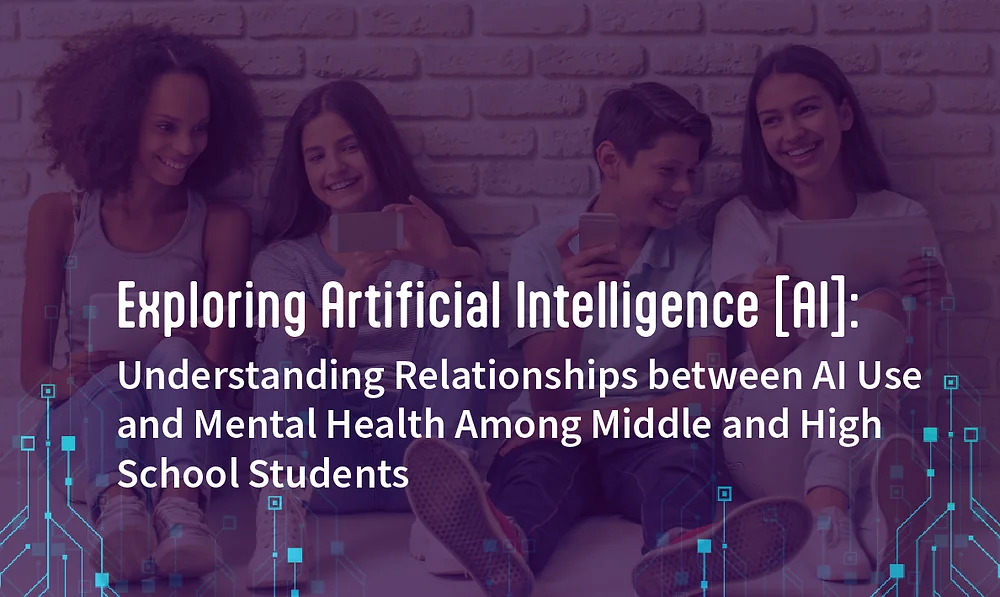
Released today by The Jed Foundation (JED)—a national nonprofit dedicated to protecting emotional health and preventing suicide among teens and young adults—the comprehensive report is titled Exploring Artificial Intelligence [AI]: Understanding Relationships between AI Use and Mental Health Among Middle and High School Students.
Developed in close collaboration with the Digital Wellness Lab at Boston Children’s Hospital and generously funded by the Nielsen Foundation, the research represents one of the most rigorous and extensive investigations into how modern youth interact with AI for emotional regulation, and how those digital dependencies intersect with clinical anxiety, depression, and historical markers of suicidal ideation.
Main Facts: The Intersection of Silicon and Sentience
The newly published data provides an unvarnished look at how the digital landscape is shifting beneath the feet of today’s adolescents. According to the research, AI is no longer merely a tool for drafting homework essays, generating creative text, or searching for information; it has quietly transformed into an accessible, non-judgmental, 24/7 digital confidant for a generation grappling with unprecedented levels of isolation and distress.
Key takeaways from the study include:
- Widespread Reliance: More than 50% of surveyed middle and high school students utilize AI chatbots or virtual companions when they are emotionally struggling—experiencing moments of sadness, high stress, acute loneliness, or emotional overwhelm.
- The Help-Seeking Disconnect: Despite utilizing chatbots to process difficult emotions, a stark minority of these teens categorize this behavior as "getting help" or seeking psychological intervention. This semantic gap suggests adolescents view AI as a neutral sounding board rather than a healthcare resource.
- Correlations with Distress: The data reveals that specific modalities and intensities of AI emotional reliance are directly associated with significantly poorer overall mental health, heightened anxiety and depression symptoms, and—most concerningly—greater histories of suicidal thoughts and previous attempts.
- Scale of the Study: The findings are drawn from an expansive dataset gathered between October 2025 and April 2026, encompassing responses from more than 5,500 students across 21 diverse middle and high schools enrolled in JED’s nationwide supportive programs.
Chronology: How the Research Unfolded
To understand the weight of these findings, it is helpful to look at the timeline and methodology behind the study, which reflects a growing urgency among pediatric researchers, educators, and mental health advocates to keep pace with hyper-accelerated technology adoption.
- Early 2025 (The Proliferation Phase): As generative AI tools became ubiquitous on smartphones, tablets, and school-issued devices, educators and mental health professionals began noticing an anecdotal shift. Students were no longer just turning to search engines or peers; many were opening chat windows to vent personal frustrations, navigate social anxieties, and seek advice on romantic or familial struggles.
- October 2025 (Data Collection Begins): Recognizing a critical blind spot in existing literature, The Jed Foundation, in partnership with the Digital Wellness Lab at Boston Children’s Hospital, launched a formalized, multi-site study. Working across 21 U.S. schools participating in JED initiatives, researchers designed a multi-faceted instrument to track daily technology habits alongside clinical mental health indicators.
- October 2025 – April 2026 (Fieldwork & Assessment): Over a six-month period, responses were compiled from over 5,500 middle and high school students. The survey gathered granular data regarding how and why teens interact with AI, examining explicit triggers for use, frequency of emotional reliance, recent symptoms of anxiety and clinical depression, levels of perceived loneliness, and documented histories of suicidal thoughts and self-harm behaviors.
- Late 2026 (Data Synthesis & Analysis): Researchers analyzed the complex correlations between heavy emotional reliance on AI and underlying psychological vulnerabilities, uncovering the statistical links between specific AI usage patterns and worsened mental health outcomes.
- October 27, 2026 (Official Release): The Jed Foundation officially published the landmark report in New York City, issuing an urgent call to action for tech developers, policymakers, school administrators, and parents to establish guardrails and redefine digital boundaries for youth.
Supporting Data and Research Insights
The nuances embedded within the JED report paint a vivid picture of modern adolescence. Gen Z and Generation Alpha are growing up in a world where conversational agents are engineered to sound empathetic, patient, and infinitely available. Unlike human friends or busy parents, an AI chatbot never gets tired, never expresses annoyance, and never breaks a confidence.
However, this frictionless availability carries hidden hazards. The research highlights that while AI can offer immediate, low-friction outlets for a panicked or lonely student, it operates within a vacuum devoid of genuine human empathy, emotional reciprocity, and clinical stewardship.
Dr. Kayla Anderson, JED’s Vice President of Research and Evaluation and the primary author of the report, emphasized the psychological implications of substituting human relationships with algorithmic simulations.
"What stands out in these findings is not just how often teens are using AI, but also its role in their emotional lives," Dr. Anderson noted during the release. "This warrants careful attention from the many stakeholders deploying these tools at a rapid pace as well as from policymakers who can help build the guardrails to protect youth mental health. While AI may offer youth an immediate and accessible outlet, it cannot replicate the developmental, protective, and necessary benefits of human connection."
Furthermore, the data suggests that vulnerable teens—those already struggling with severe depression, chronic loneliness, or suicidal ideation—may be disproportionately drawn to the absolute compliance of AI companions. Because these models are designed to validate user inputs rather than challenge cognitive distortions or intervene during mental health crises in a clinically sound manner, they risk trapping distressed youth in an insular feedback loop.
Official Responses and Stakeholder Perspectives
The release of the report has sent ripples through the public health, technology, and education sectors, sparking immediate commentary from leading experts and institutional leaders committed to youth welfare.
The Pediatric and Digital Wellness Perspective
Experts from the Digital Wellness Lab at Boston Children’s Hospital underscored the necessity of viewing digital habits through a developmental lens. Middle and high school represent critical windows of brain maturation, identity formation, and social skill development. When adolescents outsource their emotional processing to machine learning models, they miss crucial opportunities to build resilience through peer negotiation, mentorship, and professional therapeutic interventions.
The Advocacy and Institutional Standpoint
The Jed Foundation has positioned itself at the vanguard of this issue, stressing that the burden of safety cannot be placed solely on the shoulders of stressed-out teenagers or overwhelmed parents. JED’s leadership insists that structural changes must occur at the design level of consumer technology.
In its official statements accompanying the report, JED stressed a core philosophy: Human connection must remain central. AI should never be positioned as a substitute for trusted adults, school counselors, or licensed mental health professionals. Instead, responsible AI design must prioritize the immediate recognition of distress in youth, embedding automatic safety protocols that route distressed users toward real, human-backed crisis support systems rather than deepening their isolation behind a screen.
Implications for the Future: A Call to Action
The findings of Exploring Artificial Intelligence [AI] are more than an academic exercise; they represent an urgent roadmap for systemic change. To translate these findings into tangible protections for youth, the report outlines a series of comprehensive recommendations tailored for four key stakeholder groups:
- The AI and Technology Industry: Developers must build rigorous guardrails into conversational platforms. This includes implementing advanced natural language processing filters capable of detecting severe emotional distress, self-harm language, or suicidal ideation, and seamlessly transitioning users to verified human crisis resources (such as the 988 Suicide & Crisis Lifeline). Companies must also exercise extreme caution regarding parasocial AI companionship features marketed to minors.
- Policymakers and Regulators: Government officials at both the state and federal levels must examine existing consumer protection laws and establish clear legislative frameworks governing AI interactions with minors. Accountability measures should be enacted to ensure tech companies prioritize youth safety over user-engagement metrics.
- Youth-Serving Professionals (Educators, Counselors, and Coaches): Schools and community organizations must proactively integrate digital mental health literacy into their curriculums. Educators need training to recognize signs of digital dependency and guide students toward healthy boundaries with technology, explicitly teaching them the difference between algorithmic sounding boards and authentic human support systems.
- Parents and Caregivers: Families must initiate open, non-judgmental conversations about how teens use technology for emotional regulation. Caregivers are encouraged to monitor AI usage patterns not out of suspicion, but out of a desire to remain accessible, trusted anchors in their children’s lives.
As artificial intelligence continues to weave itself into the fabric of daily life, The Jed Foundation’s report serves as a timely wake-up call. Technology can be a powerful tool for learning and creativity, but when it comes to the fragile emotional terrain of a developing mind, nothing can replace the healing power of human understanding.
To download the full report, access supplementary data, or explore practical tips for parents and educators, visit the JED Foundation’s official resource page.