Beyond the Textbook: How One Colorado Educator is Redefining Middle School Science Instruction
MOSCA, Colo. — For many students, middle school science is defined by heavy textbooks, an intimidating glossary of abstract vocabulary, and the quiet dread of the standardized test. It is a subject frequently perceived as an exclusive club reserved for the naturally gifted—those few who seem
to effortlessly memorize formulas and decode complex chemical reactions on the first try.
Yet, according to Lauren McKinney, a middle school science educator at Sangre de Cristo Schools in Mosca, Colorado, this traditional narrative is built on a fundamental misunderstanding of what science actually is. McKinney’s journey to the front of the classroom did not begin with a lifelong adoration for academic laboratories. In fact, science was once her least favorite subject. Today, that personal disconnect serves as her greatest pedagogical asset, driving a classroom philosophy centered on inclusivity, critical thinking, and the normalization of academic struggle.
Her approach highlights a growing movement in modern education: shifting the focus from rote memorization and standardized testing metrics toward fostering genuine scientific literacy, empowering students to find their own "scientific voice," and leveraging adaptive learning tools to create space for individualized instruction.
Main Facts: Redefining Scientific Access
The core thesis of McKinney’s educational philosophy is deceptively simple: science is not a static collection of facts to be memorized, but a dynamic way of interacting with the physical world.
- The Imposter Syndrome Barrier: Many students enter middle school science classrooms already carrying the heavy burden of self-doubt. Terrified of giving incorrect answers, they quickly categorize themselves as "not science kids."
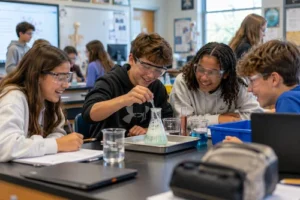
- Curiosity Over Correctness: McKinney argues that true scientific inquiry begins before an answer is found. By rooting lessons in real-world phenomena, students shift their focus away from the fear of failure and toward the thrill of discovery.
- The Vocabulary Dilemma: Scientific terminology, while ultimately essential, can act as an artificial barrier. McKinney emphasizes that students must be allowed to observe and conceptualize natural phenomena before they are forced to apply formal academic vocabulary.
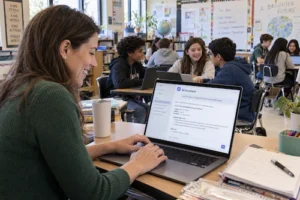
- The Role of Technology: Supplemental platforms—such as Penda Learning, which McKinney utilizes in her classroom—are not employed to replace human instruction, but rather to facilitate independent practice, deliver immediate feedback, and free up valuable one-on-one time between teacher and student.
Chronology: From Dread to Discovery
To understand McKinney’s dedication to reforming science education, one must trace the timeline of her own relationship with the discipline—a trajectory that mirrors the anxieties of the very students she teaches today.
Formative Years: A Tale of Two Sciences
Growing up, McKinney experienced two entirely different versions of science. Outside the classroom, science was vibrant and experiential. Visiting museums, exploring national parks, and conversing with working scientists in the field revealed a discipline rooted in curiosity, active questioning, and tangible discovery.
However, inside the traditional school setting, that same subject transformed into an alien landscape. Faced with dense, unfamiliar vocabulary, abstract concepts, and lessons entirely divorced from her lived experiences, McKinney withdrew. Science became a series of arbitrary facts to commit to memory for Friday quizzes rather than a lens through which to view the universe. She ultimately convinced herself that she simply lacked a "science brain."
The Epiphany of the Educator
It was only upon stepping into the shoes of an educator that McKinney had a profound realization: the problem was never science itself; it was the way science was being communicated.
Recognizing the exact brand of intimidation and self-doubt she had felt years prior mirrored in the eyes of her own middle school students, McKinney made a foundational career commitment. She vowed that no student would ever leave her classroom believing that science was a domain closed off to them. Every lesson plan, activity, and assessment would be reverse-engineered from a single premise: science belongs to everyone.
Evolution of the Classroom Experience
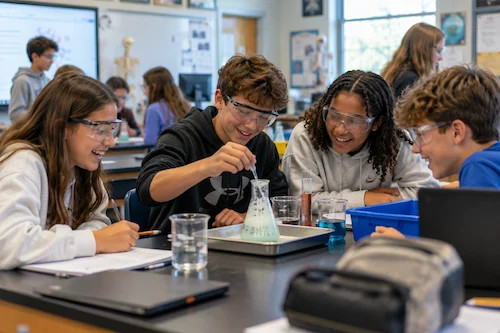
Over years of teaching at Sangre de Cristo Schools, McKinney’s methods evolved. She began deliberately stripping away the front-loaded vocabulary lists that traditionally precede scientific units. Instead, she introduced phenomena first, allowing students to investigate, question, and puzzle over real-world problems.
The integration of adaptive digital tools further transformed her daily routine. By shifting repetitive practice and basic concept reinforcement to independent digital platforms, McKinney carved out crucial minutes for targeted, individualized interventions—transforming her role from an authoritative lecturer to a collaborative facilitator of thought.
Supporting Data and Pedagogical Frameworks
Educational research increasingly supports the methodology championed by McKinney. According to data from various national science education associations, student disengagement in STEM (Science, Technology, Engineering, and Mathematics) often spikes during the middle school years—precisely when concepts transition from concrete observations to abstract theoretical models.
| Educational Challenge | Traditional Approach | Modern Inquiry-Based Approach |
|---|---|---|
| Initial Engagement | Front-loading complex vocabulary and definitions. | Presenting a real-world phenomenon or observable mystery. |
| Handling Mistakes | Penalizing incorrect hypotheses as test failures. | Treating errors as vital data points in the scientific method. |
| Pacing | Moving the entire class forward at a uniform speed. | Utilizing adaptive tools for self-paced practice and review. |
| Student Agency | Waiting for the teacher to validate the "correct" answer. | Developing a "scientific voice" to ask targeted questions. |
Furthermore, studies on formative feedback indicate that students who are given opportunities to revisit challenging concepts in low-stakes environments exhibit significantly higher resilience when facing rigorous assessments. McKinney’s integration of platforms like Penda Learning directly aligns with this data, providing automated, immediate feedback that guides students through their confusion without dampening their innate curiosity.
Official Responses and Educator Insights
The philosophy practiced at Sangre de Cristo Schools reflects a broader philosophical shift within modern Colorado education circles and beyond. Educators and administrators are increasingly recognizing that academic confidence is a prerequisite for academic achievement.
"Science begins with curiosity. It starts with asking questions, making observations, testing ideas, and sometimes discovering that our first assumptions were wrong," McKinney notes in her ongoing documentation of classroom strategies.
Reflecting on a breakthrough moment with a student who finally found the correct terminology weeks after initially observing a natural phenomenon, McKinney emphasizes that language should enhance, rather than dictate, understanding:
"The vocabulary didn’t create the student’s curiosity or replace their thinking. It gave them the tools to describe something they had already been working to understand."
Local education advocates point out that McKinney’s student-centric model serves as a blueprint for rural and urban districts alike. By validating students’ initial confusion and teaching them how to advocate for their own learning needs—shifting from a generic "I don’t get it" to a precise identification of their knowledge gaps—teachers are cultivating metacognitive skills that extend far beyond the science lab.
Implications for the Future of STEM Education
The implications of McKinney’s classroom practices extend far beyond the walls of a single middle school in Mosca, Colorado. If the primary goal of K-12 education is to prepare students for an increasingly complex, technology-driven world, then traditional gatekeeping methods in science education must be systematically dismantled.
1. Humanizing the Scientific Method
When students are permitted to fail safely, they internalize the true nature of scientific discovery. Real science is built upon discarded hypotheses, repeated trials, and persistent confusion. By reframing mistakes as milestones rather than shortcomings, educators can stem the tide of STEM disengagement during the vulnerable middle school years.
2. Strategic Integration of Educational Technology
The debate surrounding ed-tech often falls into false binaries: either technology is the ultimate savior of modern classrooms, or it is a dangerous distraction. McKinney’s praxis offers a nuanced middle ground. Technology is neither hero nor villain; it is an organizational multiplier. By automating routine practice and immediate feedback loops, digital tools restore the most valuable asset in any classroom: human connection between teacher and student.
3. Fostering Lifelong Scientific Literacy
Ultimately, the goal of middle school science is not exclusively to produce professional researchers or engineers. It is to graduate citizens who can evaluate empirical evidence, ask critical questions, and navigate a world saturated with information and misinformation.
As Lauren McKinney continues her work at Sangre de Cristo Schools, her legacy is measured not merely in test scores or standardized metrics, but in the quiet confidence of a student who looks at a complex natural world and realizes a profound truth: This is not too difficult for me. I belong here.